Q.1.
What can help reduce the risk of a head or neck injury in the event of a crash?
Q.2.
Experienced riders use a system known as IPDE to make judgments while riding. What does the "D" in IPDE stand for?
Q.3.
When carrying a passenger on a motorcycle, you must:
Q.4.
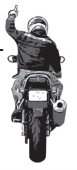
When riding in a group, what does it mean when the lead rider raises their left arm and extends their index finger, as shown in the image?
Q.5.
When carrying a passenger or cargo:
Q.6.
How can a motorcycle operator discourage lane sharing by other drivers?
Q.7.
During the day, you should:
Q.8.
When braking, you should use:
Q.9.
When riding in a group, inexperienced riders should position themselves:
Q.10.
It is a good idea to wear reflective clothing:
Q.11.
When riding behind a car, you should ride:
Q.12.
When riding downhill on a motorcycle with a sidecar:
Q.13.
To increase your chances of being seen at an intersection, you should:
Q.14.
Intersections are usually:
Q.15.
Making eye contact with other drivers:
Q.16.
Which of the following is not a safe step in preventing fatigue while riding?
Q.17.
Smoothly downshifting on motorcycles:
Q.18.
What does this hand signal mean?

Q.19.
When riding at night, you should:
Q.20.
When riding behind a car, you should:
Q.21.
If taking a long trip, you should:
Q.22.
Before mounting the motorcycle, your pre-ride inspection should include all of the following, except:
Q.23.
Which of the following will protect your eyes from the wind?
Q.24.
When braking on a slippery surface, you should:
Q.25.
If you are approaching a school bus that is stopped with its red lights flashing: