Q.1.
At dawn or dusk and in rain or snow, it can be hard to see and be seen. A good way to let other drivers know you are there is to turn:
Q.2.
If you parallel park facing downward on a hill:
Q.3.
As your speed increases, it is important to:
Q.4.
When entering the interstate, check for a gap in traffic in the nearest lane, adjust your speed to match traffic, signal, and:
Q.5.
Your license can be suspended if you are underand drive with a blood alcohol level of:
Q.6.
If a child is about to run into the street, you should:
Q.7.
Sudden wind gusts on highways:
Q.8.
You are involved in a minor collision at an intersection. There are no injuries and there is very little vehicle damage. You should:
Q.9.
When approaching a person who is crossing the street while using a white cane or guide dog, you should:
Q.10.
If you have a sudden tire blowout:
Q.11.
A reflective orange triangle on the back of a vehicle indicates that:
Q.12.
If you approach a traffic light with a red signal and a police officer directs you to go through the intersection without stopping, you should:
Q.13.
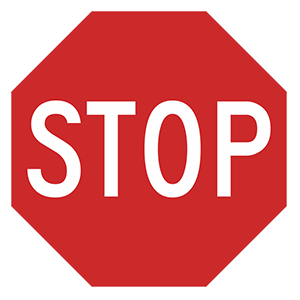
This road sign means:
Q.14.
You must yield to a pedestrian using a white cane or guide dog:
Q.15.
When changing lanes:
Q.16.
When driving in fog, it is best to drive with:
Q.17.
You are driving on the freeway. The vehicle in front of you is a large truck. You should drive:
Q.18.
Which of these statements is true about roadwork zones?
Q.19.
If a road is slippery, maintain a following distance that is:
Q.20.
In rainy weather, you should be most careful when turning or stopping:
Q.21.
At an intersection with a yield sign, you:
Q.22.
If you plan to pass another vehicle, you should:
Q.23.
"No passing zone" signs tell drivers:
Q.24.
If you miss your exit on the freeway, you should not:
Q.25.
You may be able to identify an aggressive driver by: