MCQGeeks
CBSE
JEE
NTSE
NEET
English
UK Quiz
Quiz
Driving Test
Practice
Games
Driving Test
Tennessee
Tennessee Car Driving Permit Test-15
Answers
Q.1.
This sign means:
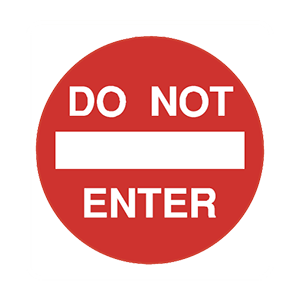
Do not enter.
Yield the right-of-way.
Reserved parking for persons with disabilities.
Q.2.
Use your headlights on rainy, snowy, or foggy days:
To keep your engine warm.
So others can see your vehicle.
To warn others of bad weather conditions.
Q.3.
When driving on an interstate, to avoid traffic merging from on-ramps to your right, the best thing to do is to:
Change lanes to the left.
Slow down.
Maintain your speed and position.
Q.4.
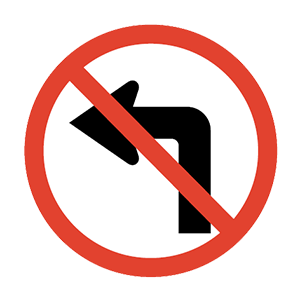
This sign means:
All traffic must turn left.
No left turn.
No U-turn.
Q.5.
At an intersection with a yield sign, you:
Must yield the right-of-way to cross traffic that is close enough to cause conflict.
Must yield to vehicles only on your right.
Should slow down but never stop.
Q.6.
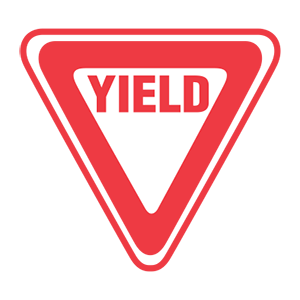
This sign means:
Slow down and yield to traffic on the main road when merging.
Always come to a complete stop.
Activate your turn signal and proceed into traffic at the usual speed.
Q.7.
An advisory letter will be mailed to adult drivers acquiring ____ points on their driving record within a 12-month period.
Between six and 11
Between eight and 10
12 or more
Q.8.
You must obey instructions from school crossing guards:
At all times.
Only during school hours.
Unless you do not see any children present.
Q.9.
You are on the freeway and traffic is merging into your lane. You should:
Make room for the merging traffic, if possible.
Assert your right-of-way by driving faster.
Always maintain your position.
Q.10.
Which of these statements is true about changing lanes?
You only need to turn and look over your right shoulder for lane changes to the right or left.
Look over your right shoulder for a right lane change and your left shoulder for a left lane change.
Vehicles with two outside mirrors do not have blind spots.
Q.11.
You are entering a freeway. Check traffic on the freeway by:
Using your rearview and side mirrors.
Using your rearview mirror.
Using your side mirror and looking over your shoulder.
Q.12.
What should you do when you see this sign?
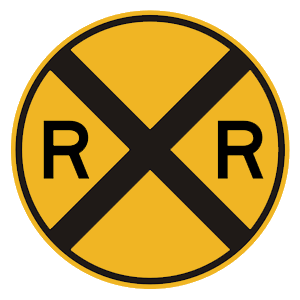
Look for a train station ahead.
Signal before going any further.
Slow down and yield to trains.
Q.13.
Highway pavement will be particularly treacherous and most slippery:
If it has been raining several hours.
If it has just begun to rain.
If it has been raining for one to two hours.
Q.14.
Stopping distances and the severity of collisions:
Decrease as a vehicle's speed increases.
Are not affected by a vehicle's speed.
Increase as a vehicle's speed increases.
Q.15.
When you see an emergency vehicle approaching while using its flashing lights, you must:
Maintain your speed and stay in your lane until the vehicle has passed.
Move into the right lane and drive slowly until the vehicle has passed.
Pull over to the curb or edge of the road and stop until the vehicle has passed.
Q.16.
Alcohol in any concentration is:
A stimulant.
A depressant.
Neither of the above.
Q.17.
When driving behind another vehicle at night, you should:
Keep your headlights on the low beam setting.
Use your high beam headlights until you are within 10 feet of the vehicle ahead.
Use your high beam headlights.
Q.18.
When entering an interstate highway, you should:
Stop, check for cars, and enter when safe.
Check for cars and reduce your speed to 25 mph before entering the traffic lane.
Check for cars, increase your speed to match the flow of traffic, and merge when the way is clear.
Q.19.
A broken yellow line beside a solid yellow line indicates that:
Passing is permitted from the lane next to the solid yellow line.
Passing is not permitted from either direction.
Passing is permitted from the lane next to the broken yellow line.
Q.20.
A major cause of fatal traffic accidents in Tennessee is:
Turning into the wrong lane.
Speeding.
Following too closely.
Q.21.
When a car with bright headlights drives toward you at night, you should:
Stop until the other driver passes.
Look below their headlights.
Glance toward the right edge of your lane.
Q.22.
When approaching an intersection with a flashing red light, you must:
Come to a complete stop, yield to oncoming traffic and pedestrians, then proceed.
Reduce your speed and proceed with caution.
Come to a complete stop and remain stopped as long as the light is red.
Q.23.
The first thing that alcohol effects is:
Vision.
Judgment.
Balance.
Q.24.
Streets and highways are most slippery:
When it has been raining hard for several hours.
When they are clean and dry.
Just after it starts to rain.
Q.25.
There are oncoming vehicles to your left and a row of parked vehicles to your right. You should steer:
Closer to the oncoming vehicles than the parked vehicles.
Closer to the parked vehicles than the oncoming vehicles.
A middle course between the oncoming and parked vehicles.
Q.26.
When parallel parking, a vehicle's wheels should be:
Within two feet of the curb.
Within 18 inches of the curb.
Within one foot of the curb.
Q.27.
A broken yellow line between two lanes of traffic means:
Both lanes of traffic are going in the same direction.
Passing is permitted when it's safe.
Passing is not permitted.
Q.28.
When driving in a construction zone:
Slightly increase your speed.
Expect the unexpected.
Expect construction workers to yield to motorists.
Q.29.
If you have trouble seeing other vehicles because of dust or smoke blowing across the roadway, you should drive more slowly and turn on your:
Emergency flashers.
Parking lights.
Headlights.
Q.30.
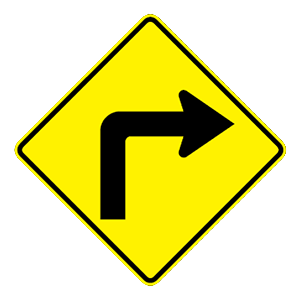
This yellow sign means:
There is a sharp turn to the right.
The lane must turn right.
A right turn is permitted on a green arrow only.
Support mcqgeeks.com by disabling your adblocker.
×
Please disable the adBlock and continue.
Thank you.
Reload page