MCQGeeks
CBSE
JEE
NTSE
NEET
English
UK Quiz
Quiz
Driving Test
Practice
Games
Driving Test
Tennessee
Tennessee Car Driving Permit Test-2
Answers
Q.1.
Which of the following is a dangerous habit when driving in work zones?
Tailgating another vehicle
Failing to carefully watch for workers and moving equipment
Both of the above
Q.2.
If you want to enter the freeway but you don't see a gap in traffic, you should:
Maintain your speed and force the other drivers to create a gap.
Slow down on the ramp to wait for a gap.
Stop at the end of the ramp to wait for a gap.
Q.3.
You must yield the right-of-way to an emergency vehicle that is using its siren and flashing lights by:
Driving as closely to the right edge of the road as possible and stopping.
Moving into the right lane and driving slowly until it has passed.
Stopping immediately, even if you are within an intersection.
Q.4.
At a railroad crossing, you must:
Watch for vehicles that must stop at all railroad crossings (school buses, trucks carrying hazardous materials, etc.).
Watch for multiple trains.
Both of the above.
Q.5.
Which of the following road surfaces freezes first?
A tunnel
An intersection
A bridge
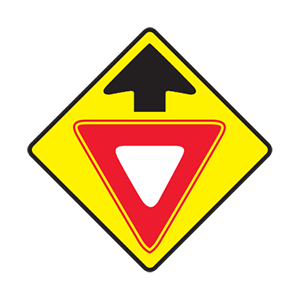
Q.6.
This sign means:
Yield sign ahead.
Side road entering from left.
Stop sign ahead.
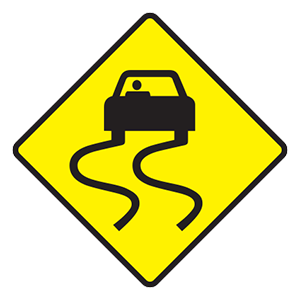
Q.7.
This sign means:
Slow down; curving road ahead.
Slow down and do not use your brakes.
Slow down; slippery when wet.
Q.8.
Backing your vehicle is:
Always dangerous.
Dangerous if you have a helper.
Only dangerous in large vehicles.
Q.9.
When driving under low-visibility conditions due to fog, you should:
Turn on your high beam headlights.
Slow down and use your low beam headlights.
Increase your speed so you do not cause an accident.
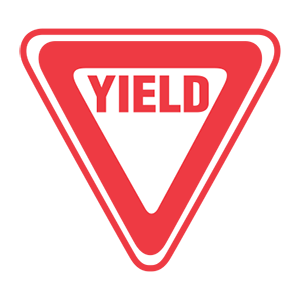
Q.10.
This sign means:
Slow down and yield to traffic on the main road when merging.
Always come to a complete stop.
Activate your turn signal and proceed into traffic at the usual speed.
Q.11.
Water on the road can cause a vehicle to hydroplane. Your car may hydroplane at speeds as low as:
45 miles per hour.
35 miles per hour.
40 miles per hour.
Q.12.
You must yield to a pedestrian using a white cane or guide dog:
Only when the guide dog is leading the person across the street.
At all times.
Only if a crossing guard is present.
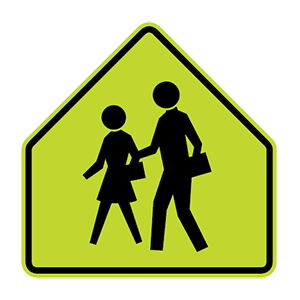
Q.13.
This yellow warning sign means:
You are approaching a school or school crosswalk.
Slow down, drive with caution, and watch for children.
Both of the above.
Q.14.
A school bus is stopped ahead of you in your lane with its red lights flashing. You should:
Stop and proceed when you think all of the children have exited the bus.
Slow to 25 mph and pass cautiously.
Stop for as long as the red lights are flashing.
Q.15.
Which of these is a safe driving technique?
Using your high beam lights in the fog.
Staring at the road ahead of your vehicle.
Checking your rearview mirrors frequently.
Q.16.
You want to park uphill on a two-way road and there is no curb. Which direction do you turn your front wheels?
Straight ahead
Right, toward the side of the road
Left, toward the center of the road
Q.17.
You see pedestrians near the road. You should:
Sound your horn and maintain your speed.
Speed up to clear the area quickly.
Slow down and pass with caution.
Q.18.
Large trucks are likely to lose speed when:
Driving up long or steep hills.
Driving in long, gradual curves.
Driving down long, gradual hills.
Q.19.
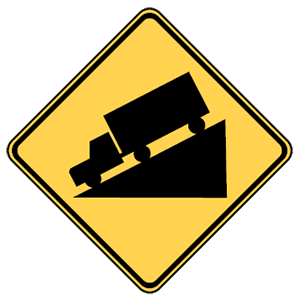
This road sign means:
Intersection ahead.
Merging traffic.
Steep hill ahead.
Q.20.
Fatigue increases the risk of:
Missing an exit.
Being late for an appointment.
Falling asleep behind the wheel and crashing.
Q.21.
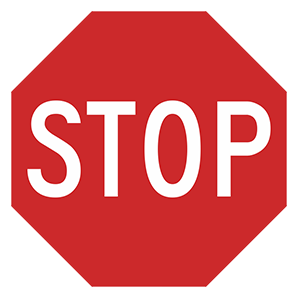
What does this road sign mean?
Slow down and prepare to stop if cars are approaching you.
Come to a full stop then proceed when it is safe to do so.
Proceed carefully through the intersection, not always stopping.
Q.22.
If your vehicle starts to lose traction because of water on the road, you should:
Drive at a constant speed to gain better traction.
Apply the brakes firmly to prevent your vehicle from sliding.
Slow down gradually and not apply the brakes.
Q.23.
A flashing red traffic light at an intersection means:
The same thing as a yield sign.
The light is about to turn green.
The same thing as a stop sign.
Q.24.
When entering the interstate, check for a gap in traffic in the nearest lane, adjust your speed to match traffic, signal, and:
Expect traffic to allow you to proceed into the lane, since you have the right-of-way.
Merge carefully into the gap.
Wait for the lane to clear before merging.
Q.25.
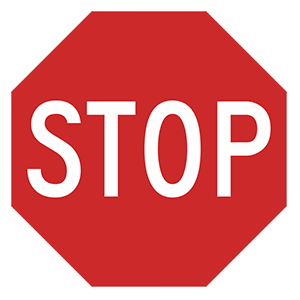
This road sign means:
Slow down or stop.
Stop if necessary.
You must come to a complete stop.
Q.26.
Which of these statements is false?
As a person's weight increases, the amount of alcohol required to raise their blood alcohol content (BAC) also increases.
If two people are the same weight, the person with more body fat will show signs of intoxication first.
Drinking three drinks in one hour and drinking three drinks in three hours will affect a person in the same way.
Q.27.
When approaching an intersection with a flashing red light, you must:
Come to a complete stop, yield to oncoming traffic and pedestrians, then proceed.
Reduce your speed and proceed with caution.
Come to a complete stop and remain stopped as long as the light is red.
Q.28.
If a truck or bus is making a right turn where you also need to make a right turn, you should:
Quickly turn before the truck or bus is able to.
Wait until the truck or bus turns before you turn.
Squeeze between the truck or bus and the curb.
Q.29.
You are involved in a minor collision at an intersection. There are no injuries and there is very little vehicle damage. You should:
Leave your vehicle in the traffic lane until law enforcement arrives.
Move your vehicle out of the traffic lane, if possible.
Not move your vehicle for any reason.
Q.30.
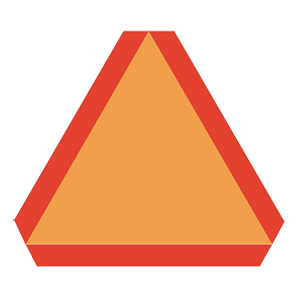
This symbol is used for:
Dangerous intersections.
Slow-moving vehicles.
Yield signs.
Support mcqgeeks.com by disabling your adblocker.
×
Please disable the adBlock and continue.
Thank you.
Reload page