Q.1.
The amount of alcohol in the blood is referred to as:
Q.2.
When driving in fog or mist, never put your headlights on the high beam setting because:
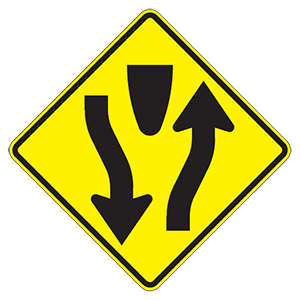
Q.3.
This sign means:
Q.4.
Any amount of alcohol in the blood may affect a driver's:
Q.5.
You should drive on the shoulder to pass a car:
Q.6.
If you have had several beers, the effects of alcohol will be reduced only by:
Q.7.
You are driving on the freeway. The vehicle in front of you is a large truck. You should drive:
Q.8.
If you see orange construction signs and cones on a freeway, you must:
Q.9.
When parallel parking, a vehicle's wheels should be:
Q.10.
You enter a designated turn lane to make a left turn at an upcoming intersection. There is oncoming traffic. You should:
Q.11.
When driving in work zones, you should:
Q.12.
Vehicles stopped behind a school bus with its red lights flashing must remain stopped until:
Q.13.
Temporary signs used in construction and maintenance work areas:
Q.14.
What should a driver do when approaching a traffic control signal that is not in operation?
Q.15.
If you are driving and you see animals standing near the roadway:
Q.16.
You should not use your horn:
Q.17.
If involved in a reportable accident, the operator of the vehicle must file an accident report to the Department of Safety and Homeland Security within:
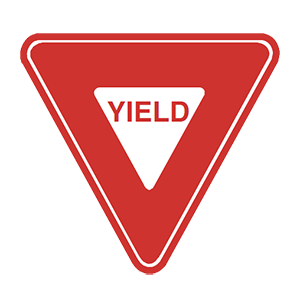
Q.18.
This sign means:
Q.19.
When driving on the highway, consistently looking far ahead of your vehicle:
Q.20.
You must show proof of insurance to law enforcement:
Q.21.
After passing a vehicle, it is safe to return to your driving lane when:
Q.22.
You may cross double yellow lines to pass another vehicle if the:
Q.23.
Various traffic control devices in construction and maintenance work areas are the color:
Q.24.
Which of these statements is true about changing lanes?
Q.25.
You may legally block an intersection:
Q.26.
When arriving to an uncontrolled intersection at the same time as vehicles to your right and left, you should:
Q.27.
When driving in fog, it is best to drive with:
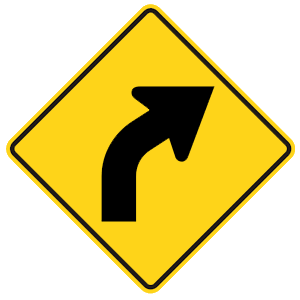
Q.28.
This sign is used to warn drivers about:
Q.29.
Stopping distances and severity of crashes:
Q.30.
The driver ahead of you stops at a crosswalk. What should you do?