MCQGeeks
CBSE
JEE
NTSE
NEET
English
UK Quiz
Quiz
Driving Test
Practice
Games
Driving Test
Utah
Utah Car Driving Permit Test-10
Answers
Q.1.
What does this road sign mean?
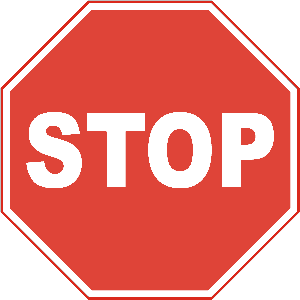
Slow down and prepare to stop if cars are approaching you.
Come to a full stop and go when it is safe to do so.
Proceed carefully through the intersection, not always stopping.
Stop only for traffic on an intersecting road.
Q.2.
When approaching an accident scene, you should:
Keep your attention on your driving.
Keep moving.
Stop if you are involved or if emergency help has not yet arrived.
All of the above.
Q.3.
When dealing with pedestrians, a driver must:
Make sure the pedestrian is aware of their vehicle.
Always yield the right-of-way, even if the pedestrian is in the wrong.
Yield the right-of-way only when the pedestrian is legally entitled to it.
Slow down and sound their horn near a crosswalk.
Q.4.
The most important thing to remember about speed management and curves is that you must:
Drive at the posted speed limit as you enter the curve, then slow down at the sharpest part of the curve.
Slow down before you enter the curve.
Accelerate gently before you enter the curve.
Drive at the posted speed limit before, throughout, and after the curve.
Q.5.
You are driving on a divided multilane highway and see or hear the signal of an approaching emergency vehicle. You should:
Disregard the signal if there are other lanes available for the emergency vehicle.
Stop as quickly as you can.
Slow down, move your vehicle to provide a clear path for the emergency vehicle, and stop.
Increase your speed to get out of the way of the emergency vehicle.
Q.6.
A child up to the age of ____ must be seated in a rear-facing car seat while in a moving vehicle.
Four
Three
Two
One
Q.7.
A flashing red light on a traffic signal means:
The same thing as a stop sign.
The traffic signal is broken.
You do not have to come to a complete stop.
Driving conditions are dangerous.
Q.8.
This road sign means:
School crossing.
Pedestrian crossing.
Jogging trail.
Busy sidewalk.
Q.9.
Parking uphill next to a curb on a two-way street requires:
Your steering wheel to be turned to the left.
Your steering wheel to be turned to the right.
Your right rear tire to be resting on the curb.
That you leave your car six inches from the curb.
Q.10.
Stop lines are solid white lines painted across traffic lanes:
In curves and on hills.
Next to churches and schools.
At intersections and pedestrian crosswalks.
On freeway on-ramps.
Q.11.
Car drivers should know that large trucks:
Have large blind spots.
Can stop more quickly than passenger vehicles.
Do not need more room to maneuver than passenger vehicles.
All of the above.
Q.12.
Large vehicles have blind spots that can extend up tofeet directly behind the vehicle.
TRUE
FALSE
Q.13.
Drivers may pass on a two-lane roadway marked with a single solid yellow line on their side of the centerline.
True
False
Q.14.
A person's ability to drive can be impaired by:
Alcohol.
Any medication.
A lack of sleep.
All of the above.
Q.15.
If another driver cuts you off in traffic, you should:
Pull next to the driver and yell at them.
Let it go.
Flash your high beams at the driver.
Get back at the other driver by cutting them off.
Q.16.
Larger vehicles have:
Larger blind spots.
Smaller blind spots.
No blind spots.
The same blind spots as smaller vehicles.
Q.17.
Always signal when:
Changing lanes.
Pulling into or out of a parking space.
Pulling into traffic from a parking area or alley.
All of the above.
Q.18.
A work zone:
May be moving or stationary.
Is marked with black and white signs.
Does not require a driver to slow down and pay extra attention.
All of the above.
Q.19.
To help prevent crashes, you should:
Communicate with other road users.
Ignore other drivers on the road.
Drive only on side streets and back roads.
Avoid driving during rush hour.
Q.20.
If you’re going to turn left onto a one-way street, you should complete the turn into:
The right lane.
The lane closest to your previous lane.
Either lane.
Neither lane.
Q.21.
This sign means:
There is a detour ahead.
You must stop for flaggers.
The road ahead is closed to traffic.
The highway ahead is undergoing maintenance.
Q.22.
You want to turn left at an intersection. The light is green but oncoming traffic is heavy. You should:
Use the next intersection.
Wait at the crosswalk for traffic to clear.
Wait in the center of the intersection for traffic to clear.
Take the right-of-way since you have a green light.
Q.23.
If an emergency vehicle with flashing lights is traveling in the area where you are driving, you should:
Speed up to avoid the emergency vehicle.
Stop your vehicle immediately and prevent them from passing.
Make every effort to give the emergency vehicle a clear path of travel.
Signal to the emergency vehicle when it is clear for them to pass you.
Q.24.
Look over your shoulder to check your blind spot when:
Pulling toward or away from a curb.
Turning left or right.
Changing lanes.
All of the above.
Q.25.
Which is not a factor in determining the distance that it takes to stop your vehicle?
Steering ability
Braking distance
Reaction distance
Perception time
Support mcqgeeks.com by disabling your adblocker.
×
Please disable the adBlock and continue.
Thank you.
Reload page