Q.1.
To be effective, an eye or face shield must:
Q.2.
Which of the following provides a rider with the best protection?
Q.3.
If in a no passing zone:
Q.4.
When riding at night, you should:
Q.5.
A motorcycle horn:
Q.6.
A passenger should never:
Q.7.
When riding at night you should:
Q.8.
If you are preparing to pass another operator on the left, you should:
Q.9.
When riding a motorcycle, you should:
Q.10.
Riding alongside another rider:
Q.11.
Which type of sign is yellow with black lettering or symbols?
Q.12.
Taking corners too fast:
Q.13.
Most motorcycle crashes occur during the day. To help combat this:
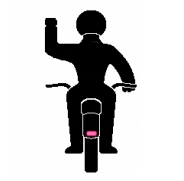
Q.14.
When an operator's left arm is bent at the elbow and pointing upward, it means the operator:
Q.15.
If you are not traveling slowly enough when shifting into a lower gear, the:
Q.16.
If you find yourself riding alongside another vehicle, you should:
Q.17.
The best source of information for your motorcycle is:
Q.18.
For the best protection, jackets and pants:
Q.19.
Where is the rear brake pedal usually located?
Q.20.
To reduce the amount of time you need to react to a hazard, you should:
Q.21.
If carrying a load in a sidecar, the motorcycle's stopping distance:
Q.22.
When slowing or stopping, you should use both brakes:
Q.23.
Usually, a good way to handle tailgaters is to:
Q.24.
When entering a turn, a rider should:
Q.25.
A plastic, shatter-resistant face shield: