MCQGeeks
CBSE
JEE
NTSE
NEET
English
UK Quiz
Quiz
Driving Test
Practice
Games
Driving Test
Vermont
Vermont Car Driving Permit Test-12
Answers
Q.1.
When you want to make a right turn, your car must be:
Near the center of the street.
Close to the left side of the street.
Close to the right side of the street.
Past the center of the intersection when you begin to turn.
Q.2.
After stopping for a school bus that is unloading children:
Do not proceed until the children wave to you.
Watch for children walking along the side of the road.
Accelerate quickly.
Turn on your emergency flashers.
Q.3.
Drivers must yield to a pedestrian:
Even if the pedestrian crosses the street carelessly.
Only when the pedestrian is in a crosswalk.
Only if the pedestrian is on the same side of the road as the driver.
If the pedestrian uses a hand signal to ask oncoming drivers to stop.
Q.4.
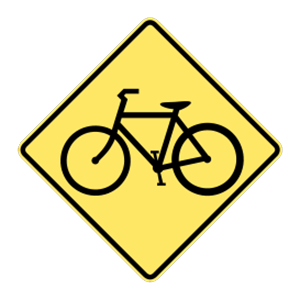
This sign means:
Watch for bicycles.
Bicycles not allowed.
Bicycle repair shop ahead.
Bicycles have the right-of-way.
Q.5.
Hydroplaning is usually caused by:
Excessive stops.
Sudden stops.
Sudden turns.
Excessive speed.
Q.6.
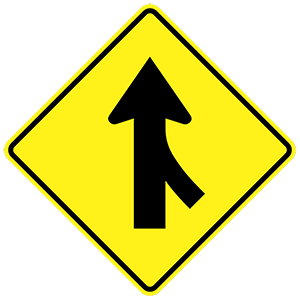
This road sign means:
Cars in right lane must slow down.
No left turn.
Merge.
Pass only in the right lane.
Q.7.
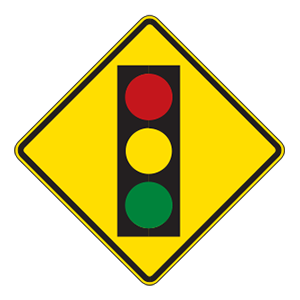
This sign means:
Traffic signal.
Fire station.
T intersection.
Left turn signal.
Q.8.
Which of the following are used on some highways to direct drivers into the proper lanes for turning?
Flashing red lights
Flashing yellow lights
White lines on the side of the road
White arrows in the middle of the lanes
Q.9.
To avoid collisions with vehicles in your blind spots, you should:
Quickly turn your head to see if your blind spot is clear before changing lanes.
Adjust your rearview mirrors every few minutes.
Honk your horn right before turning or changing lanes.
None of the above.
Q.10.
Before entering a roundabout, you must slow down and yield to:
Vehicles in the roundabout.
Bicyclists in the roundabout.
Pedestrians in the roundabout.
All of the above.
Q.11.
You may drive around the gates at a railroad crossing:
When the train has passed.
Under no circumstances.
When the lights have stopped flashing.
When other drivers drive around the gates.
Q.12.
You are coming to a railroad crossing where the crossing signals are flashing. You should:
Stop and look for a train.
Slow down and look for a train.
Look for a train, then speed up.
Do what the vehicle ahead of you does.
Q.13.
Signaling your intentions before turning, changing lanes, or driving away from a curb:
Is necessary only if other traffic is present.
Is a good driving habit and is required by law.
Is necessary only during the maneuver, not before.
Is not necessary if the maneuver is done slowly.
Q.14.
To be safe when crossing a railroad, you should:
Look both ways, but only when the red light is flashing.
Listen, look both ways, and then proceed if it is safe to do so.
Cross especially quickly when a train is approaching.
Quickly pass under any lowering gates.
Q.15.
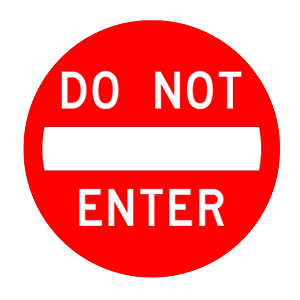
This sign means:
Heavy traffic ahead.
Do not enter.
Railroad crossing.
Yield.
Q.16.
When stopped for a traffic violation or at an equipment check, the driver must produce:
Proof of insurance.
Their license.
Proof of registration.
All of the above.
Q.17.
It is important to slow down:
On narrow or winding roads.
At intersections or railroad crossings.
When the road is wet or slippery.
All of the above.
Q.18.
From top to bottom, the following is the proper order for traffic lights:
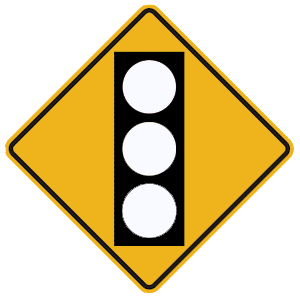
Red, yellow, green.
Red, green, yellow.
Green, red, yellow.
Green, yellow, red.
Q.19.
Your vehicle's stopping distance increases when stopping:
On a wet or icy road.
On paved highways.
When driving at night.
All of the above.
Q.20.
When faced with an oncoming car to the left and a bicyclist to the right, you should:
Pull onto the shoulder.
Split the difference.
Let the car pass and then pass the bike.
Pass the bike quickly.
Support mcqgeeks.com by disabling your adblocker.
×
Please disable the adBlock and continue.
Thank you.
Reload page