MCQGeeks
CBSE
JEE
NTSE
NEET
English
UK Quiz
Quiz
Driving Test
Practice
Games
Driving Test
Vermont
Vermont Motorcycle Driving Permit Test-4
Answers
Q.1.
Shifting into a lower gear causes an effect similar to:
Using the brakes.
Accelerating.
Swerving.
Turning.
Q.2.
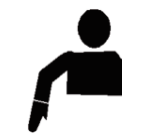
What does this hand signal mean?
Slow or stop
Left turn
Right turn
Backing up
Q.3.
____ can remove alcohol and its effects from your body.
Coffee
Time
Exercise
Fresh air
Q.4.
Engine braking:
Is illegal.
Is slowing down by turning the engine off.
Is slowing down by downshifting.
Is not encouraged because of the damage it does to the engine.
Q.5.
When exiting a highway while riding in a group, which riding formation should be used?
Staggered
Single-file
Paired up
Riding three across a lane
Q.6.
For the best protection, jackets and pants:
Should cover your arms and legs completely.
Should be loose and flap in the wind while you are riding.
Should only partially cover your arms and legs.
Should be made of wool.
Q.7.
Passengers should:
Lean as the operator leans.
Hold onto their seat.
Sit as far back on the bike as possible.
Never hold onto the operator.
Q.8.
When crossing railroad tracks that are parallel to the road, you should:
Cross the tracks at a 90-degree angle.
Avoid crossing the tracks for any reason.
Try to cross the tracks at a 45-degree angle.
Slowly inch across the tracks.
Q.9.
Making eye contact with other drivers:
Means that they see you.
Guarantees that they will yield to you.
Doesn’t mean that they see you.
Is not worth the effort it takes.
Q.10.
A pre-ride inspection should be done:
Before every ride.
Once a week.
Once a month.
Twice a month.
Q.11.
Most motorcycle crashes happen:
At high speeds.
After riding for a long time.
Far from home.
On short trips.
Q.12.
If you find your motorcycle being chased by a dog, you should:
Swerve around the animal.
Stop until the animal loses interest.
Ride alongside the animal.
Approach the animal slowly, then speed up.
Q.13.
Which of the following is not considered protective clothing for a motorcyclist?
A jacket
Boots
Gloves
A stocking cap
Q.14.
When riding in a group, inexperienced riders should be placed:
In the front of the group.
Just behind the lead rider.
At the back of the group.
Anywhere within the group.
Q.15.
To stop quickly, you should:
Rely only on the front brake.
Rely only on the rear brake.
Use the front brake and then the rear brake.
Use both brakes at the same time.
Q.16.
When slowing or stopping, you should use both brakes:
Only if the pavement is wet.
Infrequently.
Only when riding in the city.
Every time.
Q.17.
It is best to not ride directly alongside another vehicle because:
You may be riding in its blind spot.
It is distracting to have a vehicle next to you.
Other drivers may want to use the lane.
It would be difficult to see what is happening behind you.
Q.18.
Taking a turn too fast:
Is acceptable as long as you stay under the speed limit.
Is safer on a motorcycle than in a car.
Is acceptable as long as no vehicles are near you.
Can cause you to end up in another lane or leave the road.
Q.19.
Which of the following is not a good safety tip?
Slow to a safe speed before turning.
When turning, lean in the direction you wish to go.
Avoid dragging your feet on the roadway.
Avoid looking at other vehicles.
Q.20.
A person with a minimum blood alcohol concentration (BAC) of ______ is considered legally intoxicated.
0.02 percent
0.04 percent
0.08 percent
0.1 percent
Q.21.
You should completely check your motorcycle:
Before every ride.
Once a week.
Once a month.
Once a year.
Q.22.
When operating a motorcycle on a slippery surface, you should:
Ride faster than usual.
Use only the front brake.
Reduce your speed.
Use only the rear brake.
Q.23.
Motorcyclists riding in a group should avoid pairing up because:
A merging driver may not see both riders.
Reflections from both helmets may make it difficult for the riders to see.
Riding in pairs does not allow riders the necessary space to maneuver.
It is too difficult for riders on the left side of a pairing to exit a highway.
Q.24.
If your front tire locks while braking, you should:
Keep the brake engaged until you come to a full stop.
Release both brakes and coast to a stop.
Release the brake lever and use only the rear brake.
Release the brake lever until the tire regains traction.
Q.25.
A motorcyclist's cushion of space:
Should always stay the same.
Should vary according to riding conditions.
Is not necessary in most situations.
Should be avoided to keep traffic moving safely.
Support mcqgeeks.com by disabling your adblocker.
×
Please disable the adBlock and continue.
Thank you.
Reload page