MCQGeeks
CBSE
JEE
NTSE
NEET
English
UK Quiz
Quiz
Driving Test
Practice
Games
Driving Test
Virginia
Virginia Car Driving Permit Test-20
Answers
Q.1.
The sign with this shape and color is a ____ sign.

No passing zone
Wrong way
Railroad crossing
Stop
Q.2.
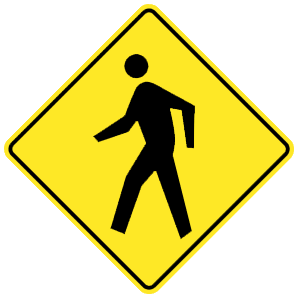
This road sign means:
Steep grade ahead.
Pedestrian crossing.
Deer crossing.
Bicycle crossing or bike path.
Q.3.
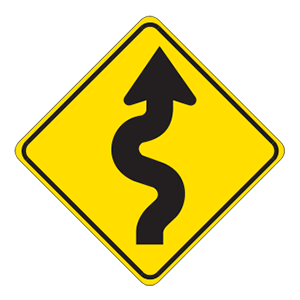
This sign means:
Winding road.
No parking.
Right lane closed.
Multiple turns.
Q.4.
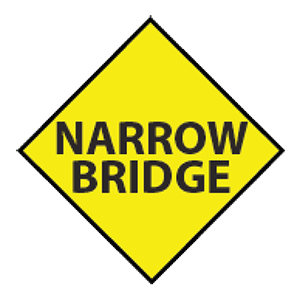
This sign means:
Trucks are permitted on an upcoming narrow bridge.
The bridge ahead is open to one-way traffic only.
The bridge ahead is wide enough for only one car at a time.
The bridge ahead may be too narrow to meet or pass a truck.
Q.5.
A “No standing” sign at a certain location means:
You may never stop your vehicle there.
You may park there if the driver remains in the vehicle.
You may stop temporarily only to pickup or discharge passengers.
You may stop to load or unload merchandise.
Q.6.
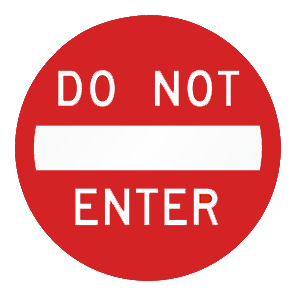
This sign means:
Stop.
No U-turn.
Yield.
Do not enter.
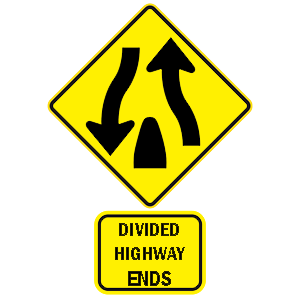
Q.7.
This sign means:
One-way traffic.
Divided highway ends.
Two-way traffic.
Keep left.
Q.8.
This green arrow on a lane use control signal means:
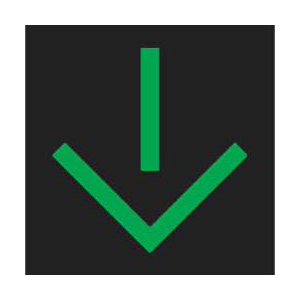
You may use this lane.
No traffic is allowed in this lane.
You have the right-of-way.
You must merge into this lane.
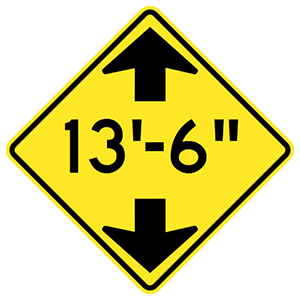
Q.9.
This road sign means:
Divided highway begins.
A steep grade is ahead.
The overpass ahead has a low clearance.
Two lanes of traffic moving in opposite directions are about to merge.
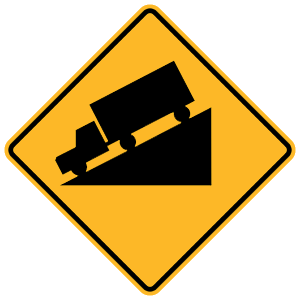
Q.10.
This sign means:
Trucks under 18,000 lbs. allowed.
Hill ahead.
Truck stop ahead.
No trucks allowed.
Q.11.
Your tire blows out while you are driving. You should:
Slam on your brakes.
Hold your steering wheel tightly and slow to a stop.
Keep driving normally.
Turn on your emergency flashers and continue driving.
Q.12.
You may cross double solid yellow lines:
To pass a slow-moving truck.
To turn into a driveway.
To pass another car.
Under no conditions.
Q.13.
A speed limit is:
The maximum or minimum legal speed you can travel on a road under dangerous conditions.
The maximum or minimum legal speed you can travel on a road under ideal conditions.
The suggested speed to travel on a road under ideal conditions.
None of the above.
Q.14.
When approaching an accident scene, you should:
Keep your attention on your driving.
Keep moving.
Stop if you are involved or if emergency help has not yet arrived.
All of the above.
Q.15.
If two drivers arrive at the same time to an open intersection:
The driver on the right has the right-of-way.
The driver on the left has the right-of-way.
One driver may continue driving without stopping.
One driver should honk to indicate that they are giving up the right-of-way.
Q.16.
A telltale sign of a drunk driver is:
They are weaving between lanes.
They are driving more slowly than the normal traffic flow.
They are making quick and sudden stops.
All of the above.
Q.17.
Drowsy drivers:
Should drink strong black coffee to stay awake.
Can drive so poorly that they may appear to be drunk.
Can stay alert by opening a window and turning up the radio.
Are usually only older drivers.
Q.18.
You must yield the right-of-way to:
Pedestrians who are crossing a public street or highway.
Funeral processions.
Military convoys.
All of the above.
Q.19.
Which of the following statements about railroad crossings is true?
It is against the law to go around lowered gates at a crossing.
You must stop at a railroad crossing when directed to do so by a flagger.
Not all railroad crossings are equipped with flashing red signals and gates.
All of the above.
Q.20.
When completing an emergency roadside stop, it is not necessary to put on your parking brake.
True
False
Q.21.
What does a single dashed white line separating traffic mean?
Drivers may pass, even if it could be dangerous.
Lanes move in opposite directions.
Drivers may not pass.
Drivers may pass if it is safe to do so.
Q.22.
Which is not a factor in determining the distance that it takes to stop your vehicle?
Steering ability
Braking distance
Reaction distance
Perception time
Q.23.
Larger vehicles have:
Larger blind spots.
Smaller blind spots.
No blind spots.
The same blind spots as smaller vehicles.
Q.24.
Two solid yellow lines on the pavement mean:
Passing is allowed for drivers from both directions.
Passing is not allowed.
Passing is allowed if you are at the top a hill.
Passing is allowed during daylight only.
Q.25.
When driving near a blind pedestrian who is carrying a white cane or using a guide dog, you should:
Slow down and be prepared to stop.
Take the right-of-way.
Proceed normally.
Drive away quickly.
Q.26.
Your brake lights tell other drivers that you:
Are making a turn.
Have your emergency brake on.
Are changing lanes.
Are slowing down or stopping.
Q.27.
Don’t follow other cars too closely because:
You may not see the road between the cars.
You may not have time to stop if the vehicle in front of you slows or stops suddenly.
You may not see the vehicle's turn signals.
You may not see the other vehicle’s brake lights.
Q.28.
If one of your tires blows out as you are driving, you should:
Brake hard immediately.
Try to steer straight while gradually slowing by removing your foot from the gas pedal.
Maintain your current speed and steer straight.
Swerve back and forth to alert traffic behind you.
Q.29.
When changing lanes, you can check your blind spots by:
Using the inside rearview mirror.
Using the outside rearview mirror.
Using both inside and outside rearview mirrors.
Turning your head and looking over your shoulder.
Q.30.
Worn or bald tires:
Can make turning more difficult.
Are likely to hydroplane.
Can increase your stopping distance.
All of the above.
Q.31.
What happens if you drink alcohol while taking prescription or over-the-counter medicine?
The medicine reduces the effect of the alcohol.
The alcohol will help the medicine cure a cold.
The combination could multiply the effects of the alcohol or medicine.
There is no effect because they are different substances.
Q.32.
When approaching a steady red traffic light, drivers should:
Drive through the intersection if there is no crossing traffic.
Continue driving, as they have the right-of-way.
Stop only if a police officer is nearby.
Come to a complete stop.
Q.33.
If you drive in Virginia without liability insurance coverage on your vehicle, you face:
A $500 fee.
Suspension of your driver license.
Higher insurance premiums.
All of the above.
Q.34.
The speed limit on interstate highways in designated rural areas is:
50 mph.
60 mph.
70 mph.
80 mph.
Q.35.
If another car is in danger of hitting you, you should:
Sound your horn.
Wave your arms.
Use your emergency lights.
Flash your headlights.
Support mcqgeeks.com by disabling your adblocker.
×
Please disable the adBlock and continue.
Thank you.
Reload page