MCQGeeks
CBSE
JEE
NTSE
NEET
English
UK Quiz
Quiz
Driving Test
Practice
Games
Driving Test
Virginia
Virginia Car Driving Permit Test-4
Answers
Q.1.
When you see an emergency vehicle with flashing lights, you must:
Slow down and keep moving in your lane.
Keep driving in your lane.
Pull to the right curb and stop.
Stop exactly where you are.
Q.2.
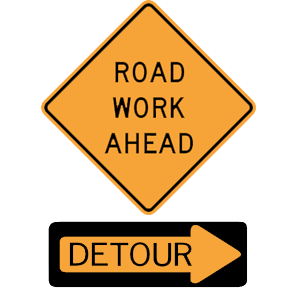
This road sign means:
Be prepared for a sharp left turn ahead.
Watch for people crossing your path.
No passing zone.
Take a detour to avoid dangerous driving conditions.
Q.3.
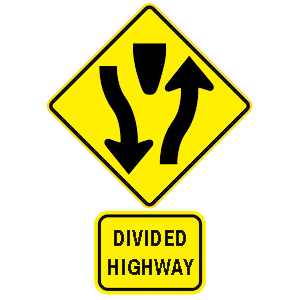
This sign means:
One-way traffic.
Divided highway ahead.
Two-way traffic.
Keep left.
Q.4.
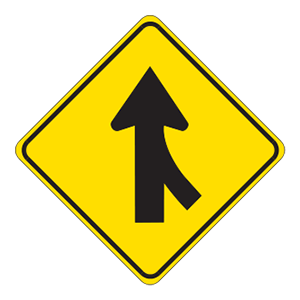
This sign means:
Merging traffic.
Multiple turns.
Lane shifting.
Do not block intersection.
Q.5.
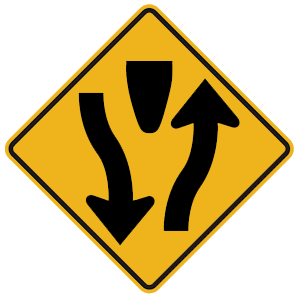
This sign means:
A divided highway ends.
A one-way street begins.
A one-way street ends.
A divided highway begins.
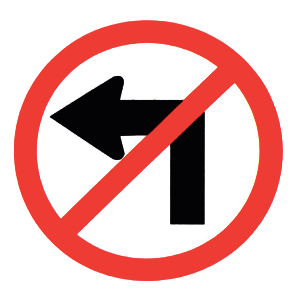
Q.6.
This sign means:
All traffic must turn left.
No left turn.
No U-turn.
Truck route to the left.
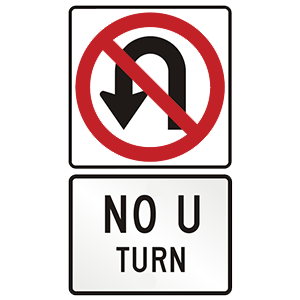
Q.7.
This sign means:
U-turns are prohibited.
U-turns are permitted.
Winding road ahead.
Sharp left turn ahead.
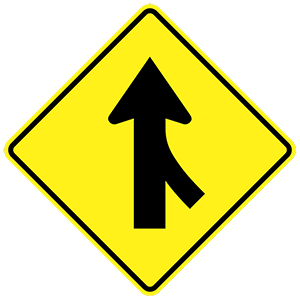
Q.8.
This road sign means:
Cars in right lane must slow down.
No left turn.
Merge.
Pass only in the right lane.
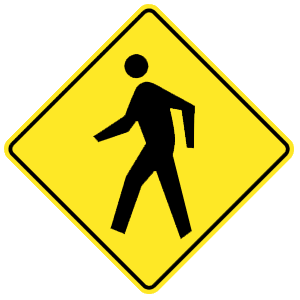
Q.9.
This road sign means:
Steep grade ahead.
Pedestrian crossing.
Deer crossing.
Bicycle crossing or bike path.
Q.10.
From top to bottom, the following is the proper order for traffic lights:
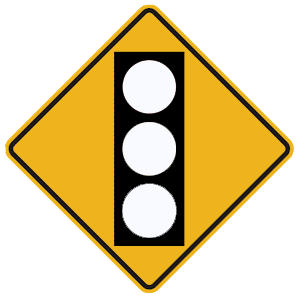
Red, yellow, green.
Red, green, yellow.
Green, red, yellow.
Green, yellow, red.
Q.11.
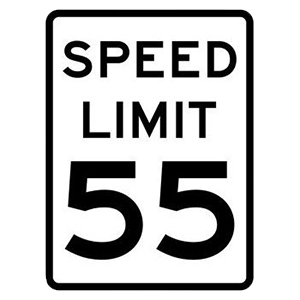
This road sign means:
You must travel at the speed indicated.
The maximum legal speed on the roadway is 55 mph.
You must travel through the intersection at the posted speed.
None of the above.
Q.12.
Yield also means stop if you cannot merge safely into the flow of traffic.
True
False
Q.13.
Allowing a space cushion between your vehicle and its surroundings is important because it:
Prevents distractions from other vehicles.
Allows you time to react to unexpected situations.
Keeps traffic flowing at a safe pace.
Keeps other drivers alert.
Q.14.
You are driving on a narrow road when you meet an oncoming vehicle. You must:
Pull completely off the road and stop.
Allow the oncoming vehicle at least one-half of the main-traveled portion of the road.
Demand the other vehicle pull over to make room.
Turn on your high beam headlights to make sure the other vehicle sees you.
Q.15.
Before turning, you should:
Use your signal.
Turn the wheel.
Increase your speed.
Change lanes.
Q.16.
When you see or hear an emergency vehicle coming, you should:
Stop immediately and let the vehicle pass.
Drive as far toward the right side of the road as is safe and stop.
Proceed slowly and permit the vehicle to pass.
Keep moving slowly, staying to the right side of the road.
Q.17.
For your own protection, do not:
Use a suspended or revoked driver license.
Lend anyone your driver license.
Allow an unlicensed driver to operate your vehicle.
All of the above.
Q.18.
A work zone:
May be moving or stationary.
Is marked with black and white signs.
Does not require a driver to slow down and pay extra attention.
All of the above.
Q.19.
The speed limit in residential zones is:
15 mph.
25 mph.
30 mph.
35 mph.
Q.20.
You must use your headlights whenever you use your windshield wipers as a result of bad weather.
True
False
Q.21.
You must yield for emergency vehicles:
Under no circumstances.
When you see a flashing red or blue light or hear a siren.
Only when other vehicles yield.
None of the above.
Q.22.
What color are pavement markings that separate traffic lanes moving in opposite direction?
Yellow
White
Yellow and white
Yellow, white, and black
Q.23.
Another driver is trying to pass your car. You should:
Pull off the road.
Signal to the other driver when it is safe for them to pass.
Check for oncoming traffic and adjust your speed to allow safe passing.
Speed up.
Q.24.
To ensure that your physical condition does not cause you to drive in an unsafe manner, you should:
Keep physically fit and have regular physical examinations.
Know the effect of any medicine on your driving ability.
Drive within your physical limitations.
All of the above.
Q.25.
To help relieve fatigue on a long trip, it is a good idea to:
Stop and rest every two hours.
Do arm exercises every hour.
Drive with one eye open at a time.
Change feet on the gas pedal.
Q.26.
Drivers must be careful when passing large vehicles and should avoid driving beside large vehicles for long periods of time.
TRUE
FALSE
Q.27.
When you are in a line of traffic that is crossing a railroad track that has no signals or gates:
You have the right-of-way and do not need to check for trains.
You may pass slower drivers while crossing the track.
You need to make sure there is space for your vehicle to get all the way across the tracks without stopping.
All of the above
Q.28.
After stopping for a school bus that is unloading children:
Do not proceed until the children wave to you.
Watch for children walking along the side of the road.
Accelerate quickly.
Turn on your emergency flashers.
Q.29.
At a light rail intersection, always:
Look both ways before crossing tracks.
Pay attention and obey all traffic signals.
Share the road with pedestrians and bicyclists.
All of these.
Q.30.
What can you do to avoid the need to make emergency stops while driving in traffic?
Honk your horn to make others aware of your presence.
Look ahead and maintain a safe following distance.
Drive in the right lane only.
Drive more slowly than the flow of traffic.
Q.31.
When a vehicle with an Anti-Lock Braking System starts to lose traction on a slippery road, drivers should:
Pump the brakes.
Press and hold the brake pedal.
Press and hold the gas pedal.
Lightly tap the brakes.
Q.32.
When making a right turn on a green light, you must:
Maintain your normal driving speed.
Stop and look for nearby police cars.
Yield to pedestrians.
Increase your normal driving speed.
Q.33.
U-turns are allowed in business districts, cities, and towns only:
On highways.
At intersections.
On four-lane roads.
None of the above.
Q.34.
You are driving in the right lane of a multilane highway and want to move into the left lane. You should:
Look in your rearview mirror for traffic behind you before changing lanes.
Look over your left shoulder for traffic in your blind spot before changing lanes.
Look in your side mirror for traffic and turn on your directional signal.
All of the above.
Q.35.
Braking distance is affected by:
The speed your vehicle is traveling.
The condition of your brakes and tires.
The condition of the pavement.
All of the above.
Support mcqgeeks.com by disabling your adblocker.
×
Please disable the adBlock and continue.
Thank you.
Reload page