MCQGeeks
CBSE
JEE
NTSE
NEET
English
UK Quiz
Quiz
Driving Test
Practice
Games
Driving Test
Virginia
Virginia Car Driving Permit Test-7
Answers
Q.1.
This road sign means:
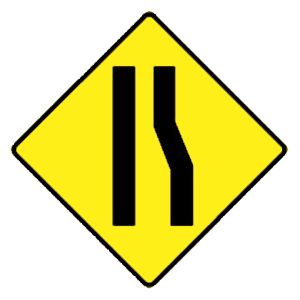
Road widens ahead.
Lane reduction; the right lane ends soon.
Highway entrance ramp ahead.
Lane reduction; the left lane ends soon.
Q.2.
A driver entering public traffic from a driveway or private road:
Has the right-of-way.
Should yield to drivers already on the public road.
May force their way into traffic.
Can assume that other drivers will change lanes to make room.
Q.3.
At an intersection with a yield sign, you should:
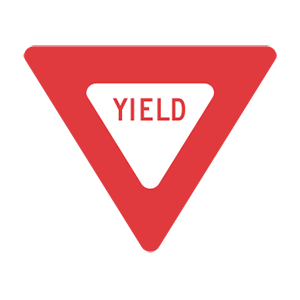
Always stop before entering the intersection.
Yield just to the traffic on the right.
Yield just to the traffic on the left.
Slow down and yield the right-of-way to other traffic.
Q.4.
This green arrow on a lane use control signal means:
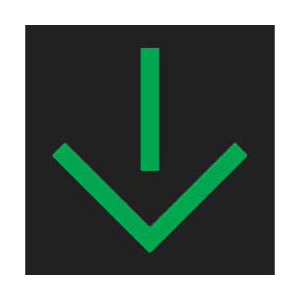
You may use this lane.
No traffic is allowed in this lane.
You have the right-of-way.
You must merge into this lane.
Q.5.
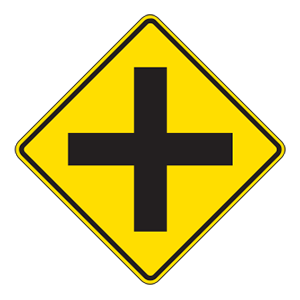
This sign means:
Crossroad ahead.
Flagger ahead.
Lane ends.
Turn right or go straight.
Q.6.
This road sign means:
Your current roadway ends ahead.
You must bear either right or left.
A four-way intersection is ahead.
A road joins from the right.
Q.7.
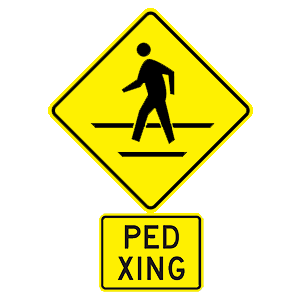
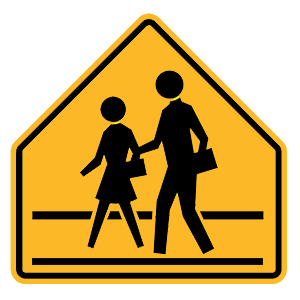
This sign means:
School ahead.
School crossing.
Pedestrian crossing.
Construction workers on or near the roadway.
Q.8.
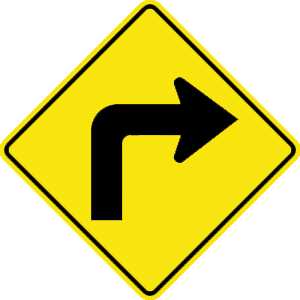
This road sign means:
One-way road.
No right turn.
Exit.
Sharp right turn in the road ahead.
Q.9.
This sign means:
Pedestrians only.
Intersection ahead.
Hiking trails ahead.
School crossing ahead.
Q.10.
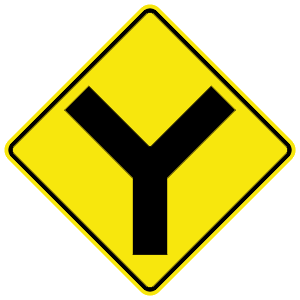
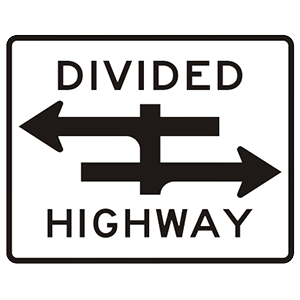
This sign means:
You must turn left or right.
You are approaching a T intersection.
The road that you are on intersects with a divided highway.
You are on an overpass above a divided highway.
Q.11.
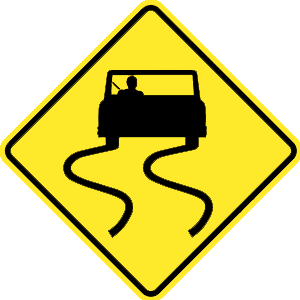
This road sign means:
When pavement is wet, reduce your speed.
The road ahead winds a series of turns or curves.
Traffic increases ahead.
Steep grade ahead.
Q.12.
Which of the following must you obey over the other three?
A steady red light
A police officer
A stop sign
A flashing red light
Q.13.
A driver who is taking a non-prescription drug should:
Read the labels on the drug before driving.
Drink alcohol instead.
Continue to drive regardless of any warning labels.
Drive only during daylight hours.
Q.14.
Drivers are not required to yield to pedestrians in a crosswalk.
True
False
Q.15.
Crossbuck signs indicate:
Railroad crossings.
School zones.
No passing zones.
Hospitals.
Q.16.
Drivers who eat and drink while driving:
Make no driving errors.
Have trouble driving slowly.
Are better drivers because they are not hungry.
Have trouble controlling their vehicles.
Q.17.
Trucks, tractor-trailers, buses, and RVs have:
Much smaller blind spots than smaller cars.
Much larger blind spots than smaller cars.
Blind spots the same size as cars' blind spots.
Mirrors that eliminate blind spots.
Q.18.
On a two-lane street, your vehicle is being followed by a fire engine that is not using its emergency signals. You should:
Continue to drive in a normal manner.
Stop as quickly as you can.
Speed up to get out of its way.
Slow down, move as far to the right as possible, and stop.
Q.19.
Lanes of traffic moving in the same direction are divided by ____ lines.
Yellow
White
Red
Black
Q.20.
The most effective safety restraints in a traffic crash are:
Only a lap and shoulder belt.
Only an airbag.
Both a lap/shoulder belt and an airbag.
No safety restraints.
Q.21.
A solid yellow line on your side of the centerline means:
Slow down.
Pass with caution.
Do not pass.
Keep right on hills.
Q.22.
To turn left from multilane, one-way streets and highways, you should start from:
The middle of the intersection.
The right lane.
The left lane.
Any lane.
Q.23.
Never drive a vehicle through, around, or under any railroad gate or barrier.
True
False
Q.24.
If you stop at a railroad crossing with more than one track:
Wait to proceed until you have a clear view of all tracks.
Stop on the first railroad track and watch for another train.
Go through as soon as the train passes.
Go through when one of the tracks is free.
Q.25.
When stopped for a traffic violation or at an equipment check, the driver must produce:
Proof of insurance.
Their license.
Proof of registration.
All of the above.
Q.26.
If your vehicle begins to skid, you should:
Overcorrect.
Turn your steering wheel into traffic.
Turn your steering wheel in the direction you want to go.
Release the steering wheel.
Q.27.
You are approaching a railroad crossing and you do not see or hear a train. You must stop:
If a stop sign is posted.
If a crossing gate is lowered.
If the crossing lights are flashing.
All of the above.
Q.28.
A leaky exhaust system in your vehicle is dangerous because it can cause:
A loss of hearing.
Pollution.
Carbon monoxide poisoning.
Poor engine performance.
Q.29.
Increasing your vehicle’s speed:
Increases your field of vision.
Decreases your field of vision.
Makes it easier to see cross traffic.
Has no effect on your field of vision.
Q.30.
You have the right-of-way when turning left on which of the following traffic signals?
A solid green light
A flashing yellow light
A green arrow pointing left
A flashing red light
Q.31.
When you hear the siren or see the flashing lights of an approaching emergency vehicle, you must:
Slow down until it passes you.
Drive to the right side of the road and stop.
Motion for the emergency vehicle to pass you.
Merge into the right lane and continue driving.
Q.32.
A person walking with a white cane or guide dog is likely to be:
A deaf person.
A person involved with a traffic study.
A blind person.
None of the above.
Q.33.
If an approaching train is near enough or going fast enough to be a danger, you must:
Slow down and proceed with caution.
Not cross the tracks until the train has completely passed.
Cross the tracks at your own risk.
Find an alternative route across tracks.
Q.34.
Your body gets rid of approximately:
Three alcoholic drinks an hour.
One alcoholic drink an hour.
Two alcoholic drinks an hour.
None of the above.
Q.35.
The most effective thing you can do to reduce your risk of being injured or killed in a traffic crash is to:
Wear your seat belt.
Limit your driving to weekdays.
Stay in the right lane on multilane highways.
Limit your driving to hours between 3:00 p.m. and 6:00 p.m.
Support mcqgeeks.com by disabling your adblocker.
×
Please disable the adBlock and continue.
Thank you.
Reload page