MCQGeeks
CBSE
JEE
NTSE
NEET
English
UK Quiz
Quiz
Driving Test
Practice
Games
Driving Test
Virginia
Virginia Motorcycle Driving Permit Test-6
Answers
Q.1.
A plastic, shatter-resistant face shield:
Protects your face, but not your eyes.
Protects your eyes, but not your whole face.
Helps protect your whole face.
Q.2.
If your motorcycle starts to weave while riding over uneven metal bridge gratings, you should:
Downshift immediately to a lower gear.
Proceed in a zigzag pattern until you cross the bridge.
Relax and steer straight.
Q.3.
To swerve correctly, you should:
Shift your weight quickly.
Turn the handlebars quickly.
Press the handgrip in the direction of the turn.
Q.4.
If you borrow a motorcycle, you should:
Assume all controls are in the same location as they are on your motorcycle.
Immediately take it out on the highway.
Get familiar with it in a controlled area.
Q.5.
A passenger on a motorcycle should:
Put their feet on the ground when the motorcycle is stopped.
Not ride without a back rest.
Sit as far forward as possible without crowding the operator.
Q.6.
Unlike other substances, alcohol:
Is very quickly absorbed into the bloodstream.
Needs to be digested to enter the bloodstream.
Can improve your riding ability.
Q.7.
When riding at night, you should:
Move closer to the vehicle in front of you so you can use its lights to see farther down the road.
Keep riding at your normal speed to lower the risk of being struck from behind.
Reduce your speed and increase your following distance.
Q.8.
A primary cause of single-vehicle motorcycle collisions is:
Motorcyclists' tendency to ride too fast for weather conditions.
Motorcyclists turning too wide in a curve or turn.
Motorcyclists running off the road while trying to avoid a collision with another vehicle.
Q.9.
When riding near a truck:
You should not be able to see the truck’s mirrors.
If you cannot see the truck’s mirrors, the driver cannot see you.
You should concentrate on operating your motorcycle and not worry about the truck’s mirrors.
Q.10.
When being passed, it is usually best for motorcyclists to be in which part of the lane?
The right
The center
The left
Q.11.
Before riding, a motorcycle operator should check the clutch. A properly working clutch should feel:
Loose and rough.
Tight and smooth.
Loose and smooth.
Q.12.
Which factor does not play a major role in affecting your blood alcohol content (BAC)?
Age
The amount of alcohol consumed
Body weight
Q.13.
While riding, you should wear:
Hearing protection to prevent damage from long-term exposure to engine and wind noise.
A helmet to protect your hearing.
A baseball cap.
Q.14.
May motorcyclists share a lane?
Yes, with automobiles.
Yes, when traffic lanes are crowded.
No. Motorcyclists should use the entire lane, without sharing it with other vehicles.
Q.15.
When riding during the day, you should:
Wear dark clothes since it is light outside.
Wear bright clothes so other motorists can see you better.
Be comfortable, wearing shorts if it is hot.
Q.16.
When traveling as a group, a distance of _____ should be maintained between the lead rider and the rider directly behind them.
One second
Two seconds
Three seconds
Q.17.
Reflective clothing:
Should be worn only at night.
Should be worn only during the day.
Should be worn both day and night.
Q.18.
Wearing which of the following colors will make you less visible to other motorists?
Orange
Yellow
Brown
Q.19.
If you are being chased by a dog, you should:
Stop your motorcycle until the animal loses interest.
Approach the animal slowly, then quickly accelerate away from the dog as it approaches.
Swerve around the animal.
Q.20.
When entering a curve, you should position your motorcycle:
In the outside of the curve.
In the inside of the curve.
Where you can most safely handle road and traffic conditions.
Q.21.
The best way to help others see your motorcycle is to:
Use your headlight.
Maintain eye contact.
Wave at drivers.
Q.22.
As your motorcycle accelerates, you will need to:
Shift to a higher gear.
Shift to a lower gear.
Put the bike in neutral.
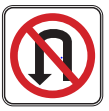
Q.23.
What does this sign mean?
No right turn
No left turn
No U-turn
Q.24.
The front brake supplies about how much of a motorcycle's potential stopping power?
About one-quarter
About one-half
About three-quarters
Q.25.
When carrying a passenger, a motorcycle takes:
Less time than usual to stop and speed up.
The same amount of time to stop and speed up as it usually does.
More time than usual to stop and speed up.
Support mcqgeeks.com by disabling your adblocker.
×
Please disable the adBlock and continue.
Thank you.
Reload page