MCQGeeks
CBSE
JEE
NTSE
NEET
English
UK Quiz
Quiz
Driving Test
Practice
Games
Driving Test
Virginia
Virginia Motorcycle Driving Permit Test-7
Answers
Q.1.
When riding in the rain, you should:
Ride down the center of your lane.
Ride on the right side of your lane.
Ride in tire tracks left by other cars.
Q.2.
When riding a motorcycle, it is important to:
Focus only on what is in front of you.
Focus only on what is behind you.
Know what’s happening both in front of and behind you.
Q.3.
A person with a minimum blood alcohol content (BAC) of ____ is considered intoxicated.
0.02 percent
0.04 percent
0.08 percent
Q.4.
When entering a turn, it is best to:
Change gears before the turn.
Change gears during the turn.
Take the motorcycle out of gear.
Q.5.
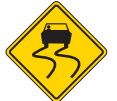
What does this sign mean?
Slippery when wet
Lanes shift
Yield
Q.6.
What type of footwear is the best for motorcycle riders?
Sneakers
Leather boots
Sandals
Q.7.
When it starts to rain, it is usually best to:
Ride in the center of the lane.
Pull onto the shoulder and wait for it to stop raining.
Ride in the tire tracks left by other vehicles.
Q.8.
Which of the following statements is true?
The front brake is more powerful than the rear brake.
The rear brake is more powerful than the front brake.
Both the front and rear brakes are equally powerful.
Q.9.
You should operate the engine cut-off switch and pull in the clutch when:
The throttle is stuck and you cannot free it.
You start to lose control in a curve.
The motorcycle starts to wobble.
Q.10.
When riding, jackets and pants should:
Fit loosely enough to allow the wind to catch the fabric.
Be snug enough to keep from flapping in the wind.
Be tight enough to prevent you from moving freely.
Q.11.
When preparing to ride with a passenger, instruct the passenger to:
Get onto the motorcycle before you.
Sit as far back as possible.
Hold firmly onto your waist, hips, or belt.
Q.12.
When other vehicles are slowed or stopped:
A motorcyclist should not weave between lanes of traffic.
It is acceptable for a motorcyclist to weave in and out of traffic lanes.
A motorcyclist should ride in a straight line between two lanes.
Q.13.
When being passed, moving to the part of your lane that is farthest from the passing vehicle:
Is recommended because you will be farther away from the passing vehicle.
Is not recommended because it invites the other driver to move back into your lane too early.
Is not encouraged or discouraged as it has no impact on safety.
Q.14.
Under normal conditions, a motorcyclist should maintain a following distance of at least:
Two seconds.
Three seconds.
Four seconds.
Q.15.
You should conduct a safety inspection of your motorcycle:
Before every ride.
Every week.
Once a month.
Q.16.
Hearing protection:
Is not needed when the rider is wearing a helmet.
Is only recommended for long trips.
Should be used on all rides.
Q.17.
Eye protection is:
Required for all riders.
Not required, but recommended.
Only required for inexperienced motorcycle users.
Q.18.
It is illegal to operate a motorcycle with a minimum blood alcohol content (BAC) of:
0.08 percent.
0.1 percent.
0.3 percent.
Q.19.
The best way to stop quickly is to:
Use only your front brake.
Use only your rear brake.
Use both brakes at the same time.
Q.20.
The oily strip down the center of a lane:
Should only be traveled upon if you are sharing the lane with another vehicle.
Usually provides adequate traction for riding, unless it is raining.
Should be avoided at all times.
Q.21.
If you need to react to a hazard in the road, do not:
Avoid communicating with other drivers.
Adjust your speed accordingly.
Make your presence known by sounding your horn and/or using lights or signals.
Q.22.
One problem with a motorcyclist riding directly next to another vehicle is that:
The other vehicle may block the motorcyclist's escape route.
The motorcyclist can be easily seen by other drivers.
The motorcyclist may not be able to read signs on the side of the road.
Q.23.
When making a U-turn:
The front and rear brakes need to be used at the same time.
Do not use the front brake because it could cause the bike to tip over.
Use the front brake to increase stability of the motorcycle.
Q.24.
If you must stop quickly, you should:
Use the front brake only.
Use the front brake first.
Use the front brake at the same time as the rear brake.
Q.25.
To reduce your reaction time, you should:
Ride more slowly than the speed limit.
Shift into neutral when slowing.
Cover the clutch and the brakes.
Support mcqgeeks.com by disabling your adblocker.
×
Please disable the adBlock and continue.
Thank you.
Reload page