MCQGeeks
CBSE
JEE
NTSE
NEET
English
UK Quiz
Quiz
Driving Test
Practice
Games
Driving Test
Washington
Washington Car Driving Permit Test-20
Answers
Q.1.
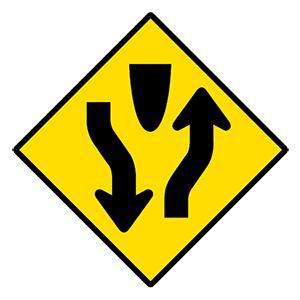
If you see this sign above your lane, you:
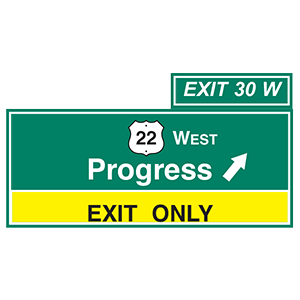
May not exit the freeway.
May either continue through the interchange or exit the freeway from your current lane.
May stay in your lane and continue through the interchange.
Must exit the freeway, if you stay in your current lane.
Q.2.
When a school bus is stopped off the road without flashing lights, you should:
Stop until the bus moves on, regardless of which side of the road you’re on.
Stop until the bus driver signals for you to go.
Stop only if you’re on the same side of the road as the bus.
Use caution as you pass the bus, since you’re not required to stop.
Q.3.
Bicyclists have the choice to ride:
On the roadway, on the shoulder of a road, or in a bicycle lane.
On freeways and highways where signs say it is illegal.
In a left turn only lane without turning, because there is no traffic.
On the wrong side of the road.
Q.4.
The amount of space you need to cross traffic depends on the:
Road conditions, weather conditions, and oncoming traffic.
Presence of a stop sign.
Use of your turn signals.
Cars behind you.
Q.5.
You have the right-of-way when turning left on which of the following traffic signals?
A solid green light
A flashing yellow light
A green arrow pointing left
A flashing red light
Q.6.
Regulatory signs:
Are placed in every location where there is a present danger.
Indicate what a driver must or must not do.
Are diamond-shaped and yellow or green.
May warn drivers that they are approaching a school zone.
Q.7.
If you become stranded in a snowstorm, the best thing to do is to:
Get out of the car and go for help.
Lay down in your car and go to sleep.
Walk into the road and get the attention of other drivers.
Stay in the car, as you are most likely to be found when you stay in your vehicle.
Q.8.
When you drive through an area where children are playing, you should expect them:
To know when it is safe to cross the street.
To stop at the curb before crossing the street.
To run out in front of you without looking.
Not to cross the street unless they are with an adult.
Q.9.
This road sign means:
Keep right.
Keep left.
Pass with caution.
No passing.
Q.10.
Which is the most common cause of traffic crashes?
New drivers
Human error
Bad weather
Bad roads
Q.11.
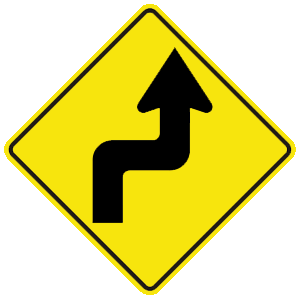
This road sign means:
Sharp right turn.
A road joins from the right.
The road ahead turns sharply right, then sharply left.
Winding road ahead.
Q.12.
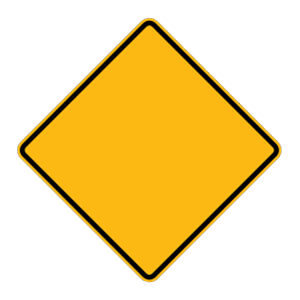
This sign is a:
Service sign.
Regulatory sign.
Warning sign.
Stop sign.
Q.13.
Which of the following are used on some highways to direct drivers into the proper lanes for turning?
Flashing red lights
Flashing yellow lights
White lines on the side of the road
White arrows in the middle of the lanes
Q.14.
On long trips, you can prevent drowsiness by:
Turning on your car radio.
Slowing down.
Stopping at regular intervals for a rest.
Moving your eyes from side to side as you drive.
Q.15.
To avoid a collision, you should:
Stop, turn, or speed up.
Move into the other vehicle’s lane.
Stay in your lane and brace for the accident.
Drive across the left lane to the left shoulder of the road.
Q.16.
When passing another vehicle on a road with two lanes traveling in opposite directions, you should:
Return to the driving lane when there's enough room between you and the vehicle you passed.
Remain in the left lane if you intend to turn left.
Return to the right side of the roadway immediately.
Drive in either lane.
Q.17.
A driver who is taking a non-prescription drug should:
Read the labels on the drug before driving.
Drink alcohol instead.
Continue to drive regardless of any warning labels.
Drive only during daylight hours.
Q.18.
When you want to make a right turn, your car must be:
Near the center of the street.
Close to the left side of the street.
Close to the right side of the street.
Past the center of the intersection when you begin to turn.
Q.19.
What should you do if your vehicle’s right wheels leave the pavement?
Stop quickly.
Immediately pull all the way off of the road and get back on when it is safe.
Accelerate and steer back on the road quickly.
Take your foot off the accelerator, slow down, then ease back onto the road when it is safe to do so.
Q.20.
Round signs indicate:
No passing zones.
School zones.
Upcoming railroad crossings.
Hospitals.
Q.21.
What should you do when you see this sign?
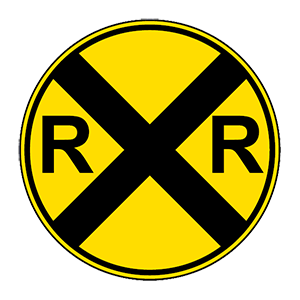
Look for a train station ahead.
Signal before going any further.
Slow down and yield for trains.
Stop.
Q.22.
If you’re going to turn left onto a one-way street, you should complete the turn into:
The right lane.
The lane closest to your previous lane.
Either lane.
Neither lane.
Q.23.
If you are turning onto a street with more than one lane traveling in your direction, you should:
Turn into the lane closest to your previous lane.
Turn into the lane marked with an arrow.
Turn into the middle lane.
Turn into any lane.
Q.24.
When driving at night, slow down and:
Use high beams whenever there are no oncoming vehicles.
Use sunglasses to reduce glare from headlights.
Use your high beams if it is also raining.
Use your dome light to help you see your speedometer.
Q.25.
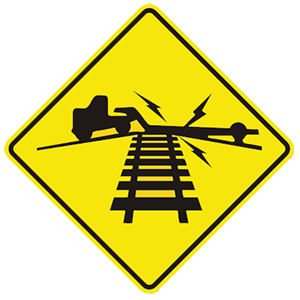
This road sign means:
No passing zone.
Winding road.
Pedestrian crossing.
Low ground railroad crossing.
Support mcqgeeks.com by disabling your adblocker.
×
Please disable the adBlock and continue.
Thank you.
Reload page