MCQGeeks
CBSE
JEE
NTSE
NEET
English
UK Quiz
Quiz
Driving Test
Practice
Games
Driving Test
Wisconsin
Wisconsin Car Driving Permit Test-14
Answers
Q.1.
This road sign means:
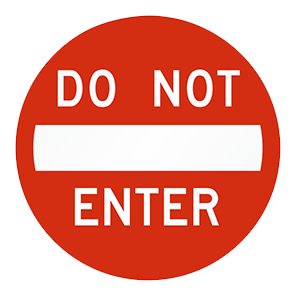
You are about to enter a one-way street from the wrong direction.
U-turns are prohibited.
You may proceed if the way is clear.
Come to a complete stop before proceeding.
Q.2.
When stopping on snow or ice, drivers who are operating vehicles equipped with an Anti-Lock Braking System (ABS) should:
Pump the brakes.
Press and hold the brake pedal firmly.
Stay off the brakes and wait for the car to drift to a stop.
Q.3.
At a school crossing sign, you should:
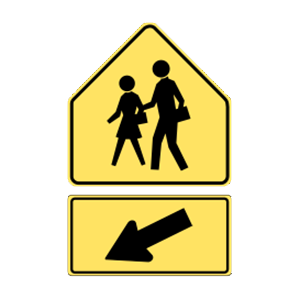
Always stop, whether there’s a stop sign or not.
Watch for children and be ready to stop.
Always sound your horn when you see children.
Be ready to help children crossing the street.
Q.4.
Where is it safe to pass another vehicle?
Within an intersection where there are no oncoming vehicles
Wherever signs and/or pavement markings permit passing
Within a curve where there are no oncoming vehicles
Q.5.
Remove all snow, frost, and ice from:
Just the windshield.
All windows.
Just the windshield and passenger window.
Q.6.
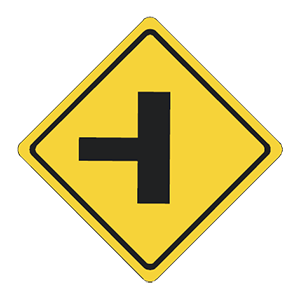
This sign means:
Side road.
Merge.
Yield the right-of-way.
Q.7.
Check your rearview mirrors:
Often to see how traffic is moving behind you.
To see if a vehicle is in your blind spot.
Only when you are slowing down.
Q.8.
If you leave your vehicle unattended, you must:
Turn off the engine.
Lock the ignition and remove the key.
Set the parking brake.
All of the above.
Q.9.
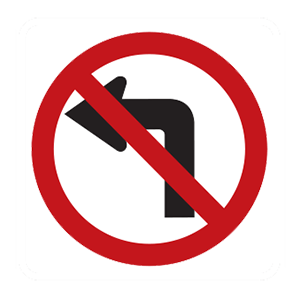
This sign means:
No left turn.
Flagger ahead.
Two-way left turn.
Turn right or go through.
Q.10.
This sign means you are approaching a railroad crossing that does not have a signal. You should:
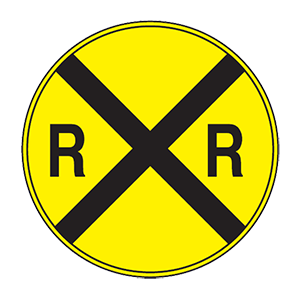
Come to a complete stop.
Proceed at a consistent speed while looking and listening for approaching trains.
Slow down, look both ways, listen for any trains, and be prepared to stop if any trains are nearby.
Q.11.
What happens if you drink alcohol while taking prescription or over-the-counter medicine?
The medicine reduces the effect of the alcohol.
The alcohol will help the medicine cure a cold.
The combination could multiply the effects of the alcohol or medicine.
There is no effect because they are different substances.
Q.12.
A steady green light at an intersection means that you:
Must slow down and prepare to stop.
Must stop and check for oncoming traffic before proceeding.
May drive through the intersection if the road is clear.
May not turn right.
Q.13.
In which of the following ways can alcoholic beverages affect you?
It slows your reaction time.
It gives you a feeling of false confidence.
It impairs your thinking ability.
All of the above.
Q.14.
Which of the following does not happen after drinking?
Your reflexes and reaction time slow down.
Your judgement of speed and distance is distorted.
You are less alert.
You calm down and can concentrate better.
Q.15.
When turning left from a two-way street onto a one-way street, you should:
Turn into any lane.
Turn into first lane.
Turn into second lane.
Q.16.
If two vehicles arrive to a four-way stop at the same time:
The vehicle on the left must yield to the vehicle on the right.
The vehicle on the right must yield to the vehicle on the left.
Drivers must make hand motions to communicate with each other.
One driver should proceed without stopping.
Q.17.
The maximum posted speed limit should be driven only:
During the night.
During the day.
Under ideal conditions.
Q.18.
It is important to be alert to motorcycles because:
They are more difficult to see than cars.
They rarely use their headlights.
Motorcyclists are less skilled drivers than other motorists.
All of the above.
Q.19.
If pedestrians are illegally crossing in the middle of the street instead of in a crosswalk, you:
Must stop for them.
Do not have to stop for them.
Should honk your horn at them.
Q.20.
Having a driver license is a:
Right, not a privilege.
Privilege, not a right.
Requirement.
Q.21.
What may help drivers conserve gasoline?
Sitting in their driveways with their cars running.
Accelerating quickly.
Slowing down gradually.
Braking abruptly.
Q.22.
If a driver sees an animal on the roadway:
No special action is required.
The driver should honk their horn.
The driver should pass the animal as closely as possible.
The driver should be very cautious.
Q.23.
A vehicle suddenly cuts in front of you, creating a hazard. What should you do first?
Honk and step on the brake firmly.
Take your foot off the gas pedal.
Swerve into the lane next to you.
Q.24.
Alcohol:
Slows reflexes and reaction time.
Puts you to sleep.
Wakes you up.
Improves your judgment.
Q.25.
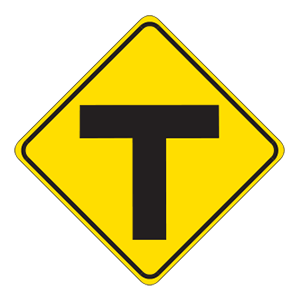
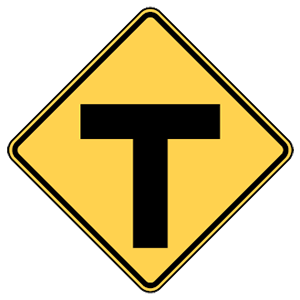
This sign means:
T intersection.
Lane shifting.
Side road.
Do not block intersection.
Q.26.
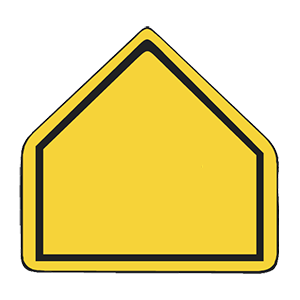
A pentagon-shaped sign is a:
Stop sign.
Regulatory sign.
School zone or school crossing sign.
Q.27.
If you need to slow down while driving on a slippery road, the first thing you should do is:
Firmly apply your brakes.
Take your foot off the gas pedal.
Apply your parking brake.
Pump your brakes.
Q.28.
As you enter into a roundabout, you should slow down and:
Yield to any crossing pedestrians and bicyclists.
Yield to any car already within the roundabout.
Both of the above.
Q.29.
This sign means:
Railroad ahead.
No passing zone.
School zone.
Q.30.
The driver's left arm and hand are extended downward. This hand signal means that the driver plans to:
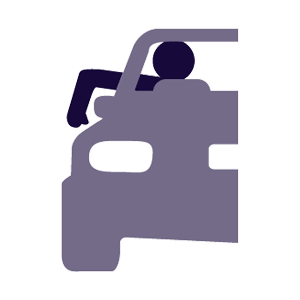
Turn left.
Turn right.
Stop.
Start up.
Q.31.
If you find yourself in a skid:
Brake lightly.
Stay off the brakes.
Brake abruptly.
Q.32.
When you approach an octagonal sign, you must:

Slow.
Stop.
Turn.
Q.33.
When backing up, drivers should drive at a speed:
No faster than a slow crawl.
No faster than a slow walk.
No faster than a jog.
No faster than a sprint.
Q.34.
Always signal when:
Changing lanes.
Pulling into or out of a parking space.
Pulling into traffic from an alley or parking area.
All of the above.
Q.35.
If you miss your exit on an interstate expressway:
Stop and make a U-turn.
Get off at the next exit and come back to the exit you missed.
Roll down your window and ask the driver next to you for help.
Back up on the highway.
Q.36.
This sign shows one type of:
Right turn.
Intersection.
Lane change.
Road curve.
Q.37.
You come to an intersection displaying a flashing red light. You should:
Come to a full stop and go when it is safe to do so.
Stop only if other cars are also approaching the intersection.
Stop only if other cars are already within the intersection.
Slow down and be prepared to stop, if necessary.
Q.38.
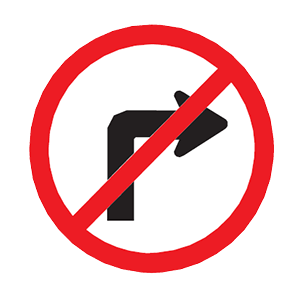
This sign means:
No right turn.
Right turn on red light permitted with caution.
All traffic must turn right at next intersection.
Q.39.
A “No stopping” sign means that, unless directed to do so by a police officer, you may stop only:
Long enough to unload packages.
To avoid conflict with other traffic.
To discharge passengers.
For less than five minutes.
Q.40.
Make room for cars that are entering the freeway by:
Slowing down.
Merging into a different lane.
Maintaining your speed and position.
Q.41.
Pentagonal signs indicate:
No passing zones.
School zones.
Speed limits.
Railroad crossings.
Q.42.
What does alcohol do to your driving skills and judgement?
It helps driving skills but harms your judgement.
It harms both driving skills and judgement.
It has no effect on either driving skills or judgement.
It has no effect on judgement but it harms driving skills.
Q.43.
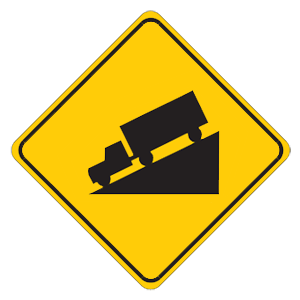
This sign indicates that:
There is a steep hill ahead.
No trucks are allowed on an upcoming hill.
A logging road is ahead.
There are trucks on an upcoming hill.
Q.44.
A good defensive driver:
Drives slowly at all times.
Looks out for the actions of other drivers.
Travels at a constant speed.
Only drives in familiar areas.
Q.45.
You are preparing to exit the interstate. When should you start reducing your speed?
About halfway through the deceleration lane.
As you approach the deceleration lane.
Immediately upon entering the deceleration lane.
Q.46.
This road sign means:
Intersection ahead.
Steep grade ahead.
Winding road.
Q.47.
When approached by an emergency vehicle that is using its siren and/or flashing lights, a driver must immediately:
Pull to the right and stop.
Pull to the right and slow down.
Pull to the right and turn on their vehicle's four-way flashers.
Stop and let the emergency vehicle pass.
Q.48.
The blind spot behind a large truck can extend for up to:
80 feet.
100 feet.
150 feet.
200 feet.
Q.49.
Which of these statements is true about changing lanes?
You only need to turn and look over your right shoulder for lane changes to the right or left.
Look over your right shoulder for a right lane change and your left shoulder for a left lane change.
Vehicles with two outside mirrors do not have blind spots.
Q.50.
When passing a row of parked vehicles, you should:
Be prepared for a person or vehicle to unexpectedly enter your lane.
Expect all other drivers and pedestrians to respect your right-of-way.
Drive closely to the parked vehicles to allow more room for moving traffic.
Support mcqgeeks.com by disabling your adblocker.
×
Please disable the adBlock and continue.
Thank you.
Reload page