MCQGeeks
CBSE
JEE
NTSE
NEET
English
UK Quiz
Quiz
Driving Test
Practice
Games
Driving Test
Wisconsin
Wisconsin Car Driving Permit Test-23
Answers
Q.1.
You notice that the driver in the vehicle ahead of you is driving with one hand and talking to a passenger. You should:
Give the vehicle extra space.
Know that the driver in the vehicle ahead is reducing their safety margin by being an inattentive driver.
Avoid following the driver's example.
All of the above.
Q.2.
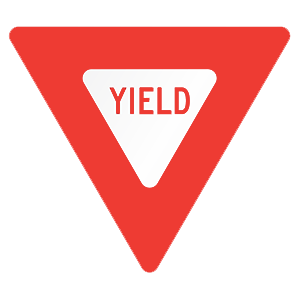
At an intersection with a yield sign, you should:
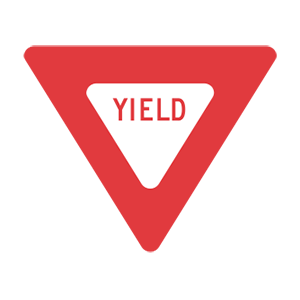
Always stop before entering the intersection.
Yield just to the traffic on the right.
Yield just to the traffic on the left.
Slow down and yield the right-of-way to other traffic.
Q.3.
You are driving in the left lane and want to move into the right lane. You should:
Check your mirrors, signal, and look over your left shoulder for other vehicles before changing lanes.
Check your mirrors, signal, and look over your right shoulder for other vehicles before changing lanes.
Check your mirrors, signal, and look over both shoulders for other vehicles before changing lanes.
Check your mirrors, signal, and change lanes.
Q.4.
This sign means:
Slow down if an emergency vehicle is approaching.
Look both ways as you cross the intersection.
Always come to a full stop at the intersection.
Slow down and be prepared to stop if necessary.
Q.5.
If you want to pass a pedestrian who is walking along the roadway and an oncoming vehicle is approaching, you should:
Slow down and let the oncoming vehicle pass before you pass the pedestrian.
Keep driving at a steady speed. The oncoming vehicle must stop for you.
Honk your horn to get the pedestrian to move over.
Q.6.
Broken yellow lines are used on streets and highways to:
Indicate no passing zones.
Separate lanes of traffic moving in the same direction.
Separate lanes of traffic moving in opposite directions.
Q.7.
Traffic signs and pavement markings:
Must always be obeyed.
Are merely suggestions.
Must be followed only when there is other traffic.
Must be followed only when a police officer is present.
Q.8.
When changing lanes:
Rely on the rearview mirror.
Look over your shoulder in the direction you plan to move.
Rely on the left side mirror.
Q.9.
If a truck or bus is making a right turn where you also need to make a right turn, you should:
Quickly turn before the truck or bus is able to.
Wait until the truck or bus turns before you turn.
Squeeze between the truck or bus and the curb.
Q.10.
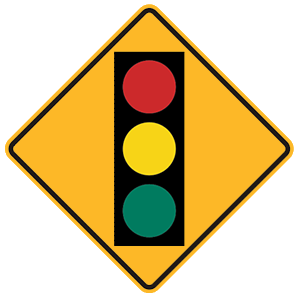
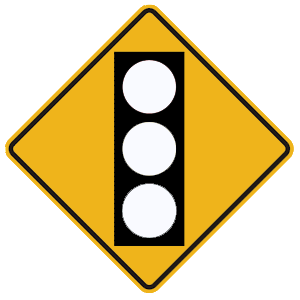
This sign means:
Continue at your current speed.
You must stop ahead.
Speeding is not allowed.
There is a traffic signal ahead.
Q.11.
When passing other vehicles:
Check your mirrors and blind spots.
Honk your horn at least three times.
Re-enter your lane within 10 feet of the passed vehicle.
There is no need to signal.
Q.12.
The proper way to make a right turn is to:
Signal, slow down, and get into the lane closest to the centerline before turning.
Signal, slow down, and get into the lane closest to the right curb before turning.
Approach the corner in the lane nearest the right curb, but move over toward the middle of the street before turning.
Q.13.
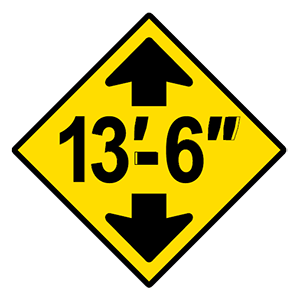
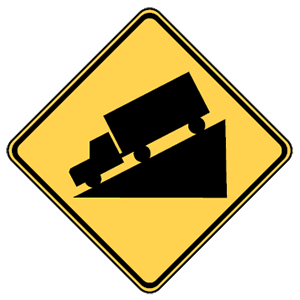
This road sign means:
Steep grade ahead.
Pedestrian crossing ahead.
Low ground railroad crossing.
Low clearance.
Q.14.
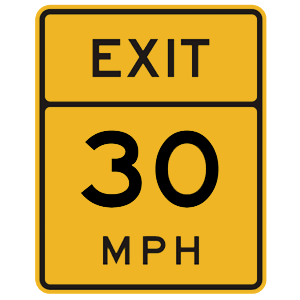
This road sign indicates:
The maximum safe speed for a residential area.
The maximum safe speed for an expressway exit.
The maximum safe speed for an expressway entrance.
The maximum safe speed for a work zone.
Q.15.
When driving in fog or mist, never put your headlights on the high beam setting because:
The light will reflect back into your eyes.
Approaching vehicles might not see you.
Vehicles behind you may follow too closely.
Q.16.
You are coming to an intersection with a flashing yellow light. You should:
Stop and wait for the light to change.
Make a U-turn because the intersection is closed.
Drive carefully through the intersection.
Prepare to stop; the light is about to turn red.
Q.17.
If a child is riding a bicycle near your vehicle:
Beep your horn.
Expect the child to be in total control of the bicycle.
Expect the unexpected.
Q.18.
From top to bottom, the following is the proper order for traffic lights:
Red, yellow, green.
Red, green, yellow.
Green, red, yellow.
Q.19.
Extra space in front of a large truck is needed for:
Other drivers to merge onto the freeway.
The truck driver to stop the vehicle.
Other drivers when they want to slow down.
Q.20.
When following closely behind another vehicle at night, you should use:
Your high beams.
Your low beams.
Your parking lights.
Q.21.
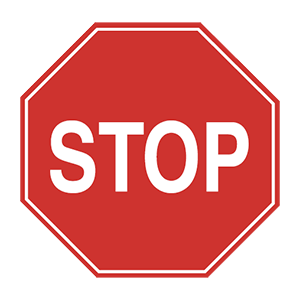
This sign means:
Stop.
Merge.
Upcoming change in direction.
Q.22.
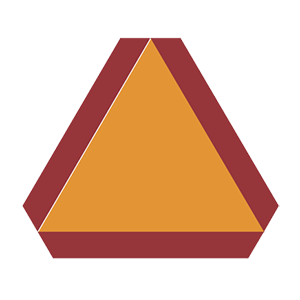
This sign means:
Slow-moving vehicle.
Road construction/maintenance area.
Traffic signal ahead.
Q.23.
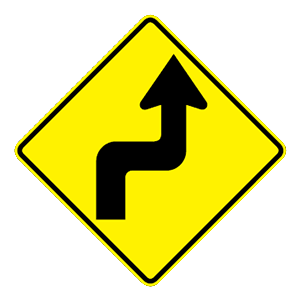
This road sign means:
The road ahead turns sharply right, then left.
The road ahead turns sharply left, then right.
The road ahead curves to the left.
Construction ahead.
Q.24.
Your tire blows out while you are driving. You should:
Slam on your brakes.
Hold your steering wheel tightly and slow to a stop.
Keep driving normally.
Turn on your emergency flashers and continue driving.
Q.25.
Allow extra space in front of your vehicle when following a:
Station wagon.
Passenger vehicle.
Motorcycle.
Q.26.
At an intersection with stop signs on all corners, to whom must you yield the right-of-way?
All drivers who got there before you.
The driver on your right, regardless of who got there first.
The driver on your left, regardless of who got there first.
The driver across the intersection from you, regardless of who go there first.
Q.27.
It is against the law to park within ____ feet of a fire hydrant.
10
15
20
25
Q.28.
If an approaching train is near enough or going fast enough to be a danger, you must:
Slow down and proceed with caution.
Not cross the tracks until the train has completely passed.
Cross the tracks at your own risk.
Find an alternative route across tracks.
Q.29.
A steady green traffic light at an intersection means:
Increase your speed.
Adjust your mirrors.
You may continue through the intersection at a safe and reasonable speed, if it is clear to do so.
Q.30.
At a light rail intersection, always:
Look both ways before crossing tracks.
Pay attention and obey all traffic signals.
Share the road with pedestrians and bicyclists.
All of these.
Q.31.
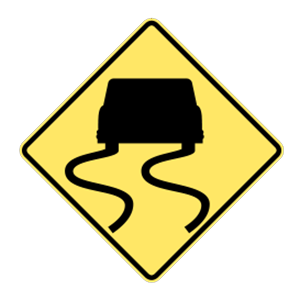
This sign means:
Watch for drunk drivers.
Curves ahead.
Slippery when wet.
Apply your brakes quickly.
Q.32.
Do not pass:
On a hill or curve.
When school bus lights are flashing.
When approaching an intersection.
All of the above.
Q.33.
To improve visibility lowered by rain or fog, drivers should use their:
Low beam headlights.
High beam headlights.
Parking lights.
Q.34.
Which of the following describes the thinking of defensive drivers?
They know other drivers will do the right thing.
They consider what other drivers might do and are prepared to react.
They expect no breaks and give none.
Q.35.
It is necessary for you to make an emergency stop. You should:
Blow your horn at passing cars to let them know you have stopped.
Get out of the vehicle once you have stopped.
Turn on your emergency flashers and stay in your vehicle, if you can.
Q.36.
Only ____ can lower blood alcohol concentration (BAC) and reduce alcohol's effects on a body.
Drinking caffeine
Eating foods high in fat
Time
Q.37.
When used on roadways, bicycles are considered:
Hazards.
Vehicles.
Dangerous.
Q.38.
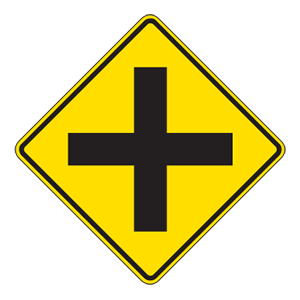
This road sign means:
Intersection ahead.
Merging traffic.
Steep hill ahead.
Q.39.
If your car begins to skid out of control, you should:
Pump the brakes.
Apply the brakes lightly.
Stay off the brakes.
Q.40.
If you approach a stopped school bus that has its lights flashing and signal arm extended, you should:
Stop.
Proceed at 15 mph if no children are present.
Proceed at normal speed, but watch for children.
Q.41.
This sign shows one type of:
Intersection.
Road curve.
Right turn.
Q.42.
At intersections, crosswalks, and railroad crossings, you should always:
Stop, listen, and proceed cautiously.
Look to the sides of your vehicle to see what is coming.
Slowly pass vehicles that seem to be stopped for no reason.
Q.43.
Driving at night requires increased caution because:
Traffic moves faster at night.
There is a larger volume of traffic at night.
Drivers cannot see as well at night.
Accidents occur more frequently at night.
Q.44.
What is a "No zone?"
A designated no passing zone
A one-way traffic area
The blind spot of a large vehicle
An area designated for motor vehicles
Q.45.
You are driving when it starts to sleet or snow. You should:
Keep your windshield and mirrors clear.
Allow additional distance between your vehicle and the vehicles that you are following.
Approach all vehicles with caution.
All of the above.
Q.46.
If you are about to be hit from the rear, you should not:
Release your seat belt.
Brace yourself.
Press your head against the head restraint.
Q.47.
Slowing down just to look at collisions or anything else out-of-the-ordinary:
Causes traffic congestion.
Prevents rear-end collisions.
Improves traffic flow by preventing collisions.
Q.48.
You are driving behind a motorcycle and want to pass. You must:
Stay in the right lane as much as possible because the motorcycle is small and doesn't use all of the lane.
Blow your horn to make the motorcycle move onto the shoulder so that you can pass.
Have your vehicle entirely in the left lane before and during the pass.
Q.49.
You are involved in an accident and your vehicle is blocking traffic. You should:
Move your vehicle off the traveled portion of the roadway, if possible.
Not move your vehicle under any circumstances.
Wait until the police arrive before moving your vehicle.
None of the above.
Q.50.
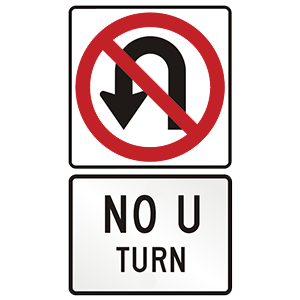
This sign means:
No U-turn.
No turning.
No left turn.
Support mcqgeeks.com by disabling your adblocker.
×
Please disable the adBlock and continue.
Thank you.
Reload page