MCQGeeks
CBSE
JEE
NTSE
NEET
English
UK Quiz
Quiz
Driving Test
Practice
Games
Driving Test
Wisconsin
Wisconsin Motorcycle Driving Permit Test-10
Answers
Q.1.
Riding at night:
Is discouraged.
Is made safer by wearing reflective clothing.
Is not safe because other drivers cannot see your turn signals.
Should only be done in the city.
Q.2.
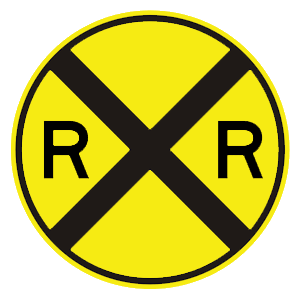
This sign indicates a:
Railroad crossing.
Pedestrian crossing.
No passing zone.
Q.3.
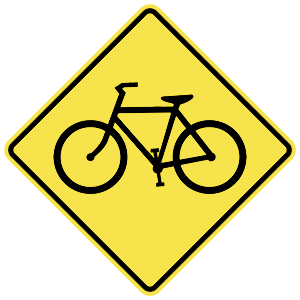
This road sign means:
Bicycle crossing.
Stop only if other cars are approaching.
Yield the right-of-way to pedestrians.
Q.4.
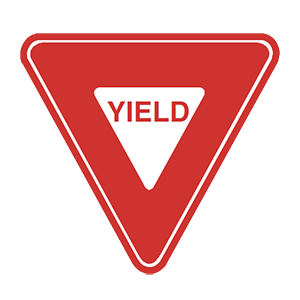
This sign means:
Yield the right-of-way.
No passing zone.
Reduction in lanes.
Q.5.
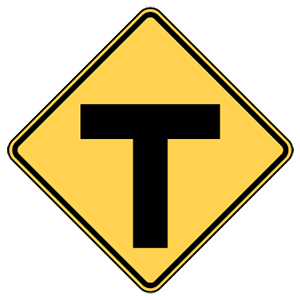
This sign shows one type of:
Right turn.
Intersection.
Lane change.
Road curve.
Q.6.
What is the meaning of this sign?
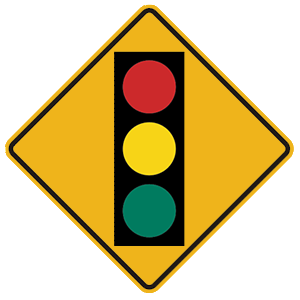
The traffic signal ahead is displaying a red light.
The traffic signal ahead is broken.
The traffic signal ahead is displaying a green light.
There is a traffic signal ahead.
Q.7.
This sign means:
Trucks under 18,000 lbs. allowed.
Hill ahead.
Truck stop ahead.
No trucks allowed.
Q.8.
Before every ride, you should:
Modify the exhaust system.
Clean and adjust your mirrors.
Clean your wheels.
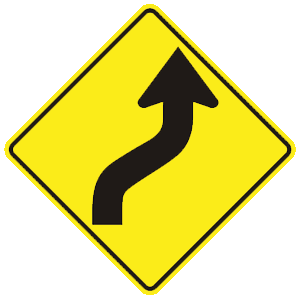
Q.9.
This sign means:
The highway ahead curves only to the right.
The highway ahead turns sharply to the right.
The highway ahead curves to the right and then to the left.
The highway ahead curves to the left and then to the right.
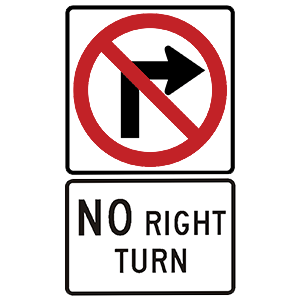
Q.10.
This sign means:
No U-turn.
No left turn.
No right turn.
Q.11.
In addition to hazardous road conditions, riders should search for:
Traffic approaching from behind.
Oncoming traffic that could turn left in front of them.
Traffic entering from side roads to the left and right.
All of the above.
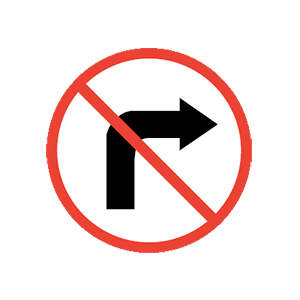
Q.12.
This road sign means:
Turn right after making a complete stop.
Right turns are not permitted.
Left turns are permitted.
None of the above.
Q.13.
This sign means:
Road construction/maintenance area.
Side road.
Railroad ahead.
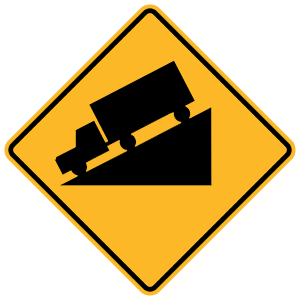
Q.14.
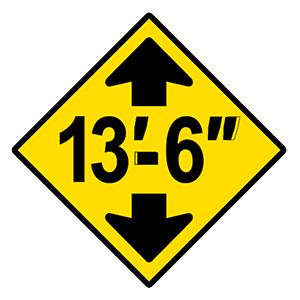
This road sign means:
Steep grade ahead.
Pedestrian crossing ahead.
Low ground railroad crossing.
Low clearance.
Q.15.
A diamond-shaped sign means:
Yield.
Stop.
Warning.
Q.16.
Head checks should be done:
Only when changing lanes.
Only when turning.
Infrequently, because they take your eyes off the road ahead.
Frequently as a part of your normal routine.
Q.17.
The best clothing for a motorcyclist:
Feels uncomfortable.
Provides protection in a crash.
Should not stand out to other motorists.
Q.18.
If wearing a jacket for protection while riding in hot weather, you should:
Take frequent breaks to cool off.
Remove the jacket to stay cool while in the sun.
Keep the jacket on to protect you from the heat.
Q.19.
Smoothly downshifting on motorcycles:
Is a useless action.
Can allow the rider to engine brake.
Is illegal.
Should not be done if other vehicles are around.
Q.20.
Snow and ice melt:
Only when directly hit by sunshine.
At the same rate on all road surfaces.
Most quickly on overpasses and bridges.
Faster on some sections of the road than on others.
Q.21.
When looking through a turn to see where you are going, you should:
Turn just your head.
Turn your head and shoulders.
Turn just your shoulders.
Turn your entire body.
Q.22.
A motorcyclist is well-protected if they are wearing:
A jacket that allows the arms to be exposed.
Boots with tall heels.
Leather gloves.
Shoes that stop below their ankle.
Q.23.
Do not change gears on railroad tracks because:
Your motorcycle may stall.
You might go too fast.
Other drivers may not be expecting you to change gears.
The uneven surface may make it more difficult to switch gears.
Q.24.
Riding on the far side of a lane when following another vehicle:
Is recommended because you will be seen easily.
Is not recommended because drivers seldom use their side mirrors and may not see you.
Is recommended because a passenger in the vehicle may tell the driver that you are there.
Is illegal because you have to ride in the center portion of the lane.
Q.25.
The best lane position for a motorcycle:
Is in the left part of a lane, next to the centerline.
Is in the right part of a lane, next to the curb.
Can vary depending on road and traffic conditions.
Q.26.
Unlike other substances, alcohol:
Is very quickly absorbed into the bloodstream.
Needs to be digested to enter the bloodstream.
Can improve your riding ability.
Q.27.
When you are stopped, you:
Should remain in first gear.
Should remain in neutral.
Should remain in fifth gear.
Can remain in any gear.
Q.28.
Your lane position should:
Allow you to blend in with traffic.
Provide an escape route.
Encourage others to use your lane.
Q.29.
If a dog is chasing your motorcycle, you should:
Swerve around the dog.
Slow down, let the dog approach, and accelerate away from the animal.
Park and wait for the dog to lose interest.
Q.30.
One way to tell if your rear tire has gone flat while riding is if:
There is a hissing noise coming from the rear of the bike.
The back end is jerking from side to side.
You are unable to accelerate.
The rear brake does not work.
Q.31.
When is it important for a rider to use their mirrors?
When slowing down or stopping suddenly
When stopped at an intersection
When changing lanes
All of the above.
Q.32.
If your front wheel locks while you are braking, you should:
Keep the tire locked until your next stop.
Continue squeezing the front brake lever.
Release the front brake and immediately re-apply it.
Q.33.
When riding downhill or shifting into first gear, you may need to:
Use your brakes to slow down before downshifting safely.
Speed up before downshifting safely.
Swerve to the left.
Flash your brakes to ensure that drivers behind you know you are downshifting.
Q.34.
If your motorcycle begins to weave while you are riding over rain grooves or bridge gratings, you should:
Relax, maintain a steady speed, and ride straight across the surface.
Tighten your hold on the handle grips and increase your speed to get past the hazard.
Travel in a zigzag motion.
Ride on the shoulder instead of on the grooves.
Q.35.
When changing lanes, riders should:
Rely only on their mirrors to identify other vehicles.
Turn their head to look for traffic behind them.
Not worry about other traffic.
Slam on the brakes to allow any vehicles in their blind spot to pass.
Q.36.
When riding with a passenger, the operator should:
Maintain a longer following distance.
Increase their speed.
Deflate the tires to accommodate the extra weight.
Not warn passengers of impending hazards.
Q.37.
When approaching a blind intersection, you should:
Ride in the portion of the lane that will bring you into other drivers' fields of vision at the earliest possible moment.
Always be in the left lane to be the farthest from oncoming traffic.
Slowly sneak up to the intersection.
Weave slightly in your lane so your headlight has a better chance of being spotted.
Q.38.
A good way to handle a tailgater is to:
Encourage the tailgater to pass by slowing down or changing lanes.
Speed up to put distance between you and the tailgater.
Ignore the tailgater.
Q.39.
Most motorcycle/automobile accidents occur:
At intersections.
On the open road.
In parking lots.
Q.40.
Riding directly alongside another vehicle is discouraged because:
You may have a difficult time getting to a highway exit.
You may be in the other vehicle’s blind spot.
You may block the driver's view.
It prevents other drivers from passing both of you.
Support mcqgeeks.com by disabling your adblocker.
×
Please disable the adBlock and continue.
Thank you.
Reload page