MCQGeeks
CBSE
JEE
NTSE
NEET
English
UK Quiz
Quiz
Driving Test
Practice
Games
Driving Test
Wisconsin
Wisconsin Motorcycle Driving Permit Test-8
Answers
Q.1.
This road sign means:
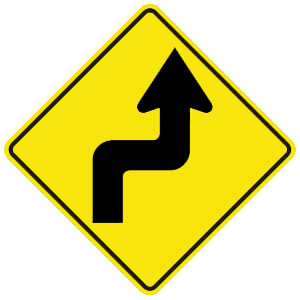
Sharp right turn.
A road joins from the right.
The road ahead turns sharply right, then sharply left.
Winding road ahead.
Q.2.
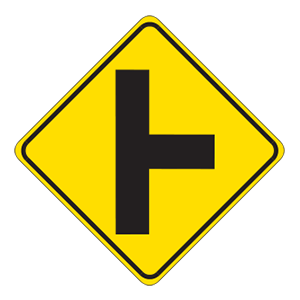
This sign means:
Side road.
Low clearance.
Merging traffic.
Prepare to stop.
Q.3.
If braking in a curve:
Only use the front brake.
You may have less traction as you lean into the curve.
You will have more traction as you lean into the curve.
Q.4.
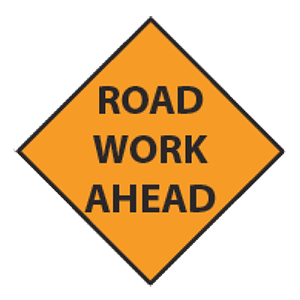
This sign means:
There is a detour ahead.
You must stop for flaggers.
The road ahead is closed to traffic.
The highway ahead is undergoing maintenance.
Q.5.
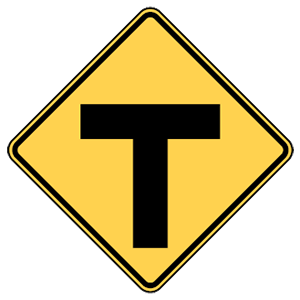
This sign shows one type of:
Right turn.
Intersection.
Lane change.
Road curve.
Q.6.
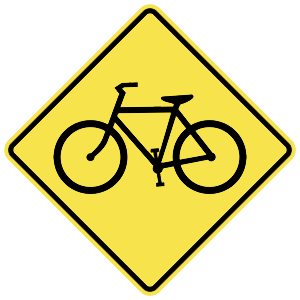
This road sign means:
Bicycle crossing.
Stop only if other cars are approaching.
Yield the right-of-way to pedestrians.
Q.7.
This road sign means:
When pavement is wet, reduce your speed.
The road ahead winds in a series of turns or curves.
Traffic increases ahead.
Q.8.
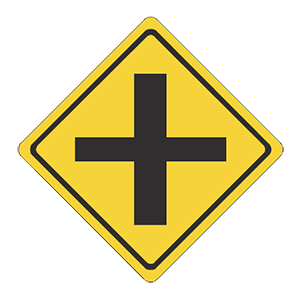
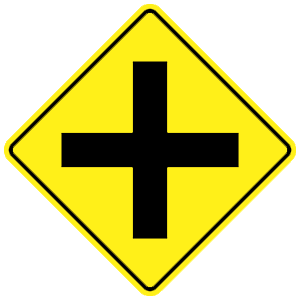
This sign means:
Crossroad ahead.
Merge.
Stop.
Q.9.
You may ride around lowered gates at a railroad crossing:
Under no circumstances.
When the lights have stopped flashing.
When other drivers drive around the gates.
Q.10.
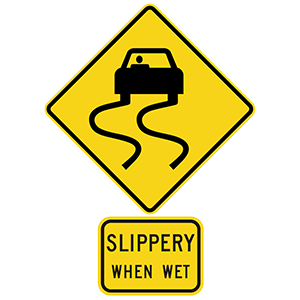
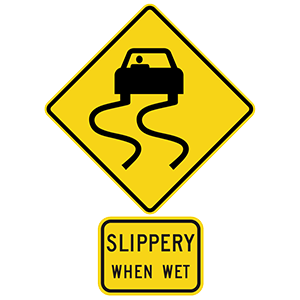
What does this road sign mean?
Winding road
Loose gravel
Slippery when wet
Q.11.
When you approach an octagonal sign, you must:

Slow.
Stop.
Turn.
Q.12.
This road sign means:
Increase your speed.
Railroad crossing ahead.
Intersection ahead.
Four-way stop ahead.
Q.13.
When riding on a slippery surface, you should:
Increase your speed.
Use only your rear brake.
Avoid making sudden moves.
Q.14.
From top to bottom, the following is the proper order for traffic lights:
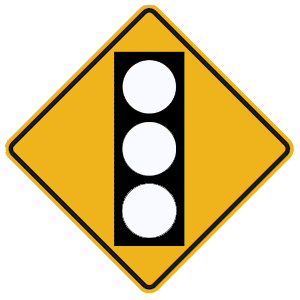
Red, yellow, green.
Red, green, yellow.
Green, red, yellow.
Q.15.
This sign means:
Winding road ahead.
Do not enter.
Pedestrian crossing.
Q.16.
To help others see your motorcycle, you should:
Use your headlight.
Weave in your lane.
Maintain eye contact with other road users.
Q.17.
Maximum straight-line braking is done by:
Using the front brake, then the rear brake.
Using the rear brake, then the front brake.
Using the front and rear brakes at the same time without locking either wheel.
Using the front and rear brakes at the same time while locking the rear wheel.
Q.18.
When riding a motorcycle and trying to turn, you should:
Press the grip in the direction you want to turn.
Press the grip opposite of the direction you want to turn.
Not hold the grip because it can be dangerous.
Not lean the motorcycle as that can be unsafe.
Q.19.
Your lane position should:
Avoid other road users' blind spots.
Provide a good view of the shoulder.
Provide a poor view of road hazards.
Invite others to share your lane.
Q.20.
When entering a turn, you should:
Slow down.
Speed up.
Come to a complete stop.
Q.21.
Your lane position should not:
Increase your ability to see.
Avoid placing you in other drivers' blind spots.
Encourage other drivers to share your lane.
Provide you with an escape route.
Q.22.
When approaching an intersection, a motorcyclist should not:
Choose a lane position that increases their visibility.
Speed up to cross the intersection quickly.
Cover the clutch and brakes to reduce their reaction time.
Q.23.
A plastic, shatter-resistant face shield:
Is not necessary if you have a windshield.
Only protects your eyes.
Helps protect your whole face.
Does not protect your face as effectively as goggles.
Q.24.
When riding, your feet should be:
On the gas tank.
Hanging loosely.
On the footrests.
Q.25.
Which portion of the lane should be avoided?
The left portion of the lane
The center portion of the lane
The right portion of the lane
No portion of the lane should always be avoided.
Q.26.
As a rider, you can lessen your chances of being involved in an accident by:
Not looking ahead for hazards.
Refraining from using turn signals, as doing so could distract other drivers.
Being visible to other drivers.
Q.27.
When choosing a lane position, you should consider:
Whether or not other drivers will see you.
How many cars are on the road ahead.
Which portion of the lane will result in a shorter trip.
If you can pass more vehicles in a certain position than in another.
Q.28.
When being passed by another vehicle, you should travel in:
The left portion of the lane.
The center portion of the lane.
The right portion of the lane.
Q.29.
When making a non-emergency stop on a motorcycle:
Only the front brake should be used.
The front and rear brakes should be applied at the same time.
Only the rear brake should be used.
Q.30.
A pre-ride inspection should be done:
Before every ride.
Once a week.
Once a month.
Once a season.
Q.31.
If the front wheel locks, you should:
Release the front brake immediately, then re-apply the brake.
Release the front brake immediately and only use the rear brake.
Keep the front wheel locked until you come to a stop.
Q.32.
Your lane position should:
Keep your intentions hidden from other drivers.
Encourage other drivers to share your lane.
Increase your ability to see and be seen.
Be close to the road signs.
Q.33.
When riding in the rain, you should:
Ride down the center of your lane.
Ride on the right side of your lane.
Ride in tire tracks left by other cars.
Q.34.
When riding a motorcycle, clothing:
Should be loose enough to flap in the wind.
Should not cover your arms or legs completely.
Should not include a jacket if the weather is warm.
Can provide protection in the event of a crash.
Q.35.
When checking tire pressure:
Eyeballing the tire is a good method.
Use a tire gauge.
It is best to squeeze the tire.
Compare the height of the tire to another tire.
Q.36.
When riding with a passenger, you should:
Maintain your usual space cushion.
Brake later than usual.
Ride a little more slowly than usual.
Ride a little faster than usual.
Q.37.
If you are being chased by a dog, you should:
Kick it away.
Stop until the animal loses interest.
Swerve around the animal.
Approach the animal slowly, then speed up.
Q.38.
Where is the front brake lever usually located?
On the left handgrip
On the right handgrip
By the left foot peg
By the right foot peg
Q.39.
On a slippery surface, you should not:
Reduce your speed.
Avoid making sudden moves.
Use only the front brake when slowing or stopping.
Use both brakes when slowing or stopping.
Q.40.
If your friend has been drinking alcohol, it is a good idea to do any of the following, except:
Arrange for a safe ride home for your friend.
Occupy your friend with activities to distract them from drinking.
Keep your friend from leaving until they are sober.
Allow your friend to ride their motorcycle.
Support mcqgeeks.com by disabling your adblocker.
×
Please disable the adBlock and continue.
Thank you.
Reload page