MCQGeeks
CBSE
JEE
NTSE
NEET
English
UK Quiz
Quiz
Driving Test
Practice
Games
Driving Test
Wyoming
Wyoming Car Driving Permit Test-2
Answers
Q.1.
A U-turn is not permitted:
In a parking lot.
On or near any curve or hill.
On a straight roadway with a clear view for 500 feet in both directions.
Q.2.
To improve visibility lowered by rain or fog, drivers should use their:
Low beam headlights.
High beam headlights.
Parking lights.
Q.3.
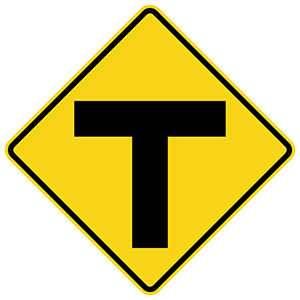
This sign shows one type of:
Right turn.
Intersection.
Lane change.
Q.4.
When changing lanes, you should never:
Cross the centerline in an intersection.
Check your blind spots by looking over your left or right shoulder.
Check for other drivers moving into the same lane.
Q.5.
Always stop before crossing railroad tracks when:
There isn't room on the other side for you to completely cross the tracks.
The railroad crossing is located in a city or town that has frequent train traffic.
You are transporting two or more young children in a passenger vehicle.
Q.6.
This sign means:
School zone or crossing.
Pedestrian crossing.
Railroad ahead.
Q.7.
A driver should:
Stare directly in front of their car.
Only focus on the middle of the road.
Watch beside, ahead, and to the rear of their car.
Q.8.
Excessive speed:
Does not increase the chance of a crash.
Increases your ability to react to a hazard.
Often leads to high-risk decision-making.
Q.9.
To help avoid skidding on slippery surfaces, you should:
Shift to a lower gear after starting down a steep hill.
Speed up to enter curves and slow down to exit them.
Slow down before entering curves and intersections.
Q.10.
When entering the interstate, check for a gap in traffic in the nearest lane, adjust your speed to match traffic, signal, and:
Expect traffic to allow you to proceed into the lane, since you have the right-of-way.
Merge carefully into the gap.
Wait for the lane to clear before merging.
Q.11.
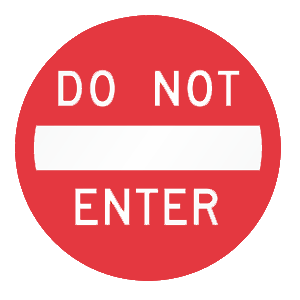
This road sign means:
You are about to enter a one-way street from the wrong direction.
U-turns are prohibited.
You may proceed if the way is clear.
Q.12.
When driving in work zones, you should:
Increase your speed to get through the zone as quickly as possible.
Reduce your speed and be prepared to stop suddenly.
Maintain your normal speed the whole way through the zone.
Q.13.
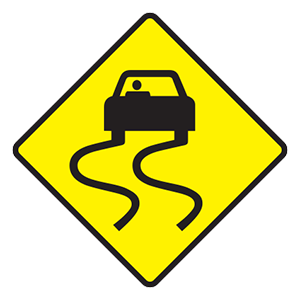
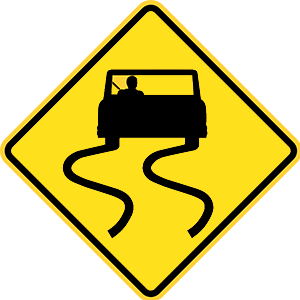
This sign means:
Slow down; curving road ahead.
Slow down and do not use your brakes.
Slow down; slippery when wet.
Q.14.
You are involved in a minor collision at an intersection. There are no injuries and there is very little vehicle damage. You should:
Leave your vehicle in the traffic lane until law enforcement arrives.
Move your vehicle out of the traffic lane, if possible.
Not move your vehicle for any reason.
Q.15.
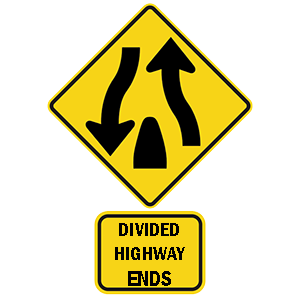
This sign means:
Curves ahead.
Divided highway starts.
Divided highway ends.
Q.16.
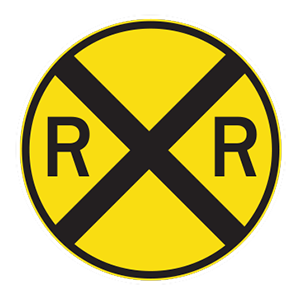
This sign means:
Stop sign ahead.
Railroad crossing ahead.
Construction ahead.
Q.17.
The proper way to make a right turn is to:
Signal, slow down, and get into the lane closest to the centerline before turning.
Signal, slow down, and get into the lane closest to the right curb before turning.
Approach the corner in the lane nearest the right curb, but move over toward the middle of the street before turning.
Q.18.
There are oncoming vehicles to your left and a row of parked vehicles to your right. You should steer:
Closer to the oncoming vehicles than the parked vehicles.
Closer to the parked vehicles than the oncoming vehicles.
A middle course between the oncoming and parked vehicles.
Q.19.
This sign is used to warn drivers that:
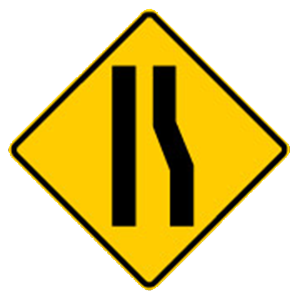
The right lane is ending and traffic should merge left.
The road curves ahead.
There are upcoming intersections.
Q.20.
A driver entering interstate traffic from an entrance or acceleration ramp:
Has the right-of-way.
Should yield to drivers already on the interstate.
May force their way into traffic.
Q.21.
When stopping on snow or ice, drivers who are operating vehicles equipped with an Anti-Lock Braking System (ABS) should:
Pump the brakes.
Press and hold the brake pedal firmly.
Stay off the brakes and wait for the car to drift to a stop.
Q.22.
When approaching a person who is crossing the street while using a white cane or guide dog, you should:
Stop until the person is well away from your path of travel.
Honk your horn as you proceed past them.
Carefully drive around them.
Q.23.
Only ____ can reduce blood alcohol content (BAC) and alcohol's effects on the body.
Drinking caffeine
Eating foods high in fat
Time
Q.24.
When passing on the left of a vehicle, it is safe to move back into the right lane:
After about three seconds.
When you can no longer see the vehicle over your right shoulder.
When you can see the front of the vehicle in your rearview mirror.
Q.25.
Backing your vehicle is:
Always dangerous.
Dangerous if you have a helper.
Only dangerous in large vehicles.
Q.26.
When you are behind a motorcycle, you should:
Be ready to use your horn.
Drive more slowly.
Allow a larger following distance.
Q.27.
Night driving presents unique problems because:
The speed limit is increased at night.
There are fewer cars on the roads at night.
Distance and vehicle speed are difficult to judge in the dark.
Q.28.
Excessive speed:
Saves time so you can get to your destination more quickly.
Helps you maneuver around obstacles.
Increases the likelihood of serious bodily injury and death.
Q.29.
Water on the road can cause a vehicle to hydroplane. Your car may hydroplane at speeds as low as:
45 miles per hour.
35 miles per hour.
40 miles per hour.
Q.30.
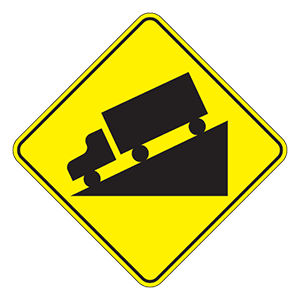
This sign means:
Trucks entering.
Truck exit only.
Steep downgrade ahead.
Q.31.
You exit the freeway on a ramp that curves downhill. You should:
Slow to a safe speed before the curve.
Slow to the posted speed limit for the freeway.
Wait until you have entered the curve to begin braking.
Q.32.
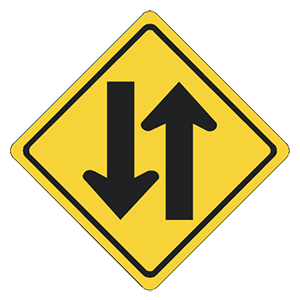
This sign means:
Two-way traffic.
Change in direction ahead.
School zone and crossing.
Q.33.
When you see this sign, you should stop and:
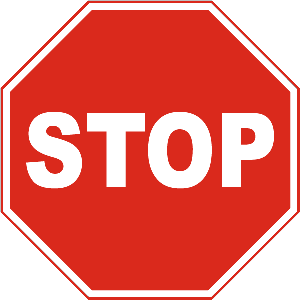
Check for vehicles only in the direction that you plan on going, then proceed.
Let all vehicles that arrive before or after you go first.
Check for traffic in all directions before proceeding.
Q.34.
Where is it safe to pass another vehicle?
Within an intersection where there are no oncoming vehicles
Wherever signs and/or pavement markings permit passing
Within a curve where there are no oncoming vehicles
Q.35.
If your vehicle begins to skid, you should:
Brake as hard as possible.
Ease up on the gas pedal.
Turn off the ignition.
Q.36.
On a green arrow, you must:
Yield to any vehicle, bicycle, or pedestrian in the intersection.
Yield to pedestrians only in the intersection.
Wait four seconds before proceeding.
Q.37.
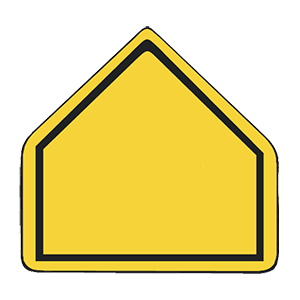
What message will be found on this yellow pennant-shaped sign?
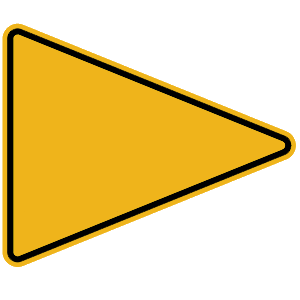
Right turns only.
Right turns permitted.
No passing zone.
Q.38.
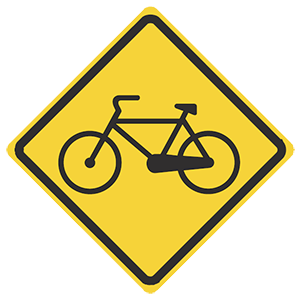
This sign means:
Watch for bicycles.
Bicycles not allowed.
Bicycle repair shop ahead.
Q.39.
You can drive off the road to pass another vehicle:
If the vehicle ahead is turning left.
If there are two or more lanes traveling in your direction.
Under no circumstances.
Q.40.
If the rear of your vehicle is skidding to the left, you should:
Not turn your steering wheel.
Turn your steering wheel to the left to correct the skid.
Turn your steering wheel to the right to correct the skid.
Q.41.
In which of the following scenarios should your wheels not be pointed straight ahead?
When waiting to make a left turn at a traffic light.
When parked on a hill or sloping driveway.
When parked on the side of a level roadway where there is no curb.
Q.42.
A vehicle suddenly cuts in front of you, creating a hazard. What should you do first?
Honk and step on the brake firmly.
Take your foot off the gas pedal.
Swerve into the lane next to you.
Q.43.
When driving behind another vehicle at night, you should:
Keep your headlights on the low beam setting.
Use your high beam headlights until you are within 10 feet of the vehicle ahead.
Use your high beam headlights.
Q.44.
You should allow an extra cushion of space:
When following a station wagon.
When following a driver who cannot see the rear of their vehicle.
When following a small passenger car.
Q.45.
If you drive more slowly than the flow of traffic, you will most likely:
Interfere with traffic and receive a ticket.
Improve traffic flow.
Demonstrate defensive driving techniques.
Q.46.
If it is necessary to make an emergency stop while driving on an interstate, you should:
Sound your horn at passing cars to get their attention.
Get out of your vehicle and flag down the first vehicle that passes.
Pull off the road, turn on your emergency flashers, and stay in your vehicle, if you can.
Q.47.
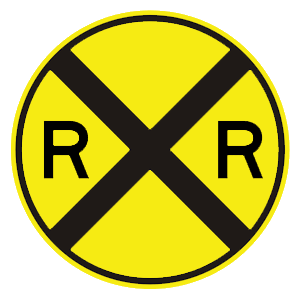
This sign indicates a:
Railroad crossing.
Pedestrian crossing.
No passing zone.
Q.48.
If you want to enter the freeway but you don't see a gap in traffic, you should:
Maintain your speed and force the other drivers to create a gap.
Slow down on the ramp to wait for a gap.
Stop at the end of the ramp to wait for a gap.
Q.49.
This yellow signs means:
The road ahead has many curves.
There is a sharp curve in the road ahead.
The road ahead may be slippery.
Q.50.
When driving in fog or mist, never put your headlights on the high beam setting because:
The light will reflect back into your eyes.
Approaching vehicles might not see you.
Vehicles behind you may follow too closely.
Support mcqgeeks.com by disabling your adblocker.
×
Please disable the adBlock and continue.
Thank you.
Reload page