Q.1.
Which of the following is not a factor of renal excretion?
- a) Blood flow to the kidneys
- b) Urine pH
- c) Blood pH
- d) Disease state
Q.2.
Which of the following is not a physicochemical factor of drug that can affect the renal excretion?
- a) Molecular size
- b) Disintegration rate
- c) pKa of the drug
- d) Lipid solubility
Q.3.
Drugs of molecular range 300-Dalton will be excreted out by glomerulus.
- a) True
- b) False
Q.4.
In a graph of rate of excretion versus plasma drug concentration, which kind of drug will give the below shown curve?
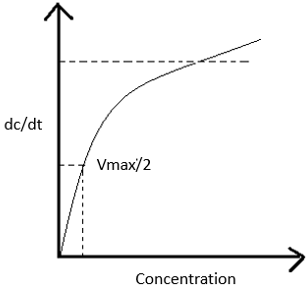
- a) Drug excreted only by filtration
- b) Drug filtered and actively reabsorbed
- c) Drug filtered as well as actively secreted
- d) Drug reabsorbed actively
Q.5.
In a graph of rate of excretion versus plasma drug concentration, which kind of drug will give the below shown curve?
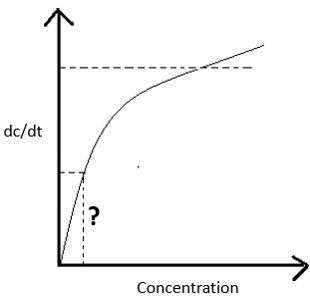
- a) Drug excreted only by filtration
- b) Drug filtered and actively reabsorbed
- c) Drug filtered as well as actively secreted
- d) Drug reabsorbed actively
Q.6.
In a graph of rate of excretion versus plasma drug concentration, which kind of drug will give the below shown curve? (x axis- rate of excretion, y axis – plasma drug concentration)

- a) Drug excreted only by filtration
- b) Drug filtered and actively reabsorbed
- c) Drug filtered as well as actively secreted
- d) Drug reabsorbed actively
Q.7.
In a graph of renal clearance versus plasma drug concentration, which kind of drug will give the below shown curve?

- a) Drug excreted only by filtration
- b) Drug filtered and actively reabsorbed
- c) Drug filtered as well as actively secreted
- d) Drug reabsorbed actively
Q.8.
In a graph of renal clearance versus plasma drug concentration, which kind of drug will give the below shown curve?

- a) Drug excreted only by filtration
- b) Drug filtered and actively reabsorbed
- c) Drug filtered as well as actively secreted
- d) Drug reabsorbed actively
Q.9.
In a graph of renal clearance versus plasma drug concentration, which kind of drug will give the below shown curve?

- a) Drug excreted only by filtration
- b) Drug filtered and actively reabsorbed
- c) Drug filtered as well as actively secreted
- d) Drug reabsorbed actively
Q.10.
Clearance is inversely related to volume of distribution.
- a) True
- b) False
Q.11.
Which drugs cannot be filtered through glomerulus?
- a) Drugs bound to plasma proteins
- b) Unbound
- c) Free drug
- d) Below molecular weight of 300 Dalton
Q.12.
Which one is the correct equation to calculate the fraction of unbound drug in plasma?
- a) Concentration of unbound drug in plasma / total plasma concentration of drug
- b) Total plasma concentration of drug / Concentration of unbound drug in plasma
- c) 1/Concentration of unbound drug in plasma
- d) 1/total plasma concentration of drug
Q.13.
What will be the fraction of unbound drug if the unbound drug concentration is 0.g/ml and total plasma concentration isg/ml?
- a) 0.006
- b) 1.61
- c) 0.618
- d) 0.010
Q.14.
What will be the unbound drug concentration if the unbound drug fraction is 0.and the total plasma concentration isg/ml?
- a) 80 g/ml
- b) 82.8 g/ml
- c) 70 g/ml
- d) 72.8 g/ml
Q.15.
Age, sex, species, differences in genetic makeup alter drug excretion.
- a) True
- b) False