Q.1.
Formula for vinyl alcohol is ....
-
54%
a) CH2=CHOH
-
23%
b) C6H5CHOCH3
-
15%
c) CH2-CHCH2OH
-
8%
d) CH2COCH3
Q.2.
Which of the following reagents can convert acetic acid into ethanol?
-
10%
a) Sn + HCl
-
50%
b) LiAlH4 + ether
-
10%
c) H2 + Ni
-
30%
d) Na + alcohol
Q.3.
1-phenyl ethanol can be prepared from benzaldehyde by the action of
-
11%
a) CH3Br and AlBr3
-
33%
b) CH3Br
-
44%
c) CH3I, Mg and HOH
-
11%
d) C2H5I and Mg
Explanation

Q.4.
Which of the following methods cannot be used for the preparation of an ester?
-
12%
a) RCOCl + R'OH + Pyridine
-
38%
b) (RCO)2O + R'OH + Pyridine
-
12%
c) RCOOH + R'OH + H+
-
38%
d) RCOOH + R'OH + OH-
Q.5.
Among the following ethers, which one will produce methyl alcohol on treatment with hot concentrated HI
-
25%
a) CH3CH2-O-CH3
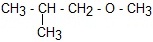
-
25%
b)
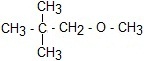
-
25%
c)
-
25%
d) CH3 - O - CH3
Explanation

Q.6.
Which of the following can work as dehydrating agent for alcohols?
-
0%
a) H2SO4
-
38%
b) H3PO4
-
38%
c) Al2O3
-
25%
d) All of these
Q.7.
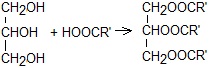
The alcohol that forms fats with fatty acids is .... ...
-
0%
a) ethanol
-
0%
b) methanol
-
100%
c) glycerol
-
0%
d) glycol
Explanation
Q.8.
An alcohol on alk. KMnO4 oxidation gives first acetone and on further oxidation acetic acid. It is
-
29%
a) ethyl alcohol
-
29%
b) primary alcohol
-
43%
c) isopropyl alcohol
-
0%
d) none of these
Q.9.
Ethyl alcohol is industrially prepared from the ethylene by .... ....
-
0%
a) fermentation
-
29%
b) permanganate oxidation
-
43%
c) catalytic reduction
-
29%
d) absorbing in sulphuric acid followed by hydrolysis
Q.10.
Lucas reagent is used to distinguish among primary, secondary and tertiary
-
50%
a) aromatic amines
-
0%
b) alcohols
-
33%
c) alkyl halides
-
17%
d) aliphatic amines
Q.11.
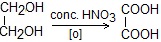
Glycol on oxidation with .... gives oxalic acid
-
0%
a) HIO4
-
71%
b) acidic KMnO4
-
0%
c) acidic K2Cr2O7
-
29%
d) nitric acid
Explanation
Q.12.
An industrial method of preparation of methanol is
-
17%
a) by reacting gormaldehyde with aqueous sodium bydroxide solution
-
50%
b) by reacting methane with steam at 900°C with a nickel catalyst
-
17%
c) catalytic reduction of carbon monoxide in presence of ZnO-Cr2O3
-
17%
d) by reacting formaldehyde with lithium aluminium hydride
Q.13.
The compound with formula C4H10O yields a compound C4H8O on oxidation. The compound C4H10O is
-
0%
a) an anhydride
-
0%
b) an aldehyde
-
80%
c) a ketone
-
20%
d) an alcohol
Q.14.
Methyl alcohol reacts with phosphorous trichloride to form .... ....
-
0%
a) methyl chloride
-
75%
b) dimethyl ether
-
0%
c) methane
-
25%
d) acetyl chloride
Q.15.
HBr reacts fastest with
-
20%
a) propan-1-ol
-
40%
b) propan-2-ol
-
20%
c) 2-methylpropan-2-ol
-
20%
d) 2-methylpropan-1-ol
Q.16.
Which of the following are known as mercaptans?
-
40%
a) Thio-ethers
-
20%
b) Thio-acids
-
20%
c) Thio-alcohols
-
20%
d) Thio-aldehyde
Q.17.
Assertion:Phenol is more reactive than benzene towards electrophilic substitution reaction Resaon:In case of phenol, the intermediate carbocation is more resonance stabilised
-
33%
a) Both Assertion and Reason are true and Reason is the correct explanation of Assertion
-
67%
b) The Assertion and Reason are true but Reason is not correct explanation of Assertion
-
0%
c) Assertion is true but, Reason is false
-
0%
d) Assertion is false but, Reason is true
Q.18.
RCH2CH2OH can be converted to RCH2CH2COOH by the following sequence of steps
-
67%
a) HCN, PBr3, H3O+
-
0%
b) KCN, H3O+
-
0%
c) PBr3, KCN, H2/Pt
-
33%
d) PBr3, KCN, H3O+
Q.19.
Under drastic conditions all the alcohols can be oxidized to carboxylic acids but the following alcohols give carboxylic acids having same number of carbon atoms
-
25%
a) primary
-
0%
b) secondary
-
75%
c) tertiary
-
0%
d) none of these
Q.20.
on Q350) The compound B formed in the following sequence of reactions,

-
75%
a)propanal
-
0%
b) propane
-
25%
c) propyne
-
0%
d) propene
Q.21.
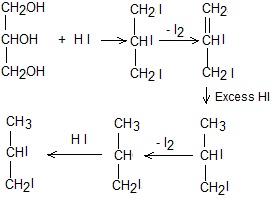
When glycerol is treated with excess of HI, it produces ... ...
-
0%
a) allyl iodide
-
0%
b) propene
-
50%
c) glycerol tri-iodide
-
50%
d) 2-iodopropane
Explanation
Q.22.
Propene, CH3 - CH = CH2 can be converted into 1-propanol by oxidation. Which set of reagents among the following is ideal to effect the conversion
-
0%
a) H2O2
-
33%
b) B2H6, H2O2
-
33%
c) H2SO4
-
33%
d) None of these
Q.23.
Iso propyl alcohol and n-propyl alcohols are .... ....
-
25%
a) position isomers
-
50%
b) functional isomers
-
0%
c) chain isomers
-
25%
d) none of these
Q.24.
on Q354)

-
25%
a) CH3 - CH = CH2

-
0%
b) (C2H5)2 - OH
-
75%
c) CH3 - CH2 - CH2 - OH
-
0%
d)
Explanation

Q.25.
on Q355) The end product of the following sequence is ..... ...

-
0%
a) CH3CH2OH
-
25%
b) CH3COCH4
-
50%
c) CH4
-
25%
d) CH3CHO
Q.26.
Which of the following statements is/are not correct?
-
0%
a) All alcohols are soluble in water
-
50%
b) Only the lower alcohols are soluble in water
-
25%
c) All alcohols are poisonous
-
25%
d) Methanol is poisonous
Q.27.
Fermentation is ... .....
-
50%
a) endothermic
-
0%
b) reversible
-
25%
c) exothermic
-
25%
d) none of these
Q.28.
on Q358) Identify Z in the following series ..... ....

-
0%
a)

-
100%
b) CH3 - C ≡ CH

-
0%
c)

-
0%
d)
Q.29.
Consider the following compounds the most acidic nature?
-
0%
a)

-
25%
b)
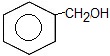
-
25%
c)

-
50%
d)
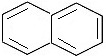
Q.30.
Assertion: Ethanol is more viscous than glycerol Reason: Both possess H-bonding
-
0%
a) Both Assertion and Reason are true and Reason is the correct explanation of Assertion
-
33%
b) The Assertion and Reason are true but Reason is not correct explanation of Assertion
-
67%
c) Assertion is true but, Reason is false
-
0%
d) Assertion is false but, Reason is true