Q.1.
The reaction of CH3OC2H5 with HI gives .... ...
-
20%
a) CH3I only
-
65%
b) CH3I + C2H5OH
-
10%
c) C2H5OH only
-
5%
d) CH3I only
Q.2.
Diethyl ether finds its use in medicine as .... .....
-
13%
a) hypnotic
-
47%
b) antiseptic
-
20%
c) pain killer
-
20%
d) anaesthetic
Q.3.
Which compound is capable of strong hydrogen bonding?
-
29%
a) C2H5OH
-
21%
b) C3H7OH
-
36%
c) C4H9OH
-
14%
d) C5H11OH
Q.4.
Carbinol is the trivial name for .... ....
-
53%
a) (CH3)3COH
-
20%
b) C2H5OH
-
20%
c) CH3OH
-
7%
d) CH3CH2CHOHCH3
Q.5.
han One Correct Answer Q426) The ether C6H5-O-CH2-C6H5 when treated with HI produce(s)
-
10%
a) C6H5CH2I
-
40%
b) C6H5CH2OH
-
20%
c) C6H5I
-
30%
d) C6H5OH
Q.6.
In which of the following bond angles on sp3-hybridized are not contracted due to lone pair of electron?
-
50%
a) H2O
-
8%
b) CH3OH
-
17%
c) OF2
-
25%
d) CH3OCH3
Q.7.
Physical properties of ....
-
25%
a) H2O lie between alcohols and alkenes
-
33%
b) alkenes lie between alcohol and H2O
-
17%
c) alcohols lie between alkanes and H2O
-
25%
d) none of the above
Q.8.
Phenol is .... .....
-
25%
a) neutral
-
8%
b) an acid weaker than carbonic acid
-
50%
c) an acid stronger than carbonic acid
-
17%
d) a base weaker than NH3
Q.9.
Ethanol is more soluble in water but ether is less soluble because .... .....
-
55%
a) ethanol forms strong hydrogen bonds in water where as ether forms weaker hydrogen bonding
-
36%
b) ether is more volatile than ethanol
-
9%
c) the molar mass of ether is more than of ethanol
-
0%
d) none of the above
Q.10.
Assertion: Alcohols give only substitution products with HX and not elimination product Reason: X- is a very weak base which cannot abstract protons from alcohol
-
30%
a) Both Assertion and Reason are true and Reason is the correct explanation of Assertion
-
40%
b) The Assertion and Reason are true but Reason is not correct explanation of Assertion
-
20%
c) Assertion is true but, Reason is false
-
10%
d) Assertion is false but, Reason is true
Q.11.
Acetone on reduction gives .... .....
-
9%
a) CH3CHO
-
36%
b) C2H5OH
-
45%
c) (CH3)2CHOH
-
9%
d) CH3COOH
Q.12.
on Q433) Identify Z in the series

-
10%
a) C2H5I
-
20%
b) C2H5OH
-
30%
c) CHI3
-
40%
d) CH3CHO
Explanation

Q.13.
Diethyl ether is soluble in .... ...
-
0%
a) dilute HCl
-
44%
b) conc. H2SO4
-
33%
c) conc. KOH
-
22%
d) water
Q.14.
Action of nitrous acid on ethyl amine gives .... .....
-
11%
a) C2H6
-
33%
b) C2H5OH
-
11%
c) NH3
-
44%
d) nitromethane
Q.15.
Nobel's oil is ... ...
-
12%
a) detergent
-
0%
b) insecticide
-
50%
c) fire extinguisher
-
38%
d) explosive
Q.16.
Diethyl ether is decomposed on heating with .... ...
-
12%
a) NaOH
-
25%
b) HI
-
38%
c) water
-
25%
d) KMnO4
Q.17.
Ethyl alcohol reacts with following to form a compound of fruity smell
-
25%
a) K2Cr2O7 + H2SO4
-
12%
b) PCl5
-
38%
c) CH3COOH
-
25%
d) CH3COCH3
Q.18.
han One Correct Answer Q439) Phosphorus pentachloride react(s) with
-
43%
a) alcohols
-
14%
b) ketones
-
14%
c) ethers
-
29%
d) amines
Q.19.
on Q440) The product of the reaction is .... ..
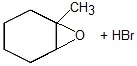
-
43%
a)
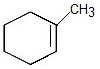
-
0%
b)

-
43%
c)

-
14%
d)

Q.20.
Primary amine on treatment with NaNO2 and HCl yield
-
33%
a) Primary alcohol
-
33%
b) secondary alcohol
-
0%
c) ammonia
-
33%
d) nitro compound
Explanation

Q.21.
Acetylene and formaldehyde interact in the presence of copper acetylide as a catalyst to furnish the compound .... ...
-
33%
a) butyne-1, 4-diol
-
33%
b) butyne-2
-
17%
c) ethylele-1, 4-diol
-
17%
d) none of these
Q.22.
When glycerol is treated with a mixture of excess of conc.HNO3 and H2SO4, the compound formed is .... ....
-
50%
a) glycerol trinitrate
-
0%
b) glycerol dinitrate
-
17%
c) acrolein
-
33%
d) glycerol mononitrate
Explanation
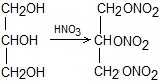
Q.23.
han One Correct Answer Q444) Ethyl alcohol on oxidation with K2Cr2O7 gives(s)
-
17%
a) formic acid
-
33%
b) formaldehyde
-
33%
c) acetic acid
-
17%
d) acetaldehyde
Q.24.
Widespread deaths due to liquor poisoning occurs due to presence of .... .....
-
0%
a) lead compounds in liquor
-
0%
b) methyl alcohol in liquor
-
50%
c) ethyl alcohol in liquor
-
50%
d) carbonic acid in liquor
Q.25.
Diethyl ether on reaction with CO in specific conditions forms ... .....
-
17%
a) acetyl chloride
-
17%
b) carbon dioxide
-
50%
c) acetic acid
-
17%
d) ethyl propanoate
Explanation

Q.26.
Proof spirit contains about ... ...
-
0%
a) 5% alcohol by mass
-
60%
b) 10% alcohol by mass
-
0%
c) 48% alcohol by mass
-
40%
d) 98% alcohol by mass
Q.27.
Ethyl alcohol is also known as .... ...
-
33%
a) spirit of wine
-
17%
b) grain alcohol
-
17%
c) methyl carbinol
-
33%
d) all of these
Q.28.
Ethyl iodide on treatment with dry Ag2O will yield
-
0%
a) ethylene
-
50%
b) diethyl ether
-
33%
c) ethyl methyl ether
-
17%
d) ethyl alcohol
Q.29.
The first oxidation product of primary alcohol is .......
-
0%
a) an ester
-
33%
b) a hydrocarbon
-
17%
c) a ketone
-
50%
d) aldehydes
Q.30.
The cleavage of an aryl-alkyl ether with hydrogen halide will give .... .....
-
0%
a) a molecules each of an alkyl halide and water
-
33%
b) a molecule each of an aryl halide and water
-
33%
c) a molecule each of an alkyl halide, aryl halide and water
-
33%
d) a molecule each of phenol and an alkyl halid
Explanation
