Q.1.
During dehydration of alcohols to alkenes by heating with con.H2SO4 the initiation step is [ AIEEE 2003]
-
22%
a) formation of carbocation
-
30%
b) elimination of water
-
24%
c) formation of an ester
-
24%
d) protonation of alcohol molecule
Q.2.
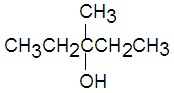
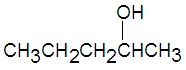
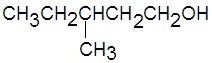
Among the following compounds which can be dehydrated very easily is ..[ AIEEE 2004]
-
37%
a)
-
26%
b)
-
22%
c)

-
15%
d)
Q.3.
The best reagent to convert pent-3-en-2-ol into pent-3-in-2-one is [ AIEEE 2005]
-
58%
a) Pyridinium chloro-chromate
-
17%
b) Chromic anhydride in glacial acetic acid
-
25%
c) Acidic dichromate
-
0%
d) Acidic permanganate
Q.4.
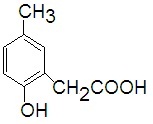
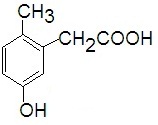
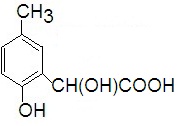
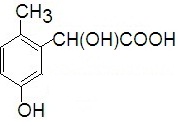
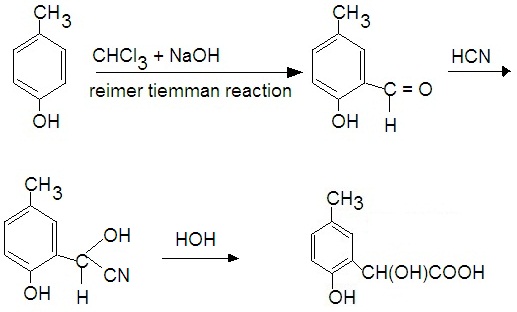
p-cresol reacts with chloroform in alkaline medium to give the compound A which adds hydrogen cyanide to form the compound B. The latter on acidic hydrolysis gives chiral carboxylic acid. The structure of the carboxylic acid is[ AIEEE 2005]
-
26%
a)
-
58%
b)
-
11%
c)
-
5%
d)
Explanation
Q.5.
HBr reacts with CH2 = CH-OCH3 under anhydrous conditions at room temperature to give [ AIEEE 2006]
-
29%
a) BrCH2-CH2-OCH3
-
29%
b) CH3-CHBr-OCH3
-
35%
c) CH3CHO and CH3Br
-
6%
d) BrCH2CHO and CH3OH
Q.6.
The structure of the compound that gives a tribromo derivative on treatment with bromine water is [ AIEEE 2006]
-
29%
a)

-
0%
b)
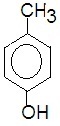
-
41%
c)
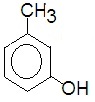
-
29%
d)
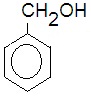
Q.7.
Among the following the one that gives positive iodoform test upon reaction with I2 and NaOH is [ AIEEE 2006]
-
24%
a) (CH3)2CHCH2OH
-
47%
b) PhCHOHCH3
-
18%
c) CH3CH2CH(OH)CH2CH3
-
12%
d) C6H5CH2CH2OH
Q.8.
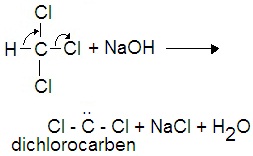
ion Q67) The electrophile involved in the reaction is[ AIEEE 2006]
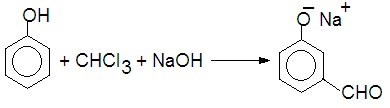
-
17%
a) trichloromethyl anion (C-Cl3)
-
25%
b) formyl cation (C+HO)
-
50%
c) dichloromethyl cation (C+HCl2
-
8%
d) dichlrocarbene ( :CCl2)
Explanation
Q.9.
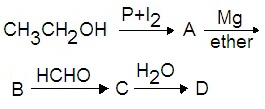
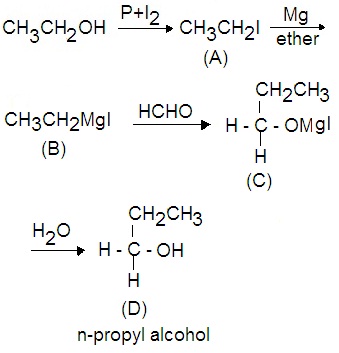
ion Q68) In the following sequence of reactions. compound D is [ AIEEE 2007]
-
15%
a) propanal
-
23%
b) butanal
-
38%
c) n-butyl alcohol
-
23%
d) n-propyl alcohol
Explanation
Q.10.
Phenol, which reacts with concentrated sulphuric acid and then with concentrated nitric acid, give [ AIEEE 2008]
-
60%
a) 2,4,6 - trinitrobenzene
-
7%
b) o-nitrophenol
-
20%
c) p-nitrophenol
-
13%
d) nitrobenzene
Q.11.
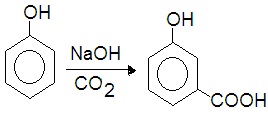
The major product obtained on interaction of phenol with sodium hydroxide and carbon dioxide is [ AIEEE 2009]
-
20%
a) salicylaldehyde
-
60%
b) salicylic acid
-
0%
c) phthalic acid
-
20%
d) benzonic acid
Explanation
Q.12.
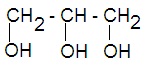
Glycerol contains [ AIIMS 1997]
-
18%
a) one primary and two secondary alcoholic group
-
36%
b) two primary and one secondary alcoholic group
-
27%
c) one primary, one secondary and one tertiary alcoholic groups
-
18%
d) one secondary and two tertiary alcoholic groups
Explanation
Q.13.
Chloroform and concentrated HNO3 react to produce [ AIIMS 1997]
-
30%
a) CHCl2NO2
-
20%
b) CHCL2HNO3
-
30%
c) CCl3NO2
-
20%
d) CCl3NO3
Q.14.
Which pair can be distinguished by using Tollen's reagent? [ AIIMS 1997]
-
7%
a) Ethanol and propanol
-
20%
b) Ethanoic acid and acetone
-
67%
c) Ethanoic acid and propanal
-
7%
d) Methanol and methanoic acid
Q.15.
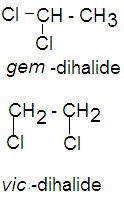
When two halogens are attached to same carbon atom, it is known as [ AIIMS 1999]
-
15%
a) vic-dihalide
-
46%
b) gem-dihalide
-
31%
c) α and ω - dihalide
-
8%
d) α, β- dihalide
Explanation
Q.16.
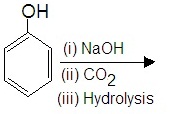
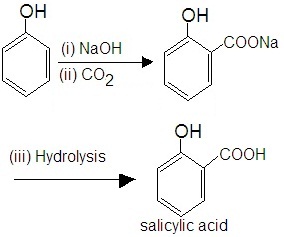
ion Q75) The product obtained from the reaction is [ AIIMS 1998]
-
25%
a) Benzene
-
25%
b) Toluene
-
50%
c) Salicylic acid
-
0%
d) Benzoic acid
Explanation
Q.17.
Prestone is a mixture of [ AIIMS 1998]
-
9%
a) Glycol + H2O
-
64%
b) Glycerol + H2O
-
18%
c) Acetone + H2O
-
9%
d) Propanal + H2O
Q.18.
0.5g of sample of bleaching powder was suspended in water and an excess KI added. On acidifying with dil. H2SO4, I2 was liberated which required 50 cc of N/10 hypo solution. The percentage of Cl2 in bleaching powder is [ AIIMS 1998]
-
22%
a) 35.5%
-
33%
b) 45.5%
-
33%
c) 25.5%
-
11%
d) 39.5%
Q.19.
Vinegar is represented by [ AIIMS 1999]
-
29%
a) CH3COOH
-
43%
b) CH3CH2COOH
-
0%
c) HCOOH
-
29%
d) CH3CH2CH2COOH
Q.20.
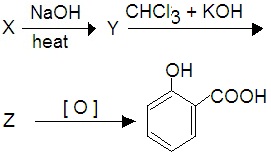
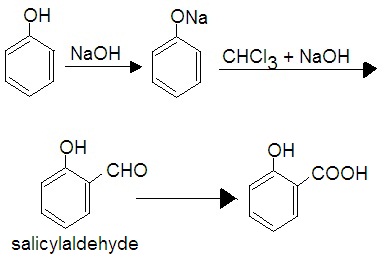
ion Q79)In reaction below Z is
-
30%
a) phenol
-
20%
b) benzoic acid
-
50%
c) salicylaldehyde
-
0%
d) carbolic acid
Explanation
Q.21.
Gammexane is
-
11%
a) Chloral
-
56%
b) BHC
-
22%
c) DDT
-
11%
d) HCB
Q.22.
Ethyl alcohol reacts with chlorine to produce [ AIIMS 2000]
-
33%
a) CH3CH2Cl
-
22%
b) CH2ClCH2OH
-
22%
c) CHCl2CH2CH2OH
-
22%
d) CCl3CHO
Q.23.
Picric acid is [ AIIMS 2000]
-
54%
a) Trinitrophenol
-
8%
b) Trinitrotoluene
-
15%
c) Trinitrobenzene
-
23%
d) Tribromobenzene
Q.24.
Lucas reagent is [ AIIMS 2000]
-
17%
a) anhy. AlCl3 + conc. HCl
-
42%
b) anhy. AlCl3 + conc. HNO3
-
8%
c) anhy. ZnCl2
-
33%
d) anhy. ZnCl2 + conc. HCl
Q.25.
Lucas test is used for the detection of [ AIIMS 2002]
-
23%
a) alcohols
-
23%
b) alkyl halides
-
38%
c) phenols
-
15%
d) aldehydes
Q.26.
The intermediate formed in aldol condensation is [ AIIMS 2002]
-
11%
a) aldol
-
56%
b) carbanion
-
11%
c) alcohol
-
22%
d) α-hydrogen ester
Q.27.
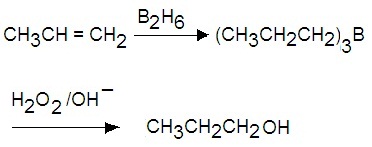
Propan-1-ol can be prepared from propene by [ AIIMS 2003]
-
0%
a) H2O / H2SO4
-
38%
b) Hg(OAc)2/ H2O followed by NaBH4
-
25%
c) B2H6 followed by H2O2
-
38%
d) CH3CO2H / H2SO4
Explanation
Q.28.
Among the following, the dissociation constant is highest for [ AIIMS 2004]
-
0%
a) C6H5OH
-
33%
b) C6H5CH2OH
-
25%
c) CH3C ≡ CH
-
42%
d) CH3NH3+ Cl-
Q.29.
Among the following the one which reacts most readily with ethanol is [ AIIMS 2004]
-
30%
a) p-nitrobenzyl bromide
-
30%
b) p- chlorobenzyl bromide
-
30%
c) p- methoxybenzyl bromide
-
10%
d) p-methylbenzyl bromide
Q.30.
The most suitable reagent for the conversion of RCH2OH → TCHO is [ AIIMS 2004]
-
0%
a) KMnO4
-
22%
b) K2CCr2O7
-
11%
c) CrO3
-
67%
d) PCC( pyridine chlorochromate