Q.1.
When a ketone is condensed into an aldol, the reagent used is
-
55%
a) alkali
-
32%
b) NaHCO3
-
5%
c) Br2 water
-
8%
d) Cl2
Q.2.
Which does not react with Fehling solution?
-
7%
a) Acetaldehyde
-
48%
b) Propanone
-
24%
c) Glucose
-
21%
d) Formic acid
Q.3.
(CH3)2C = CHCOCH3 can be oxidised to (CH3)2C = CHCOOH by
-
11%
a) NaOI
-
50%
b) KMnO4
-
29%
c) Cu at 300°C
-
11%
d) chromic acid
Q.4.
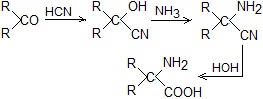
ion Q32) What is compound (C) is reaction below

-
44%
a) α-amino acid
-
17%
b) α-amino alkanol
-
17%
c) α-hydroxy acid
-
22%
d) α-amino β-hydroxy acid
Explanation
Q.5.
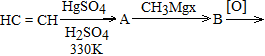
ion Q33) The end product in the following sequence of reaction is ... [ Bihar CEE 2002]
-
12%
a) acetic acid
-
50%
b) iso-propyl alcohol
-
19%
c) acetone
-
19%
d) ethanol
Q.6.
The structural formula of the compound isomeric with acetone is
-
27%
a) CH3CHO
-
7%
b) CH3CH2OH
-
40%
c) CH3CH2CHO
-
27%
d) none of these
Q.7.
Wolff-Kishner reduction is used for the reduction of
-
0%
a) Olefins
-
22%
b) Carboxylic acid
-
67%
c) Carbonyl compounds
-
11%
d) Nitro compounds
Q.8.
Which is obtained by oxidation of propionaldehyde?
-
6%
a) Acetic acid and formic acid
-
31%
b) Acetic acid
-
25%
c) n-propyl alcohol
-
38%
d) propanoic acid
Q.9.
Acetaldehyde cannot exhibit
-
18%
a) Tollen's test
-
18%
b) Benedict's test
-
47%
c) Lucas test
-
18%
d) Iodoform test
Q.10.
The compound obtained by the reduction of propionaldehyde by amalgamated zinc and concentrated HCl is
-
13%
a) Propene
-
47%
b) Propane
-
13%
c) Propanol
-
27%
d) All
Q.11.
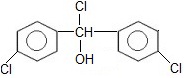
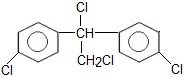
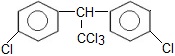
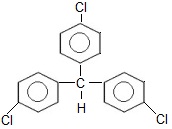
Trichloroacetaldehyde, CCl3CHO reacts with chlorobenzene in presence of sulphuric acid and produces
-
17%
a)
-
25%
b)
-
33%
c)
-
25%
d)
Q.12.
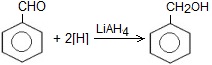
Benzyl alcohol is obtained from benzaldehyde by
-
47%
a) Reduction with LiAlH4
-
18%
b) Kolbe's reaction
-
29%
c) Fitting's reaction
-
6%
d) Clemmensen's reduction
Explanation
Q.13.
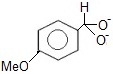
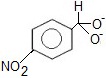
In a Cannizzaro reaction, the intermediate that will be best hydeide donor is ... ... [ IIT 1997]
-
42%
a)

-
33%
b)

-
8%
c)
-
17%
d)
Q.14.
Tautomerism is not exhibited by
-
15%
a)

-
54%
b)

-
31%
c)

-
0%
d)

Q.15.
Which of the aldehydes is most reactive? [ DEC 2004]
-
44%
a) HCHO
-
12%
b) CH3CHO
-
25%
c) C6H5-CHO
-
19%
d) All are equally reactive
Q.16.
Than One Correct Answer Q46) Oppenauer oxidation
-
25%
a) uses aluminium t-butoxide
-
33%
b) uses aluminium isopropoxide
-
25%
c) is used to prepare ketone
-
17%
d) is used to prepare aldehyde
Q.17.
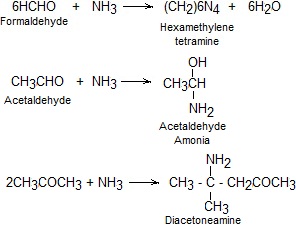
Which of the following reagents reacts differntly with HCHO, CH3CHO and CH3COCH3 ... ..[ MPCET 2000 ]
-
14%
a) HCN
-
29%
b) NH3
-
36%
c) NH2NH2
-
21%
d) NH2OH
Explanation
Q.18.
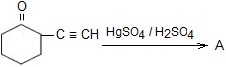
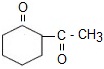
ion Q48)
-
33%
a)
-
33%
b)
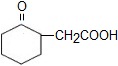
-
17%
c)
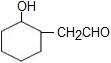
-
17%
d)
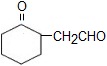
Explanation
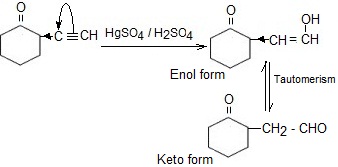
Q.19.
Consider the reaction: RCHO + NH2NH2 → RCH = N - NH2 What sort of reaction is it?
-
53%
a) Nucleophilic addition - elimination reaction
-
27%
b) Electrophilic addition - elimination reaction
-
7%
c) Free radical addition - elimination reaction
-
13%
d) Electrophilic addition - elimination reaction
Q.20.
Carbonyl group undergoes
-
17%
a) electrophilic addition reactions
-
42%
b) nucleophilic addition reactions
-
33%
c) both a and b
-
8%
d) none of the above
Q.21.
Ketones are first oxidation product of
-
15%
a) primary alcohols
-
62%
b) secondary alcohol
-
23%
c) trihydric alcohol
-
0%
d) dihydric alcohol
Q.22.
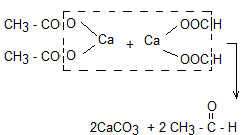
A mixture of calcium acetetae and calcium formate on heating gives
-
27%
a) HCHO
-
36%
b) CH3CHO
-
9%
c) CH3COCH3
-
27%
d) all of these
Explanation
Q.23.
Than One Correct Answer Q53) Aldehydes can be reduced to hydrocarbons by
-
0%
a) The Huang-Minlon method
-
33%
b) Mg/Hg, H2O
-
58%
c) Wolff-Kishner reduction
-
8%
d) Clemmensen reduction
Q.24.
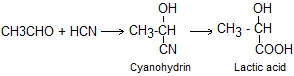
The reaction of acetaldehyde with HCN followed by hydrolysis gives a product which exhibits
-
8%
a) Tautomerism
-
46%
b) Geometrical isomerism
-
8%
c) Metamerism
-
38%
d) Enantiomerism
Explanation
Q.25.
ion More Than One Correct Answer Q55) A will

-
17%
a) form dioxime
-
50%
b) give Cannizzaro's reaction
-
17%
c) give Idoform test
-
17%
d) reduce Tollen's reagent
Q.26.
Aldehyde and ketones cannot be distinguished by ... ..
-
6%
a) Molisch's test
-
25%
b) Tollen's test
-
31%
c) Benedict's test
-
38%
d) Schiff's test
Q.27.
tion: Acetone forms one oxime where as acetophenone forms two oximes. Reason: In acetophenone syn and anti form of geometrical isomers are possible
-
33%
a) Both Assertion and Reason are true and Reason is the correct explanation of Assertion
-
53%
b) The Assertion and Reason are true but Reason is not correct explanation of Assertion
-
13%
c) Assertion is true but, Reason is false
-
0%
d) Assertion is false but, Reason is true
Q.28.
Which of the following is incorrect
-
0%
a) FeCl3 is used in the dtection of phenols
-
20%
b) Fehling solution is used in the detection of glucose
-
50%
c) Tollen's reagent is used in detecton of unsaturation
-
30%
d) NaHSO3 is used in the detection of carbonyl compounds
Q.29.
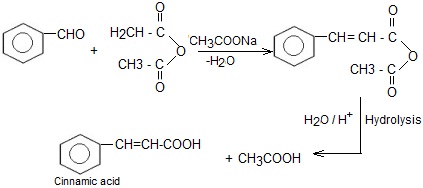
In which reaction, aromatic aldehyde is treated with acid anhydride in the presence of corresponding salt of the acid to give unsaturated aromatic acid?
-
43%
a) Perkin's reaction
-
14%
b) Wurtz reaction
-
14%
c) Friedel Crafts reaction
-
29%
d) None of these
Explanation
Q.30.
iso-propyl alcohol on oxidation forms
-
38%
a) Acetone
-
24%
b) Ether
-
29%
c) Ethylene
-
10%
d) Acetaldehyde