Q.1.
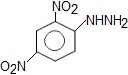
on Q151) Which of the following compounds containing carbonyl group will give coloured crystalline compound with
-
38%
a) CH3COCNH2
-
50%
b) CH3COCH3
-
0%
c) CH3COCl
-
12%
d) CH3COOC2H5
Q.2.
Which statement is incorrect in the case of acetaldehyde and acetone?
-
17%
a) Both reduce ammonical silver nitrate to silver
-
33%
b) Both react with hydrazine to form hydrazones
-
17%
c) Both react with hydroxylamine to form oximes
-
33%
d) Both react with sodium bisulphite to form addition product
Q.3.
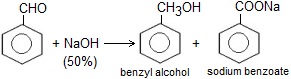
Which one of the following undergoes reaction with 50% sodium hydroxide solution to give the corresponding alcohol and acid? ... ...[ AIEEE 2004]
-
17%
a) phenol
-
67%
b) benzoic acid
-
0%
c) butanal
-
17%
d) benzaldehyde
Explanation
Q.4.
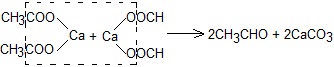
On heating calcium acetete and calcium format, the major product formed is
-
67%
a) CH3COCH3
-
0%
b) CH3CHO
-
33%
c) HCHO + CaCO3
-
0%
d) CH3CHO + CaCO3
Explanation
Q.5.
Assertion: Benzaldehyde forms two oximes on reacting with NH2OH Reason: The two oximes are formed due to geometrical isomerism arised in product
-
33%
a) Both Assertion and Reason are true and Reason is the correct explanation of Assertion
-
50%
b) The Assertion and Reason are true but Reason is not correct explanation of Assertion
-
0%
c) Assertion is true but, Reason is false
-
17%
d) Assertion is false but, Reason is true
Q.6.
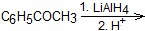
Which of the following would produce secondary alcohol?
-
0%
a)
-
20%
b)

-
80%
c)
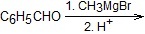
-
0%
d)
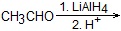
Q.7.
Assertion: The major products formed by heating C6H5CH2OCH3 with HI are C6H5CH2I and CH3OH Reason: Benzyl cation is more stable than methyl cation
-
33%
a) Both Assertion and Reason are true and Reason is the correct explanation of Assertion
-
67%
b) The Assertion and Reason are true but Reason is not correct explanation of Assertion
-
0%
c) Assertion is true but, Reason is false
-
0%
d) Assertion is false but, Reason is true
Q.8.
A typical compound undergoes Cannizzaro's reaction as well as aldol condensation. The possible compound is
-
17%
a) C6H5CHO
-
50%
b) (CH3)2CHCHO
-
17%
c) CH3CH2CHO
-
17%
d) HCHO
Q.9.
The difference between aldol condensation and Cannizzaro's reaction is that
-
67%
a) the former takes place in the presence of β-H-atom
-
33%
b) the former takes place in the presence of α-H-atom
-
0%
c) the former takes place in the absence of α-H-atom
-
0%
d) none of the above
Q.10.
Aldol condensation between the following comounds followed by dehydration gives methyl vinyl ketone
-
50%
a) methanal and ethanal
-
17%
b) two mole of formaldehyde
-
17%
c) methanal and propanone
-
17%
d) two mole of ethanal
Explanation

Q.11.
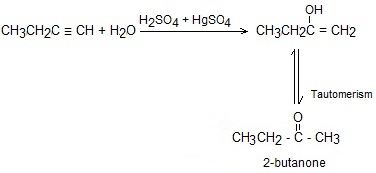
The product(s) obtained via oxymercuration (HgSO4+H2SO4) of 1-butyne would be ... ..[ IIT 1999]
-
40%
b) CH3CH2CH2CHO
-
20%
c) CH3CH2CHO + HCHO
-
20%
a) CH3CH2COCH3
-
20%
d) CH3CH2COOH + HCOOH
Explanation
Q.12.
C6H5CHO on reacting with Cl2 gives
-
20%
a) C6H5COCl
-
0%
b) C6H5CH2OH
-
60%
c) C6H5COOH
-
20%
d) C6H5CHCl2
Q.13.
Which of the following is correct?
-
60%
a) Aldehydes are more susceptible to oxidation than ketones
-
0%
b) Formaldehyde forms CH2(OH)NH2 with NH3
-
20%
c) All aldehydes undergo Cannizzaro's reaction
-
20%
d) Aldehydes are more susceptible to oxidation than ketones
Q.14.
The most reactive compound towards formation of cyanohydrin on treatment with HCN followed by acidification is
-
60%
a) p-Nitrobenzealdehyde
-
0%
b) p-Hydroxybenzaldehyde
-
0%
c) Benzaldehyde
-
40%
d) Phenyl acetaldehyde
Q.15.
Which of the following contains ketene group? [ DEC 2005]
-
20%
a) -CH2 - CHO
-
20%
b) >C=C=O
-
60%
c) HCN
-
0%
d) -CH2-OH
Q.16.
han One Correct Answer Q166) When a mixture of calcium acetate and calcium formate is heated, it yield(s)
-
20%
a) acetone
-
40%
b) acetaldehyde
-
40%
c) formic acid
-
0%
d) acetic acid
Q.17.
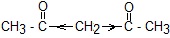
Which of the following has most acidic proton? ... [ Harayana CEET 1998]
-
20%
a) (CH3)2C = CH2
-
60%
b) (CH3CH2)3CH
-
0%
c) CH3COCH3
-
20%
d) CH3COCH2COCH3
Explanation
Q.18.
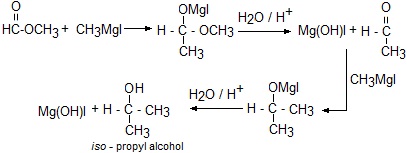
Reaction of metyl formate with excess of CH3MgI followed by hydrolysis gives
-
0%
a) ethanal
-
0%
b) iso-propyl alcohol
-
25%
c) n-propyl alcohol
-
75%
d) propanal
Explanation
Q.19.
han One Correct Answers Q169) Which of the following reagents can be used to distinguish between an aldehyde and ketone?
-
50%
a) Tollen's reagent
-
0%
b) 2,4-dinitrophenyl hydrazine
-
50%
c) Acidified aqueous potassium dichromate solution
-
0%
d) Fehling's reagent
Q.20.
Self condensation of acetaldehyde in the presence of dilute alkalies gives ... ... [ Punjab CET 1990]
-
0%
a) An acetal
-
50%
b) An aldol
-
50%
c) Mesitylene
-
0%
d) Propionaldehyde
Explanation

Q.21.
When propanone reacts with chlorine, it forms
-
50%
a) hexachloro propanone
-
25%
b) trichloro propanal
-
0%
c) trichloro propanone
-
25%
d) trichloro ethanol
Q.22.
Which of the following contains pungention odour?
-
50%
a) Esters
-
0%
b) Highly aldehydes
-
25%
c) Lower aldehydes
-
25%
d) None of these
Q.23.
han One Correct Answer Q173) For separation of aldehyde or ketone from a non-carbonyl compound, mixture is first treated with .... and further regenerated with Na2CO3 solution
-
50%
a) NaHSO4

-
50%
b) HCN
-
0%
c) H2NOH
-
0%
d)
Q.24.
Acetaldehyde on oxidation with SeO2 give
-
25%
a) C2H5OH
-
0%
b) CHO.CHO
-
50%
c) CH3COOH
-
25%
d) none of these
Q.25.
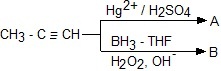
on More Than One Correct Answer Q175) The product(s) is/are
-
50%
a) CH3CH2CHO
-
25%
b) CH3CH=CH2OH
-
25%
c) CH3COCH3
-
0%
d) none of these
Q.26.
Acetaldehyde and acetone can be distinguished by ... [ DCE 2003]
-
25%
a) DNP test
-
50%
b) Fehling's solution test
-
0%
c) Nitroprusside test
-
25%
d) Iodoform test
Q.27.
Assertion: Addition of KCN solution to carbonyl compounds decreases the pH of solution Reason: KCN in aqueous solution forms a basic solution due to hydrolysis of CN-. The nucleophilic addition on carbonyl and brings in a decrease in H+ ions or an increase in OH- ions
-
100%
a) Both Assertion and Reason are true and Reason is the correct explanation of Assertion
-
0%
b) The Assertion and Reason are true but Reason is not correct explanation of Assertion
-
0%
c) Assertion is true but, Reason is false
-
0%
d) Assertion is false but, Reason is true
Q.28.
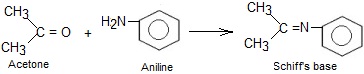
Aniline reacts with which of these to form Schiff's base?
-
25%
a) NH3
-
50%
b) Benzaldehyde
-
25%
c) Acetic acid
-
0%
d) Acetone
Explanation
Q.29.
Formaldehyde on condensation in presence of Ca(OH)2 gives
-
25%
a) fructose
-
0%
b) maltose
-
50%
c) formose
-
25%
d) xylose
Explanation

Q.30.
Formalin is an aqueous solution of
-
0%
a) Furfural
-
0%
b) Fluorescein
-
50%
c) Formaldehyde
-
50%
d) Formic acid