Q.1.
on Q241) The following reaction is known by the name of

-
78%
a) Rosenmund's reaction
-
0%
b) Cannizzaro's reaction
-
22%
c) Stephen's reduction
-
0%
d) none of these
Q.2.
Acetone may be produced from starch by the action of
-
33%
a) acid
-
44%
b) certain bacteria
-
22%
c) oxidising agents
-
0%
d) none of these
Q.3.
Which of the following compounds is oxidised to prepare ethyl methyl ketone? [ IIT 1988]
-
43%
a) 2-propanol
-
0%
b) 1-butanol
-
43%
c) 2-butanol
-
14%
d) t-butyl alcohol
Explanation

Q.4.
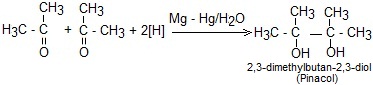
Ketone reacts with Mg-Hg over water to give
-
0%
a) Pinacolone
-
33%
b) Pinacols
-
50%
c) Alcohols
-
17%
d) None of these
Explanation
Q.5.
Which of the following reagents is used to distinguish acetone and acetophenone?
-
33%
a) NaHSO3
-
17%
b) Na2SO4
-
50%
c) NH4Cl
-
0%
d) Grignard reagent
Q.6.
Aldehydes behave as
-
50%
a) Oxidising as well as reducing agent
-
33%
b) reducing agent
-
17%
c) oxidising agent
-
0%
d) dehydrating agent
Q.7.
han One Correct Answers Q247) Which is /are generally used for preparing derivatives of aldehydes and ketones?
-
17%
a) Hydrogen cyanide
-
50%
b) Hydroxylamine hydrochloride
-
33%
c) 2,4-Dinitrophenyl hydraine
-
0%
d) Phenylhydrazinehydrochloride
Q.8.
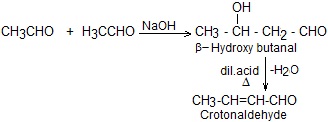
A compound possessing α-hydrogen atom, in the presence of dilute alkali forms β-hydroxy aldehyde. This product on cortonaldehyde. The compound us
-
33%
a) CH3CH2CHO
-
33%
b) CH2=CH-CHO
-
17%
c) HC≡C-CHO
-
17%
d) CH3CHO
Explanation
Q.9.
Benzaldehyde and acetaldehyde can be distinguished by
-
0%
a) NH3 reaction
-
33%
b) iodoform test
-
33%
c) 2:4 DNP test
-
33%
d) Wolff-Kishner's reduction
Q.10.
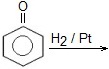
on Q250) The product of following reaction is
-
40%
a)

-
0%
b)

-
40%
c)

-
20%
d)

Q.11.
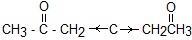
Which of the following has the most acidic hydrogen? [ IIT 2000 ]
-
0%
a) 3-Hexanone
-
17%
b) 2, 4-Hexanedione
-
67%
c) 2, 5-Hexanedione
-
17%
d) 2, 3-Hexaedione
Explanation
Q.12.
han One Correct Answer Q252) Which is/are correct statement(s)?
-
0%
a) Cannizzaro's reaction is proton-hydride transfer reaction
-
67%
b) Hofmann-degradation of acid amid involves intra-molecular migration is intramolecular
-
0%
c) Fries migration is intramolecular
-
33%
d) Cannizzaro's reaction is disproportionation reaction
Q.13.
HCHO and HCOOH are distinguished by treating with
-
17%
a) Benedict solution
-
17%
b) NaHCO3
-
33%
c) Tollens reagent
-
33%
d) Fehling's solution
Q.14.
Wacker method involves the conversion of alene using PdCl2 into corresponding
-
0%
a) Alcohol
-
67%
b) Aldehyde
-
33%
c) Ether
-
0%
d) Ketone
Explanation

Q.15.
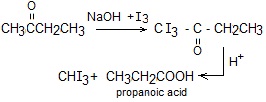
How will you convert butan-2-one to propanoic acid? ... ... [ IIT 2005]
-
17%
a) Tollen's reagent
-
50%
b) Fehling's solution
-
0%
c) NaOH/I3/H+
-
33%
d)NaOH/NaI/H+
Explanation
Q.16.
han One Correct Answer Q256) Which compound(s) react(s) with PCl5?
-
50%
b) C2H5OH
-
33%
c) CH3COCH3
-
17%
a) HCHO
-
0%
d) CH3CHO
Q.17.
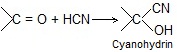
The addition of HCN to carbonyl compounds is an example of ... ... [ Haryana EET 2000 ]
-
40%
a) Nucleophilic substitution
-
20%
b) Electrophilic addition
-
40%
c) Nucleophilic addition
-
0%
d) Electrophilic substitution
Explanation
Q.18.
The important step in Cannizzaro's reaction is the intermolecular shift of
-
0%
a) H-atom
-
60%
b) proton
-
20%
c) hydronium ion
-
20%
d) hydride ion
Q.19.
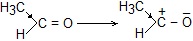
Nucleophilic addition reaction will be most favoured in
-
0%
a) CH3CHO
-
67%
b) CH3CH2CHO
-
33%
c) (CH3)2C = O
-
0%
d) CH3CH2CH2COCH3
Explanation
Q.20.
Which of the following does not give brick red ppt. with Fehling's solution?
-
0%
a) Formalin
-
17%
b) Acetone
-
33%
c) Acetaldehyde
-
50%
d) D-glucose
Q.21.
Consider the following statements. Acetopgenone can be prepared by I. Oxidation of 1-phenylethanol II. Reaction of benzaldehyde with methyl magnesium bromide III. Friedel crafts reaction of benzene with acetyl chloride IV. Distillation of calcium benzoate Which of the above satements are correct?
-
17%
a) I and II
-
67%
b) I and IV
-
17%
c) I and III
-
0%
d) III and IV
Q.22.
C6H5CHO + HCN → C6H5CN(CN)OH, the product is
-
17%
a) optically active
-
50%
b) raccemate
-
17%
c) a meso compound
-
17%
d) mixture of distereoisomers
Q.23.
han One Correct Answer Q263) Which react(s) with Fehling's solution
-
0%
a) Acetone
-
33%
b) Formic acid
-
67%
c) Acetaldehyde
-
0%
d) Formaldehyde
Q.24.
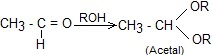
Acetals are
-
33%
a) Aldehyde
-
33%
b) Ketone
-
17%
c) diether
-
17%
d) hydroxy aldehyde
Explanation
Q.25.
Tear gas is
-
20%
a) C6H5COCH2Cl
-
60%
b) C6H5COCH3
-
0%
c) C6H5COCl
-
20%
d) C6H5OC6H5
Q.26.
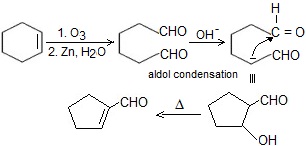
Cyclohexene on ozonolysis followed by reaction with zinc dust and water gives compound E. Compound E on further treatment with aqueous KOH yields compound F. Compound F is .... [ IIT 2007]
-
0%
a)

-
40%
b)

-
40%
c)

-
20%
d)

Explanation
Q.27.
Dialkyl cadmium reacts with compound to form a ketone. The compound is
-
0%
a) CO
-
60%
b) acid chloride
-
20%
c) acid
-
20%
d) ester
Q.28.
Aldehydes and ketones do not give addition reaction with
-
40%
a) HCN
-
40%
b) HCl(aq)
-
0%
c) NaHSO4
-
20%
d) Both a and b
Q.29.
General formula of carbonyl compound is ...
-
0%
a) CnH2nP
-
60%
b) CnH2n+2O
-
0%
c) CnH2n+1O
-
40%
d) CnH2n+2P2
Q.30.
C2H5OH and RCOOC2H5 can be separated from CH3CHO using .... ... [ DEC2006]
-
0%
a) Tollen's reagent
-
50%
b) I2/NaoH
-
0%
c) NH2NH2
-
50%
d) NaHSO3