Q.1.
Decrease in species diversity in tropical countries is mainly due to C.P.M.T. 2008
-
11%
a) Urbanization
-
34%
b) Pollution
-
49%
c) Deforestation
-
6%
d) Soil erosion
Q.2.
Which of the following is not connected with wildlife conservation ..... ..... [M.P.P.M.T. 2009]
-
9%
a) IBWL
-
32%
b) WWF
-
21%
c) IUCN
-
38%
d) IVF
Q.3.
Kanha National Park is .... ..... [M.P.P.M.T.2010]
-
16%
a) Assam
-
28%
b) Rajasthan
-
28%
c) U.P.
-
29%
d) Madhya Pradesh
Q.4.
In case of extinction of Bengal Tiger .... .... [A.I.I.M.S.2004
-
21%
a) Wolves and Hyena shall become scarce
-
23%
b) Wild areas will become safe
-
25%
c) Gene pool will be lost forever
-
31%
d) Population of deer and other herbivores will be stabilized
Q.5.
Which communities are more vulnerable invasion by outside plants and animals? .... .... [C.B.S.E 1998]
-
32%
a) Tropical evergreen forests
-
21%
b) Temperate forests
-
27%
c) Mangroves
-
21%
d) Oceanic island communities
Q.6.
Which one is correct pair .... .... [Manipur 2006]
-
31%
a) Nagarjuna Sagar Sanctuary - Andhra Pradesh
-
20%
b) Periyar Sanctuary - K.C.E.T
-
25%
c) Gir National Park - U.P
-
24%
d) Corbett National Park - M.P
Q.7.
Gir National Park is famous for .... ..... [Pb.P.M.T.1999]
-
43%
a) Tiger
-
38%
b) Asiatic Lion
-
12%
c) Panther
-
7%
d) Musk deer
Q.8.
Hot spot is related to .... .... [W.B. 2007]
-
49%
a) Biodiversity
-
25%
b) Ecological efficiency
-
16%
c) Niche
-
10%
d) Ecological pyramid
Q.9.
What is true of National Park? .... .... [Odisha 2004]
-
38%
a) Tourism is allowed in buffer zone
-
32%
b) No human activity is allowed
-
20%
c) Cattle grazing is allowed in buffer zone
-
10%
d) Hunting is allowed in core zone
Q.10.
Lions are found in .... ..... [M.P.P.M.T. 2012]
-
15%
a) Western Ghats
-
17%
b) Corbett National Parks
-
21%
c) Forest of Madhya Pradesh
-
47%
d) Gir forest
Q.11.
Peculiar primitive animals found in Madagascar but absent in Africa are .... .... [E.A.M.C.E.T. 2008]
-
20%
a) Elephants
-
25%
b) Lemurs
-
46%
c) Penguins
-
10%
d) Echidnas
Q.12.
Which is mainly responsible for extinction wildlife? .... ..... [D.P.M.T. 2003]
-
17%
a) Hunting of flesh
-
25%
b) Destruction of habitats
-
11%
c) Pollution of air and water
-
46%
d) All
Q.13.
An in situ method of conservation is .... .... [Kerala 2005]
-
23%
a) Botanical garden
-
35%
b) National Park
-
23%
c) Tissue culture
-
19%
d) Cryopreservation
Q.14.
Drugs obtained from plants are mostly .... ..... [Odisha 2006]
-
11%
a) Terpenes
-
41%
b) Alkaloids
-
35%
c) Lignin deposits
-
13%
d) None
Q.15.
Mark the national tree .... ..... [J.I.P.M.E.R. 2002]
-
11%
a) Ficus religiosa
-
46%
b) Mangifera indica
-
33%
c) Ficus bengalensis
-
11%
d) Azadirachta indica
Q.16.
An example of ex situ conservation is : .. [AIPMT 2014]
-
32%
a) Wildlife Sanctuary
-
14%
b)Sacred Grove
-
18%
c) National Park
-
37%
d) Seed Bank
Q.17.
Given below is the representation of the extent of global diversity of invertebrates. What groups the four portions (A-D) represent respectively? …[AIPMT 2014]
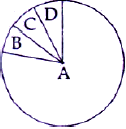
-
16%
a) A:Molluscs; B: Other animal groups; C: Crustaceans; D: Insects
-
31%
b) A:Insects ; B: Molluscs ; C: Crustaceans; D: Other animal groups
-
43%
c) A:Insects; B: Crustaceans; C: Other animal Groups; D: Molluscs
-
10%
d) A:Crustaceans; B:Insects; C: Molluscs; D: Other animal groups
Q.18.
Just as a person moving from Delhi to Shimla to escape the heat for the duration of hot summer, thousands of migratory birds from Siberia and other extremely cold northern regions move to : …[AIPMT 2014]
-
8%
a) Corbett National Park
-
46%
b) Keoladeo National Park
-
40%
c) Western Ghats
-
6%
d) Meghalaya
Q.19.
Just as a person moving from Delhi to Shimla to escape the heat for the duration of hot summer, thousands of migratory birds from Siberia and other extremely cold northern regions move to : …[AIPMT 2014]
-
15%
a) Corbett National Park
-
69%
b)Keoladeo National Park
-
6%
c) Western Ghats
-
10%
d) Meghalaya
Q.20.
Which of the following statement is wrong?
-
14%
a) Stable community must be resistant to occasional disturbances.
-
36%
b) Rich biodiversity is essential for ecosystem health but imperative for the very survival of the human race on this planet.
-
27%
c) A stable community should show much variation in productivity from year to year.
-
23%
d) According to Tillman’s long term ecosystem experiments increased diversity contributed to higher productivity.
Q.21.
Which is an ex – situ conservation method?
-
28%
a) Safari parks.
-
21%
b) Wildlife sanctuaries.
-
36%
c) National park.
-
15%
d) Biosphere reserve.
Q.22.
The UN Conference of Parties on climate change in the year 2011 was held in : …[AIPMT 2015]
-
25%
a) Qatar
-
15%
b) Poland
-
42%
c) South Africa
-
17%
d) Peru
Q.23.
Which one of the following statements is wrong? …[AIPMT 2015]
-
27%
a) Mannitol is stored food in Rhodophyceae
-
21%
b) Algin and carrageenan are products of algae
-
38%
c) Agaragar is obtained from Gelidium and Gracilaria
-
15%
d) Chlorella and Spirulina are used as space food
Q.24.
Cryopreservation of gametes of threatened species in viable and fertile condition can be referred to as: …[AIPMT 2015]
-
30%
a) In situ cryo-conservation of biodiversity
-
23%
b) In situ conservation of biodiversity
-
39%
c) Advanced ex-situ conservation of biodiversity
-
9%
d) In situ conservation by sacred groves
Q.25.
In which of the following both pairs have correct combination? …[AIPMT 2015]
-
5%
a) In situ conservation: Tissue culture Ex situ conservation: Sacred groves
-
59%
b) In situ conservation: National Park Ex situ conservation: Botanical Garden
-
20%
c) In situ conservation: Cryopreservation Ex situ conservation: Wildlife Sanctuary
-
16%
d) In situ conservation: Seed Bank Ex situ conservation: National Park
Q.26.
Which is the National Aquatic Animal of India ? …[AIPMT-2016]
-
16%
a) Gangetic shark
-
34%
b) River dolphin
-
34%
c) Blue whale
-
16%
d) Sea-horse
Q.27.
Which of the following is the most important cause of animals and plants being driven to extinction ? …[AIPMT-2016]
-
9%
a) Over - exploitation
-
27%
b) Alien species invasion
-
56%
c) Habitat loss and fragmentation
-
9%
d) Co-extinctions
Q.28.
Joint Forest Management Concept was introduced in India during : …[AIPMT-2016]
-
24%
a) 1960 s
-
33%
b) 1970 s
-
35%
c) 1980 s
-
9%
d) 1990 s
Q.29.
Which one of the following is not used for ex situ plant conservation? .. [NEET 2013]
-
10%
a) Field gene banks
-
29%
b) Seed banks
-
46%
c) Shifting cultivation
-
15%
d) Botanical Gardens
Q.30.
hich of the following represent maximum number of species among global biodiversity? .. [NEET 2013]
-
20%
a) Algae
-
7%
b) Lichens
-
51%
c) Fungi
-
22%
d) Mosses and Ferns