Q.1.
In which one of the following, the male and female gametophytes don’t have free-living independent existence?
-
40%
a) Pteris
-
45%
b) Funaria
-
10%
c) Polytrichum
-
5%
d) Cedrus
Q.2.
Which one of the following is considered important in the development of seed habit?
-
38%
a) Dependent sporophyte
-
31%
b) Heterospory
-
6%
c) Haplontic lifecycle
-
25%
d) Free-living gametophyte
Q.3.
Which one of the following is a vascular cryptogam?
-
41%
a) Equisetum
-
12%
b) Ginkgo
-
24%
c) Marchantia
-
24%
d) Cedrus
Q.4.
The class of algae in which zygotic meiosis does not occur?
-
27%
a) Green algae.
-
40%
b) Blue algae.
-
13%
c) Red algae.
-
20%
d) Brown algae.
Q.5.
Consider the following statements ((i) – (iv)): (i) In both bryophytes and pteridophytes, Gametophytic generation has independent free living existence. (ii) Megasporophyll of Cycas is equivalent to the stamen of angiosperms. (iii) Sexual reproduction in Spirogyra is carried out by motile gametes. (iv) The fungus often studied in experimental genetics and is also called as “Drosophila of plant kingdom”, belongs to class Basidiomycetes. Which of the above statements is/are correct?
-
25%
a) (i) and (ii).
-
25%
b) (ii) and (iii).
-
25%
c) (iii) and (iv)
-
25%
d) Only (i).
Q.6.
The characteristic which Linnaeus considered for classification of plants:
-
36%
a) Gynoecium structure.
-
9%
b) Androecium structure.
-
27%
c) Pollen grain viability.
-
27%
d) Cellular mobilization.
Q.7.
How does Bentham and Hooker’s classification differ from that of Linnaeus?
-
38%
a) Linnaeus considered the cytology while Bentham and Hooker considered morphology as a character for classification.
-
38%
b) Linnaeus classification was artificial while Bentham and Hooker’s were natural.
-
12%
c) Linnaeus classification was natural while Bentham and Hooker’s were artificial
-
12%
d) Both were the same and considered the gross morphological structures.
Q.8.
Which of the following is wrong about Numerical taxonomy?
-
14%
a) It is carried out easily by using computers and is based on all observable characters.
-
57%
b) Numbers and codes are assigned to all characters and the data is then processed.
-
0%
c) Each character is given equal importance at the same time hundreds of characters can be considered.
-
29%
d) It also takes into account cytological information on the species.
Q.9.
Algae present in sloth bear:
-
43%
a) Trichophilus
-
29%
b) Hydrodicton
-
0%
c) Fritschiella
-
29%
d) Coleochaeta
Q.10.
Microscopic unicellular algae:
-
33%
a) Volvox
-
33%
b) Chlamydomonas
-
0%
c) Ulothrix
-
33%
d) Spirogyra
Q.11.
Colonial form of algae:
-
17%
a) Volvox
-
50%
b) Chlamydomonas
-
17%
c) Ulothrix
-
17%
d) Spirogyra
Q.12.
The filamentous forms of algae:
-
33%
a) Volvox
-
17%
b) Spirogyra
-
17%
c) Ulothrix
-
33%
d) Both B and C.
Q.13.
Which of the following are not true regarding the prothallus of pteridophytes? (i) Dependent on sporophyte. (ii) Mostly they are unicellular rarely multicellular. (iii) Product of syngamy. (iv) They produce sex organs – antheridia and archegonia. (v) They have photosynthetic light harvesting pigments.
-
40%
a) (i), (ii) and (iii).
-
20%
b) (ii), (iv), (v).
-
20%
c) iii). (iv) and (v).
-
20%
d) (i), (ii) and (v).
Q.14.
hich of the following is an aquatic fern?
-
17%
a) Pteris.
-
50%
b) Selaginella.
-
17%
c) Salvinia
-
17%
d) Sphagnum
Q.15.
Observe the diagram carefully and identify the part labelled
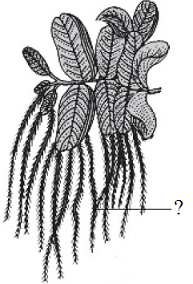
-
67%
a) Assimilatory roots for absorption and photosynthesis – Advanced vascular cryptogams.
-
17%
b) Assimilatory roots for photosynthesis and floating – Primitive vascular cryptogams.
-
17%
c) Dissected roots only for absorption – Advanced pteridophyte.
-
0%
d) Dissected roots for buoyancy – Advanced pteridophyte
Q.16.
Deep in the tropical rain forest, a botanist discovered an unusual plant with vascular tissues, stomata, a cuticle, flagellated sperm, cone like reproductive structures bearing seeds, and an alternation-of-generations life cycle. He was very excited about this discovery because it would be rather unusual for a plant to have both:
-
20%
a) A cuticle and flagellated sperm.
-
40%
b) Seeds and flagellated sperm.
-
20%
c) Vascular tissues and alternation of generations.
-
20%
d) Alternation of generations and seeds.
Q.17.
A universal feature of the life cycle of plants is:
-
20%
a) Morphologically identical haploid and diploid stages.
-
40%
b) Alteration of generations between heteromorphic haploid
-
20%
c) gametophytes and diploid sporophytes.
-
20%
d) Genetically identical haploid and diploid stages.
Q.18.
Angiosperms have dominated the land flora primarily because of their:
-
20%
a) Nature of self pollination.
-
60%
b) Property of producing large number of seeds.
-
0%
c) Domestication of man.
-
20%
d) Power of adaptability in diverse habitat.
Q.19.
In angiosperms, a mature male gametophyte is derived from a pollen mother cell by:
-
20%
a) One meiotic and two mitotic divisions.
-
40%
b) Two meiotic divisions.
-
0%
c) Three mitotic divisions.
-
40%
d) A single meiotic division.
Q.20.
If you are asked to classify the various algae into distinct groups then which of the following characters you should choose for the classification?
-
20%
a) Structural organization of thallus.
-
40%
b) Chemical composition of the cell wall.
-
0%
c) Types of pigments present in the cell.
-
40%
d) Nature of habitat.
Q.21.
Protonema:
-
40%
a) Produces lateral bud which forms leafy plant body.
-
20%
b) is a creeping, green, branched and develops directly from a spore.
-
0%
c) is a stage of Gametophytic generation
-
40%
d) All of the above.
Q.22.
The spreading of living pteridophytes is limited and restricted to narrow geographical region because:
-
0%
a) Gametophytic growth needs cool, damp and shady places.
-
20%
b) It requires water for fertilization.
-
60%
c) Due to absence of stomata in leaf and absence of vascular tissue.
-
20%
d) Both (a) and (b).
Q.23.
Which one of the following is termed as walking fern?
-
20%
a) Adiantum.
-
20%
b) Marsilea.
-
60%
c) Selaginella.
-
0%
d) Pteridium.
Q.24.
Mosses are of great ecological importance because of:
-
40%
a) Its contribution to prevent soil erosion.
-
20%
b) Its contribution in ecological succession.
-
0%
c) Its capability to remove CO from the atmosphere.
-
40%
d) Both (a) and (b).
Q.25.
You are given an unknown plant to study in the laboratory. You find that it has chlorophyll, no xylem. Its multicellular sex organs are enclosed in a layer of jacket cells. Its gametophyte stage is free living. The plant probably belongs to;
-
0%
a) Bryophyte.
-
20%
b) Chlorophyceae
-
40%
c) Pteridophyte.
-
40%
d) Gymnosperm.
Q.26.
If there are 4 cells in anther, what will be the number of pollen grains?
-
60%
a) 4
-
20%
b) 8
-
20%
c) 12
-
0%
d) 16
Q.27.
Bryophytes are different from fungi in having:
-
25%
a) Sterile jacket layers.
-
25%
b) Gametophytic plant body.
-
0%
c) Land habit.
-
50%
d) Multi-flagellate gametes.
Q.28.
A research student collected certain alga and found that its cells contained both chlorophyll a and chlorophyll d as well as phycoerythrin on the basis of his observation the students conclude that the alga belongs to:
-
25%
a) Phaeophyceae.
-
25%
b) Bacillariophyceae
-
50%
c) Rhodophyceae.
-
0%
d) Chlorophyceae.
Q.29.
Fruits are not formed in gymnosperms because of:
-
25%
a) Absence of fertilization.
-
25%
b) Absence of ovary.
-
25%
c) Absence of pollination.
-
25%
d) Absence of seed.
Q.30.
Match column-I with column-II and choose the correct option.
| Column I | Column II |
| a. Amphibians of plant kingdom | I. Sphagnum |
| b. Specialised structure in liverworts for asexual reproduction | II. Angiosperms |
| c. Monocotyledons and dicotyledons | III. Bryophytes |
| d. A plant which has high water holding capacity. | IV. Gemmae |
-
50%
a) A - IV; B - III; C - II; D - I
-
0%
b) A - III; B - IV; C - II; D- I
-
0%
c) A - III; B - IV; C - I; D - II
-
50%
d) A - III; B - II; C - IV; D – I.