Q.1.
How many of the following parts exhibit haplodization in chromosome number? (i) Gemmae. (ii) Cells in capsule of Funaria. (iii) Basidiospores. (iv) Zoospores of phycomycetes. (v) Spores of slime moulds. (vi) Primary protonema. (vii) Secondary protonema.
-
33%
a) 2
-
33%
b) 4
-
22%
c) 5
-
11%
d) 6
Q.2.
How many of the following statements are true: (i) Cell wall of Dictyota, Laminaria and Sargassum are made up of cellulose, algin and polysulphate esters. (ii) Gracilaria reproduces vegetatively by fragmentation. (iii) In Ferns, sporophyte is independent and photoautotrophic in nature. (iv) Gametophytes of Marchantia, Polytrichum and Sphagnum are free living.
-
14%
a) 1
-
29%
b) 2
-
14%
c) 3
-
43%
d) 4
Q.3.
Which of the following is not true regarding prothallus of pteridophytes? (i) Dependent on sporophyte in young stage but free living in mature stage. (ii) Mostly they are unicellular rarely multicellular. (iii) Product of syngamy. (iv) They produce sex organs – antheridium and archegonium. (v) They have photosynthetic light harvesting pigments.
-
17%
a) (i), (ii) and (iii).
-
33%
b) (ii), (iv) and (v).
-
33%
c) (iii), (iv) and (v).
-
17%
d) (i), (ii), (iii) and (v).
Q.4.
Observe the following statements: (i) Both kelps and Fucus exhibit the life cycle similar to true seed bearing plants. (ii) In algae, more number of flagella is an advanced character than less number of flagella. (iii) In Lycopsida, all the members are homosporous. (iv) In Cycas, female cone is larger than male cone.
-
33%
a) All except (i) are true.
-
33%
b) All except (ii) are true.
-
33%
c) All statements are true.
-
0%
d) All statements are false.
Q.5.
How many of the following statements are false regarding kingdom Plantae? (i) White spots seen on mustard leaves are due to parasitic algae. (ii) Bryophytes produce spores and embryo, but they lack seeds and vascular tissue. (iii) In gymnosperms, pollination takes place only by wind. (iv) Homosporous condition is more advanced than heterosporous condition.
-
50%
a) One.
-
33%
b) Two.
-
0%
c) Three.
-
17%
d) Four.
Q.6.
In Ginkgo, female gametes are formed within:
-
22%
a) Female cone.
-
33%
b) Lax.
-
33%
c) Archegonia.
-
11%
d) Oogonium.
Q.7.
In which of the following algae possess multicellular jacketed sex organs:
-
40%
a) Polysiphonia.
-
20%
b) Fucus.
-
40%
c) Chara.
-
0%
d) Laminaria.
Q.8.
Select the wrong statements: (i) Reserve food material is Floridian starch in brown algae. (ii) Alginic acid is obtained from Chondrus crispus (red algae). (iii) The number of flagella of Phaeophyceae is two, heterokont and lateral in position. (iv) Oogamy is observed in Volvox and Fucus.
-
25%
a) (i) and (iv).
-
50%
b) (i) and (iii).
-
25%
c) (ii) and (iii).
-
0%
d) (i) and (ii).
Q.9.
Read the statements and find out how many is/are incorrect statements: (i) In majority of the pteridophytes all the spores are of similar kind. (ii) Genera like Selaginella and Salvinia produce two kinds of spores. (iii) The development of the zygote into young embryos takes place within the female gametophytes. This event is a precursor to the seed habit. (iv) Azolla is an aquatic fern and is used as a biofertilizer.
-
0%
a) Zero.
-
25%
b) One.
-
75%
c) Two.
-
0%
d) Three.
Q.10.
A parasitic red colourless red algae living on other red algae is:
-
0%
a) Harveyella.
-
40%
b) Batrachospermum.
-
40%
c) Porphyra.
-
20%
d) Cephaleuros.
Q.11.
Pollen chamber present in gymnosperms represents:
-
25%
a) Microsporangium.
-
25%
b) Pollen grain cell where sperms are formed.
-
50%
c) Opening of megagametophyte for the passage of pollen tube to egg.
-
0%
d) Cavity in the nucellus for resting pollen grains after pollination.
Q.12.
Consider the following statements and state whether they are true or false: (i) The sporophyte in liverworts is more elaborate than that in mosses. (ii) Salvinia is heterosporous. (iii) The life cycle of all seed bearing pants is Diplontic. (iv) In Pinus male and female cones are borne on different trees.
-
100%
a) Statements (i) and (iii) are false.
-
0%
b) Statements (i) and (iv) are false.
-
0%
c) Statements (ii) and (iii) are false.
-
0%
d) Statements (i) and (ii) are false.
Q.13.
Cycas and Adiantum resemble each other in having:
-
20%
a) Seeds.
-
40%
b) Motile sperms.
-
20%
c) Cambium.
-
20%
d) Vessels.
Q.14.
Which one the following pair is wrongly matched:
-
0%
a) Gingko – Archegonia.
-
50%
b) Salvinia – Prothallus.
-
0%
c) Viroids – RNA.
-
50%
d) Mustard – Synergids.
Q.15.
Which of the following are true statements: (i) Young leaves of ferns are protected by Ramenta. (ii) Protonema is the juvenile, green autotrophic stage in the life cycle of ferns. (iii) Marsilea, Salvinia and Azolla are aquatic ferns and they show Heterospory. (iv) With regarding the kingdom plantae, gametophytes are non-vascular.
-
100%
a) (i), (ii) and (iv).
-
0%
b) (i), (iii) and (iv).
-
0%
c) (ii), (iii) and (iv).
-
0%
d) (i), (ii) and (iii).
Q.16.
Red snow formed by Chlamydomonas nivalis is due to the haematochrome Carotenoids pigment present in:
-
0%
a) Stigma.
-
100%
b) Chloroplast.
-
0%
c) Hypnospores.
-
0%
d) Aplanospores.
Q.17.
Match the columns:
| Column A | Column B |
| a. Bacteriophage | Mycorrhiza |
| b. Pinus | Ustilago |
| c. Smut | Gelidium and Gracilaria |
| d. Agar – Agar | Gemmae |
| e. Marchantia | Double stranded DNA |
-
50%
a) a → 3 ; b → 1; c → 2 ; d → 4; e → 5
-
0%
b) a → 1 ; b → 4; c → 3 ; d → 2; e → 5
-
50%
c) a → 5; b → 1; c → 4 ; d → 2; e → 3
-
0%
d) a → 5 ; b → 1; c → 2 ; d → 3; e → 4
Q.18.
What is common between pteridophytes and bryophytes?
-
0%
a) Absence of roots.
-
25%
b) Requirement of water for fertilization.
-
25%
c) Presence of vascular tissue.
-
50%
d) Presence of independent sporophyte and independent gametophyte.
Q.19.
Assertion: In gymnosperms, both male and female gametophytes do not have independent free living existence. Reason: Gymnosperms are heterosporous.
-
67%
a) Both Assertion and Reason are true and Reason is the correct explanation of Assertion.
-
33%
b) Both Assertion and Reason are true but Reason is NOT the correct explanation of Assertion.
-
0%
c) Assertion is true but Reason is false.
-
0%
d) Both Assertion and Reason are false.
Q.20.
Assertion: In Cycas megasporophylls are loosely arranged and form lax. Reason: Cycas is a living fossil.
-
25%
a) Both Assertion and Reason are true and Reason is the correct explanation of Assertion.
-
25%
b) Both Assertion and Reason are true but Reason is NOT the correct explanation of Assertion.
-
25%
c) Assertion is true but Reason is false.
-
25%
d) Both Assertion and Reason are false.
Q.21.
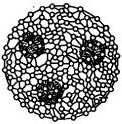
Consider the following statements regarding the given organism: (a) Strictly found in fresh water. (b) They produce female gametes which are smaller in size and non-motile. (c) Cell wall made up of only cellulose. (d) Motile colonial forms. (e) They have photosynthetic pigments identical to angiosperms. (f) Exhibit coenobium. Of the above statements:
-
50%
a) a, d, c, e and f are false.
-
0%
b) a, b, c, e and f are false.
-
50%
c) a, d, e and f are true.
-
0%
d) b, c, d, e and f are true.
Q.22.
Whisk Ferns belong to group called
-
20%
a) Tracheophyta
-
20%
b) Bryophyta
-
60%
c) tricophyta
-
0%
d) quadrophyta
Q.23.
Select the false statement among the following;
-
0%
a) In angiosperms, within the ovules are present highly reduced female gametophyte.
-
33%
b) Each embryo sac has a 3 celled egg apparatus, 3 antipodals and 2 polar nuclei.
-
67%
c) In Angiosperms, the endosperm is triploid and is formed before fertilization.
-
0%
d) The polar nuclei eventually fuse to produce a diploid secondary nucleus.
Q.24.
Which of the following statements are true: (i) In mosses, the sporophyte is differentiated into foot, seta and capsule. (ii) Operculum, theca, apophysis and Columella are parts of moss capsule. (iii) Calyptra is a part of gametophyte in mosses. (iv) Peristomial teeth regulate the spore dispersal in Funaria capsule. (v) Anthoceros possess longest lived sporophyte since it possesses a basal meristematic zone. (vi) Buxbaumia aphylla is a saprophytic bryophyte.
-
0%
a) (i), (iii) and (v) only.
-
33%
b) (ii) and (iv) only.
-
33%
c) (ii) and (v) only.
-
33%
d) All of the above.
Q.25.
How many of the following statements about Bryophytes are true: (i) Bryophytes are not considered as successful land plants because vascular tissue is absent and they need water for fertilization (Non – vascular cryptogams). (ii) Haploid gametophyte is the dominant stage in the life cycle and sporophyte is partially or completely dependent on gametophyte. (iii) It does not possess true leaves, stem and roots and the sporophyte is divided into foot, setae and capsule. (iv) Male sex organs are also called antheridium and female sex organs are called archegonium (1st archegoniate group). (v) Sexual reproduction is Oogamous type and life cycle is Haplo-diplontic. (vi) Sex organs are multicellular and jacketed.
-
50%
a) 2
-
50%
b) 3
-
0%
c) 5
-
0%
d) 6
Q.26.
How many of the following belong to Chlorophyceae? Laminaria, Porphyra, Pteris, Sargassum, Spirulina, Gelidium, Porella, Anabaena, Kelps, Chlorella, Riccia, Chlamydomonas, Dictyota, Gracilaria, Sequoia, Chara, Ectocarpus, Polysiphonia.
-
100%
a) 4
-
0%
b) 3
-
0%
c) 6
-
0%
d) 5
Q.27.
In Riccia and Marchantia, water and food is transported by:
-
0%
a) Xylem.
-
0%
b) Phloem.
-
33%
c) Cell to cell.
-
67%
d) Both A and B.
Q.28.
Statement 1: In gymnosperms, endosperm is haploid. Statement 2: In gymnosperm, endosperm is formed before fertilization.
-
33%
a) Both statements -1 and statement - 2 are true and statement - 2 is the correct explanation of statement - 1.
-
33%
b) Both statements -1 and statement - 2 are true but statement - 2 is not the correct explanation of statement - 1.
-
33%
c) Statement -1 is true and statement - 2 is false.
-
0%
d) Statement -1 is false and statement - 2 is true.
Q.29.
Read the following statements: (i) The Redwood tree Sequoia is one of the tallest tree species. (ii) Mycorrhizal roots are found in Pinus and coralloid roots in Cycas. (iii) The roots of gymnosperms are generally tap roots. (iv) In gymnosperms, stems may be unbranched (e.g. Pinus) or branched (e.g. Cycas). (v) In Cycas, the pinnate leaves persist for few years. How many of the above statements are correct?
-
33%
a) Four.
-
0%
b) Five.
-
0%
c) Two.
-
67%
d) Three.
Q.30.
The sexual reproduction in Spirogyra is:
-
33%
a) Isogamous involving non – flagellated gametes.
-
0%
b) Anisogamous involving flagellated gametes.
-
67%
c) Oogamous involving one flagellated and the other non – flagellated gametes.
-
0%
d) Isogamous involving flagellated gametes.