Q.1.
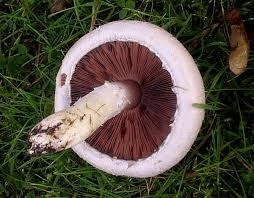
After Karyogamy followed by meiosis, spores are produced exogenously in:
-
22%
a) Agaricus
-
33%
b) Alternaria.
-
22%
c) Saccharomyces
-
22%
d) Neurospora
Explanation
Q.2.
elect the sexual spores in fungi from the list given below: (i) Conidiospores. (ii) Ascospores. (iii) Oospores. (iv) Sporangiospores. (v) Zygospores. (vi) Basidiospores. (vii) Zoospores. (viii) Aplanospores.
-
14%
a) (ii), (iii), (v), (vi)
-
14%
b) (ii), (iv), (v), (vi), (vii).
-
43%
c) (i), (ii), (iv), (v), (viii).
-
29%
d) (i), (iii), (iv), (v), (vii).
Q.3.
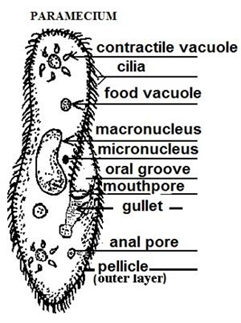
Which of the following is incorrect about Paramoecium?
-
14%
a) It shows transverse binary fission.
-
43%
b) It possess two nuclei, a micronucleus for vegetative purpose and a macronucleus for reproductive purpose.
-
29%
c) They show nuclear dimorphism.
-
14%
d) It is also known as slipper animalcule.
Explanation
Q.4.
Locomotory structure in Sporozoans:
-
20%
a) Pseudopodia.
-
60%
b) Cilia
-
0%
c) Flagella
-
20%
d) No locomotory structure.
Q.5.
The most abundant group of microorganisms:
-
0%
a) Algae
-
0%
b) Viruses
-
80%
c) Bacteria
-
20%
d) Protista.
Q.6.
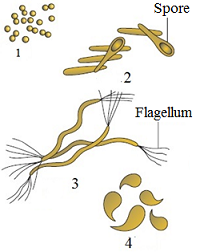
Bacteria are grouped under four categories based on their shape. Refer to the given figure and identify the correct option:
-
25%
a) 1-Vibrio, 2-Cocci, 3-Bacilli, 4-Spirilla.
-
75%
b) 1-Cocci, 2-Bacilli, 3-Spirilla, 4-Vibrio.
-
0%
c) 1-Bacilli, 2-Spirilla, 3-Vibrio, 4-Cocci.
-
0%
d) 1-Spirilla, 2-Vibrio, 3-Cocci, 4-Bacilli.
Q.7.
How many of the following statements are true regarding flagellation in bacteria: (i) Monotrichous – A single flagella at one end of bacterial cell. (ii) Amphitrichous – Single flagella at both the ends of bacterial cell. (iii) Cephalotrichous – Group of flagella at one end of bacterial cell. (iv) Lophotrichous – Group of flagella at both the ends of bacterial cell. (v) Petritrichous – Flagella present all around the body of bacterial cell. (vi) Atrichous – No flagella present.
-
60%
a) 5
-
0%
b) 6
-
20%
c) 4
-
20%
d) 3
Q.8.
The membrane stabilizing molecule present in the cell wall of bacteria.
-
0%
a) Ergo sterol.
-
20%
b) Stigma Sterol
-
40%
c) Chitin
-
40%
d) Hopanoids.
Q.9.
Fill in the box with suitable answers and choose the correct option: Five kingdom
| Characters | Monera | Protista | Fungi | Plantae | Animalia |
| Cell type | 1 | Eukaryotic | 2 | Eukaryotic | Eukaryotic |
| Cell wall | Non cellulosic | Present in some | 3 | Present (Cellulose) | 4 |
| Nuclear membrane | 5 | Present | Present | 6 | Present |
| Body organisation | Cellular | 7 | loose tissue | Tissue/organ | Tissue/organ/ organ system |
| Mode of nutrition | 8 | 9 | 10 | Autotrophic | Heterotrophic |
-
75%
a) 1-Prokaryotic, 2-Eukaryotic, 3-Present (without cellulose), 4-Absent, 5-Absent, 6-Present, 7-Cellular, 8-Autotrophic, 9- Autotrophic, 10-Heterotrophic.
-
25%
b) 1-Prokaryotic, 2-Eukaryotic, 3- Present (with cellulose), 4-Present, 5-Absent, 6-Present, 7-Multicellular, 8-Autotrophic, 9-Autotrophic, 10-Heterotrophic.
-
0%
c) 1-Prokaryotic, 2-Eukaryotic, 3- Present (with cellulose), 4-Absent, 5-Present, 6-Present, 7-Multicellular, 8-Autotrophic, 9-Heterotrophic, 10-Autotrophic.
-
0%
d) 1-Prokaryotic, 2-Eukaryotic, 3-Present (without cellulose), 4-Absent, 5-Present, 6-Present, 7-Cellular, 8-Autotrophic, 9-Heterotrophic, 10-Autotrophic.
Q.10.
Connecting link between bacteria and fungi:
-
0%
a) Spirochaete.
-
67%
b) Actinomycetes.
-
0%
c) Rickettsia.
-
33%
d) Enterobacteria
Q.11.
Filamentous body of Nostoc, Anabaena and Oscillatoria is called:
-
50%
a) Trichome
-
50%
b) Pellicle
-
0%
c) Hormogonia
-
0%
d) Fragment
Q.12.
What is the mode of arrangement of flagella in cyanobacteria?
-
0%
a) Monotrichous
-
20%
b) Lophotrichous.
-
80%
c) Petritrichous.
-
0%
d) Atrichous
Q.13.
How many of the following are true: (i) Albugo candida – White rust of mustard. (ii) Phytophthora infestans – Late blight of potato. (iii) Pythium debaryanum – Damping off of seedlings. (iv) Rhizopus – Spoilage of bread. (v) Puccinia graminis – Black rust of wheat. (vi)Ustilago tritici – Loose smut of wheat.
-
50%
a) 4
-
25%
b) 5
-
0%
c) 6
-
25%
d) 3
Q.14.
Flagella of prokaryotic and eukaryotic cells differ in:
-
0%
a) Type of movement and placement in cell.
-
67%
b) Location in cell and mode of functioning.
-
33%
c) Microtubular organisation and type of movement.
-
0%
d) Macrotubular organisation and function.
Q.15.
In some virus, RNA is present instead of DNA indicating that:
-
0%
a) Their nucleic acid must combine with lost DNA before replication.
-
0%
b) They cannot replicate
-
33%
c) RNA can act to transfer heredity.
-
67%
d) There is no hereditary information.
Q.16.
atch the following:
| E.coli | a. Bacteriophages |
| Cyanobacteria | b. Coliophages |
| Fungi | c. Cyanophages |
| Bacteria | d. Mycophages. |
-
33%
a) 1→a ; 2 →b ; 3→c ; 4→d
-
33%
b) 1→b ; 2 →c ; 3→d ; 4→a
-
33%
c) 1→c ; 2 →d ; 3→a ; 4→b
-
0%
d) 1→a ; 2 →b ; 3→d ; 4→a
Q.17.
Which one of the following statements regarding viruses is correct?
-
0%
a) Viruses possess their own metabolic system.
-
0%
b) Viruses contain either DNA or RNA.
-
0%
c) Viruses are facultative parasites.
-
100%
d) Viruses are readily killed by antibiotics.
Q.18.
ndospore formation is not considered as a method of reproduction because:
-
0%
a) The individual formed from it does not exist.
-
0%
b) Individuals cannot be formed from endospores.
-
100%
c) Only one endospore in a cell, so number of individuals does not increase.
-
0%
d) Endospore formation is not frequent.
Q.19.
Fungi usually store food materials in the form of:
-
0%
a) Starch
-
33%
b) Glycogen and oil
-
0%
c) Lipid
-
67%
d) Protein.
Q.20.
Consider the following statements regarding characters of Archaebacteria share with Eukaryotes: (i) The cell wall does not contain peptidoglycan. (ii) DNA associated with histones. (iii) Translation initiated with formylated methionine. (iv) RNA polymerase similar to eukaryotic RNA polymerase II. (v) Similarity in ATPase. (vi) Similar DNA replication and repair. How many of the above characters Archaebacteria share with Eukaryotes.
-
67%
a) 3
-
33%
b) 4
-
0%
c) 5
-
0%
d) 6
Q.21.
During Gram’s staining which is incorrect ?
-
0%
a) All bacteria take crystal violet stain
-
0%
b) Gram +ve bacteria take crystal violet stain
-
33%
c) Only Gram –ve bacteria take crystal violet stain
-
67%
d) Gram –ve bacteria lose this stain after alcohol treatment
Q.22.
Which of the following statements regarding Euglenoids is not true?
-
67%
a) They have cell wall
-
0%
b) They have two flagella, a short and along one
-
33%
c) They are photosynthetic in the presence of sunlight but behave like a heterotroph when deprived of sunlight
-
0%
d) Pigments of Euglenoids are identical are to those present in higher plants
Q.23.
Consider the following regarding the reasons for the fact that new Cyanobacteria are kept in Monera and not in Plantae i. They are prokaryotes ii The cell wall of cyanobacteria has peptidoglycan iii. They can fix atmospheric nitrogen The correct explanation would be
-
0%
a) i and ii only
-
67%
b) i and iii only
-
0%
c) ii and iii only
-
33%
d) i,ii and iii
Q.24.
Which of the following are valid pointers to the demerits of the kingdom classification proposed by Linnaeus? i. Euglena has features of plant and animal ii. Chlamydomans is autotrophic but has flagella iii) Slime molds resemble animals in one phase of their life cycle and plants in other phase
-
0%
a) i and ii only
-
33%
b) i and iii only
-
33%
c) ii and iii only
-
33%
d) i, ii and iii
Q.25.
Identify the group that is not matched correctly to all the characters shown:
| Sr | Group | Cell type | Cell wall | Nuclear membrane | Body organisation |
| 1 | Monera | Prokaryotic | Absent | Absent | Cellular |
| 2 | Protista | Eukaryotic | Present in some | Present | Cellular |
| 3 | Fungi | Eukaryotic | Present | Present | Multicellular/loose |
| 4 | Plantae | Eukaryotic | Present | Present | Tissue/Organ |
-
33%
a) 1
-
33%
b) 2
-
33%
c) 3
-
0%
d) 4
Q.26.
Match Column I with Column II
| Column I ( Bacterium) | Column(Shape) |
| i. Escherechia coli | Spherical |
| ii. Streptococcus pyogenes | Helically coiled |
| iii. Treponema pallidum | Rod shape |
-
33%
a) i – 1, ii- 2, iii- 3
-
67%
b) i – 3, ii- 1, iii- 2
-
0%
c) i – 3, ii- 2, iii- 1
-
0%
d) i – 1, ii- 3, iii- 2
Q.27.
Identify the incorrect statement regarding bacteria
-
0%
a) Bacteria are the most abundant microorganisms
-
0%
b) Bacteria also live in extreme habitats where very few other life forms can survive
-
33%
c) Bacteria as group show the most extensive metabolic diversity
-
67%
d) They are obligate intercellular parasites
Q.28.
Identify a character that is not unique to archaebacteria
-
0%
a) Cell wall structure
-
0%
b) Cell membrane stricture
-
0%
c) Flagellin protein structure
-
100%
d) Fatty acid synthase
Q.29.
In which of the following patterns of viral replication viruses enter a cell, replicate and then cause the cell to burst, releasing new virus?
-
33%
a) Lytic
-
0%
b) Lysogenic
-
33%
c) Repreogenic
-
33%
d) Both (a) and (b)
Q.30.
These organisms are fungus like in one phase of their life cycle and Amoeba like in another phase of their life cycle
-
33%
a) diatoms
-
33%
b) slime molds
-
33%
c) dinoflagellates
-
0%
d) water molds