Q.1.
MALT constitutes about ___________ percent of the lymphoid tissue in human body. ….[NEET- 2017]
-
41%
a) 50%
-
26%
b) 20%
-
32%
c) 70%
-
0%
d) 10%
Q.2.
How do parasympathetic neural signals affect the working of the heart? …[AIPMT 2014]
-
36%
a) Both heart rate and cardiac output increase.
-
8%
b) Heart rate decreases but cardiac output increases.
-
44%
c) Reduce both heart rate and cardiac output.
-
12%
d) Heart rate is increased without affecting the cardiac output.
Q.3.
Person with blood group AB is considered as universal recipient because he has: …[AIPMT 2014]
-
22%
a) no antigen on RBC and no antibody in the plasma.
-
39%
b) both A and B antigens in the plasma but no antibodies.
-
30%
c) both A and B antigens on RBC but no antibodies in the plasma.
-
9%
d) both A and B antibodies in the plasma.
Q.4.
If you suspect major deficiency of antibodies in a person, to which of the following would you look for confirmatory evidence? [ ReAIPMT 2015] Explanation is provided, please click on
-
55%
a) Serum globulins
-
20%
b) Fibrinogin in plasma
-
20%
c) Serum albumins
-
5%
d) Haemocytes
Q.5.
Reduction in pH of blood will :- …[AIPMT-2016]
-
14%
a) reduce the rate of heart beat.
-
0%
b) reduce the blood supply to the brain.
-
64%
c) decrease the affinity of hemoglobin with oxygen.
-
23%
d) release bicarbonate ions by the liver.
Q.6.
Blood pressure in the pulmonary artery is :- …[AIPMT-2016]
-
14%
a) same as that in the aorta.
-
18%
b) more than that in the carotid.
-
64%
c) more than that in the pulmonary vein.
-
5%
d) less than that in the venae cavae.
Q.7.
Figure shows schematic plan of blood circulation in humans with labels A to D. Identify the label and give its function/s. …[NEET 2013]
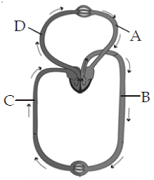
-
5%
a) A – Pulmonary vein – takes impure blood from body parts, PO2 = 60 mm Hg
-
40%
b) B – Pulmonary artery – takes blood from heart to lungs, PO2 = 90 mm Hg
-
50%
c) C – Vena Cava – takes blood from body parts to right auricle, PCO2 = 45 mm Hg
-
5%
d) D – Dorsal aorta – takes blood from heart to body parts, PO2 = 95 mm Hg
Q.8.
The diagram given here is the standard ECG of a normal person. The P-wave represents the …[NEET 2013]
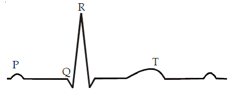
-
35%
a) Contraction of both the atria
-
30%
b) Initiation of the ventricular contraction
-
25%
c) Beginning of the systole
-
10%
d) End of systole
Q.9.
Name the blood cells, whose reduction in number can cause clotting disorder, leading to excessive loss of blood from the body. …[NEET 2016] Explanation is provided, please click on
-
0%
a) Neutrophils
-
67%
b) Thrombocytes
-
24%
c) Erythrocytes
-
10%
d) Leucocytes
Q.10.
Adult human RBCs are enucleate. Which of the following statement(s) is/are most appropriate explanation for this feature? ….[NEET- 2017] (a) They do not need to reproduce (b) They are somatic cells (c) They do not metabolize (d) All their internal space is available for oxygen transport
-
40%
a) Only (d)
-
5%
b) Only (a)
-
50%
c) (a), (c) and (d)
-
5%
d) (b) and (c)
Q.11.
The genotypes of a Husband and Wife are IAIB and IAi. Among the blood types of their children, how many different genotypes and phenotypes are possible? ….[NEET- 2017]
-
22%
a) 3 genotypes ; 3 phenotypes
-
17%
b) 3 genotypes ; 4 phenotypes
-
56%
c) 4 genotypes ; 3 phenotypes
-
6%
d) 4 genotypes ; 4 phenotypes
Q.12.
Which layer of the following serves the dual purpose of forming the inner layer of the pericardium and forming the outermost wall of the heart?
-
7%
a) fibrous pericardium
-
33%
b) parietal pericardium
-
40%
c) visceral pericardium
-
20%
d) myocardium
Explanation

Q.13.
During high blood pressure, regulations of heart beat and circulation are controlled by ... ... [ AIIMS 1999 ]
-
27%
a) Vasodilator and vasoconstrictor centres.
-
27%
b) Cardio-stimulatory and vasoconstrictor centres
-
27%
c) Cardio-inhibitory and vasoconstrictor centres
-
20%
d) Cardio - inhibitory and vasodilator centres
Explanation
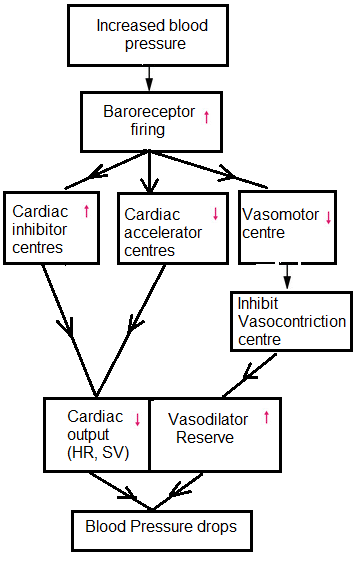
Q.14.
Purkinje fibres are connected with impulse conducting system of .... [ BHU 2000 ]
-
73%
a) Heart
-
7%
b) Brain
-
20%
c) Skin
-
0%
d) Kidney nephrons
Q.15.
Which one are granulocytes... .. [ manipal 2002 ]
-
6%
a) Neutrophis, basophilis, lymphocytes
-
6%
b) Eosinophils, basophils, monocytes
-
19%
c) Basophils, monocytes, lymphocytes
-
69%
d) Neutrophils, eosinophils, basophils
Q.16.
Thoracic duct is associated with ... ... [ BHU 2002 ]
-
7%
a) Purkinje fibres
-
20%
b) Hepatic duct
-
53%
c) Innominate vein
-
20%
d) Aorta
Q.17.
Purkinje fibres are present in ... ... [ MPPMT 2012 ]
-
69%
a) Heart
-
6%
b) Cerebrum
-
19%
c) Semicircular canals
-
6%
d) Voluntary muscles
Q.18.
Bundle of His is a network of ... ... [ CBSE 2003 ]
-
31%
a) Muscle fibres distributed throughout heart walls
-
31%
b) Muscle fibres found only in ventricle wall
-
25%
c) Nerve fibres distributed in ventricles
-
12%
d) Nerve fibres found throughout the heart