Q.1.
Common factors in the trachea of mammals and insects is .... [ CPMT 1993 ]
-
27%
a) Ciliated inner lining
-
52%
b) Non-collapsible wall
-
11%
c) Paired nature
-
11%
d) Origin from head region
Q.2.
Which one respires through gills ... [ JKCMEE 2005 ]
-
5%
a) Crocodile
-
33%
b) Whale
-
18%
c) Frog
-
44%
d) Prawn
Q.3.
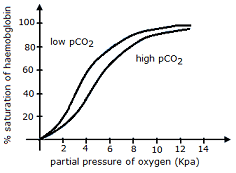
In a resting person, oxygen saturation of haemoglobin as blood leaves the tissue capillaries is ....[AMU 2009 ]
-
27%
a) 3%
-
24%
b) 40%
-
24%
c) 46%
-
25%
d) 75%
Explanation
Q.4.
Vocal cord occur in ... [PMPMT 1999 ]
-
10%
a) Pharynx
-
75%
b) Larynx
-
8%
c) Glottis
-
7%
d) Bronchial tube
Explanation

Q.5.
Emphysema is characterised by ...[ H.P.PMT 2007 ]
-
57%
a) Inflation of alveoli
-
25%
b) Pulmonary hemorrhage
-
13%
c) Increased number of air sacs
-
5%
d) Infection of Mycobacterium tuberculosis
Q.6.
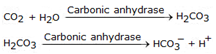
What percentage of CO2 is transported as bicarbonates ( HCO'3
-
50%
a) 70%
-
19%
b) 7%
-
20%
c) 20 -25%
-
11%
d) 97%
Q.7.
Hemoblobin that is bonded to carbon monoxide and therefore cannot transport oxygen, is called
-
44%
a) caroxyhemoglobin
-
17%
b) metheoglobin
-
11%
c) reducedhemoglobin
-
28%
d) carbaminohemoglobin
Q.8.
About 1200 ml of air left in lung even after forceful respiration is called..... [CBSE 1996 ]
-
10%
a) Tidal volume
-
31%
b) Inspiratory reserve volume
-
51%
c) Residual volume
-
8%
d) Vital capacity
Q.9.
During strenuous exercise glucose is converted into ...[BHU 2005 ]
-
14%
a) Glycogen
-
21%
b) Pyruvic acid
-
12%
c) Starch
-
52%
d) Lactic acid
Q.10.
The cells which do not respire aerobically ... [ AFMC 2000 ]
-
16%
a) Epidermal cells
-
30%
b) Sieve cells
-
20%
c) Cortical cells
-
34%
d) Erythrocytes
Q.11.
Which energy is consumed in breathing ? [ CPMT 1994 ]
-
24%
a) Mechanical
-
38%
b) Chemical
-
11%
c) Bioelectricity
-
27%
d) Physical energy
Q.12.
Carboxyhaemoglobin is produced due to ... [ AFMC 2009]
-
35%
a) CO
-
53%
b) CO2
-
12%
c) NO3-
-
0%
d) SO43-
Q.13.
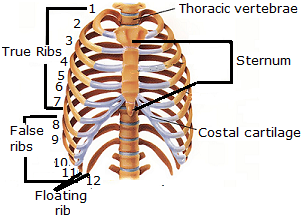
Thoracic cage of man is formed of ...[ MPPMT 2002]
-
32%
a) Ribs and sternum
-
60%
b) Ribs, sternum and thoracic vertebrae
-
5%
c) Ribs, sternum and lumbar vertebrae
-
2%
d) Ribs and thoracic vertebrae
Explanation
Q.14.
What is true about RBCs in human .....[ CBSE 2010 ]
-
30%
a) They transport 99.5% of O2
-
18%
b) They transport 80% oxygen, the rest 20% being transported by plasma
-
18%
c) They do not carry CO2 at all
-
35%
d) They carry 20 - 25% of CO2
Q.15.
Expiratory capacity is .... [ HPPMT 2012 ]
-
17%
a) Tidal volume
-
14%
b) Residual volume
-
58%
c) TV+ERV
-
11%
d) TV + IRV
Q.16.
CO2 is carried in blood as ....[ MPPMT 2002 ]
-
70%
a) Sodium bicarbonate
-
11%
b) Sodium carbonate
-
16%
c) Potassium carbonate
-
3%
d) Magnesium carbonate
Explanation
Q.17.
Volume of air which remains in conducting airways and is not available for gas exchange is ... [ JKCET 2012 ]
-
8%
a) Vital capacity
-
39%
b) Anatomic dead space
-
47%
c) Functional residual capacity
-
6%
d) Forced expiratory volume
Q.18.
Amount of oxygen present in one gram of haemoglobin is ....[ AIIMS 1997 ]
-
19%
a) 20 ml
-
49%
b) 1.34 ml
-
19%
c) 13.4 ml
-
14%
d) None of the above
Q.19.
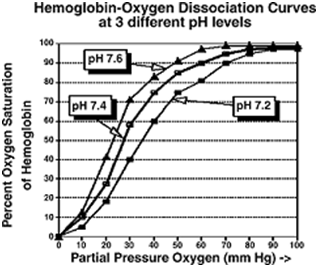
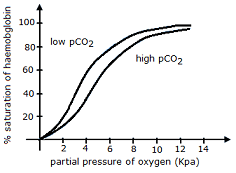
Dissociation curve shifts to the right when.....[ MPPMT 2002 ]
-
18%
a) O2 concentration decreases
-
15%
b) CO2 concentration decreases
-
45%
c) CO2 concentration increases
-
21%
d) Chloride concentration increases
Explanation
Q.20.
Muscles attached to diaphragm contract during inspiration to make it ...[BHU 2008 ]
-
44%
a) Flat
-
42%
b) Dome-shaped
-
11%
c) Concave
-
3%
d) Rotate
Q.21.
CO2 is transported mainly as ... [ CBSE 1995 ]
-
10%
a) Dissolved in blood plasma
-
29%
b) As carbonic acid
-
29%
c) In carbaminohaemoglobin
-
32%
d) As carbaminohaemoglobin and carbonic acid
Q.22.
Inspiratory centre is located in ...[ kerala 2002 ]
-
10%
a) Cerebrum
-
16%
b) Cerebellum
-
13%
c) Hypothalamus
-
61%
d) Medulla oblongata
Q.23.
SARS is caused by variant of ...[AIIMS 2004 ]
-
25%
a) Pneumococcus pneumonia
-
46%
b) Common cold and Corona virus
-
21%
c) Asthma
-
8%
d) Bronchitis
Q.24.
Which one of the mammalian cells is incapable of metabolising glucose to carbon dioxide aerobically ... [ CBSE 2007 ]
-
11%
a) WBC
-
43%
b) RBC
-
7%
c) Liver cells
-
39%
d) Unstriated muscle cells
Q.25.
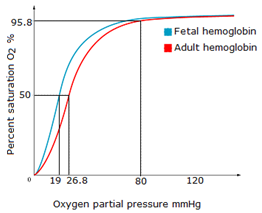
Haemoglobin of human foetus ... [ CBSE 2008 ]
-
19%
a) Has two protein subunits instead of four
-
48%
b) Higher affinity of oxygen that of adult
-
15%
c) Has lower affinity of oxygen than that of adult
-
19%
d) Its affinity for oxygen is the same as that of an adult
Explanation
Q.26.
Lining of trachea is made of ....[ JIPMER 2004]
-
31%
a) Simple squamous epithelium
-
4%
b) Simple cuboidal epithelium
-
50%
c) Pseudostratified epithelium
-
15%
d) Stratified cuboidal epithelium
Q.27.
Whether a child died after birth or died before birth can be confirmed by measuring... [ KCT 2208 ] <
-
50%
a) Residual volume of air
-
4%
b) Tidal volume
-
43%
c) Dead space air
-
4%
d) Weight of child
Q.28.
Air directly enters the tracheae via the
-
28%
a) external nares
-
34%
b) pharynx
-
28%
c) larynx
-
10%
d) bronchi
Q.29.
In which of the following subjects, the dead space is highest .. [ WB 210 ]
-
50%
a) Old man
-
19%
b) Old woman
-
27%
c) Young woman
-
4%
d) Young man
Q.30.
Emphysema is a .... [ JKCET 2011]
-
12%
a) Cardiovascular disease
-
67%
b) Pulmonary disease
-
4%
c) Renal disease
-
17%
d) Neural disease
Q.31.
Bicarbonate formed inside erythrocytes passes out into plasma while chloride of plasma pass into erythrocytes. the phenomenon is called ...[ Kerala 2003 ]
-
29%
a) Bicarbonate shift
-
10%
b) Carbonation
-
57%
c) Hamburger phenomenon
-
5%
d) Carbochlorosis
Q.32.
Vocal cords occur in ...[MPPMT 1995 ]
-
71%
a) Larynx
-
21%
b) pharynx
-
4%
c) Glottis
-
4%
d) Bronchial tube
Q.33.
Determination of oxygen carried by haemoglobin is done by ... [ CET Chd. 2001 ]
-
8%
a) pH
-
23%
b) Partial pressure of oxygen
-
8%
c) Partial pressure of carbon dioxide
-
62%
d) All the above
Q.34.
Alveoli become enlarged and damaged with reduced surface area in heavy smokers. the condition is called ...[ kerala 2044 ]
-
4%
a) Silicosis
-
75%
b) Emphysema
-
17%
c) Asthma
-
4%
d) Bronchitis
Q.35.
Food does not enter windpipe due to structure called ... [ Kerala 2000 ]
-
21%
a) Glottis
-
67%
b) Epiglottis
-
8%
c) Tonsils
-
4%
d) Pharynx
Q.36.
Oxyhaemoglobin dissociates at ....[ JIPMER 2002 ]
-
50%
a) Low pO2 in tissues
-
29%
b) High pO2 in tissues
-
12%
c) Equal pO2
-
8%
d) All times irrespective of pO2
Q.37.
Match the columns and find the correct combination
| Column I | Column II |
| (a) Asthma | (i) Inflammation of nasal tract |
| (b) Bronchitis | (ii) Spasm of tracheal muscle |
| (c) Rhinitis | (iii) Fully blown out alveoli |
| (d) Emphysema | (iv) Inflammation of bronchi |
| - - | (v) Cough with blood stained sputum |
-
30%
a) a - iv ; b - ii; c - v; d - i
-
5%
b) a - v ; b - iii; c - ii; d - i
-
40%
c) a - iii ; b - i; c - v; d - iv
-
25%
d) a - ii ; b - iv; c - i; d – iii
Q.38.
With conscious efforts one can .... [ CBSE 2011 ]
-
14%
a) Breathe out air totally without oxygen
-
50%
b) Breathe in and out by moving diaphragm alone without moving diaphragm alone without moving ribs at all
-
32%
c) Breathe out air through eustachian tube by closing both nose and mouth
-
5%
d) Empty the lungs completely by breathing out all air out of them
Q.39.
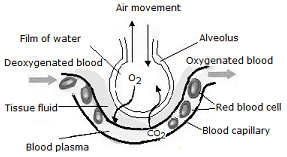
Which structure of lungs is directly involved in O2/CO2 exchange between air and blood capillaries ... [ Guj CET 2011]
-
9%
a) Bronchi
-
9%
b) Trachea
-
77%
c) Alveoli
-
5%
d) Secondary bronchi
Q.40.
Respiratory membrane consists of ..... [
-
19%
a) Alveolar wall and ducts
-
38%
b) Membranes of alveolar ducts and capillaries
-
23%
c) Inner and outer pleural membranes and pleural fluid
-
19%
d) Alveolar wall, alveolar capillary and interstitial space
Explanation
Q.41.
Assertion "A": CO2 transport occurs very fast through RBCs Reason "R": Enzyme carbonic is absent in blood plasma .... [ GUJ CET 2011 ]
-
16%
a) Both correct with "R" being correct explanation of "A"
-
37%
b) Both correct but "R" is not correct explanation of "A"
-
37%
c) "A" correct, "R" wrong
-
11%
d) "A" wrong, "R" correct
Q.42.
Which is the end part of pulmonary or lung division and place of gaseous exchange? ... [ C.P.M.T. 1991 ]
-
9%
a) Bronchiole
-
61%
b) Alveolus
-
9%
c) Air chamber
-
22%
d)Tracheole
Q.43.
Assertion: Extra oxygen consumption is called oxygen debt Reason: Extra oxygen is required to oxidise accumulated lactic acid produced during strenuous exercise
-
72%
a) Both Assertion and Reason are true and Reason is the correct explanation of Assertion
-
11%
b) The Assertion and Reason are true but Reason is not correct explanation of Assertion
-
11%
c) Assertion is true but, Reason is false
-
6%
d) Assertion is false but, Reason is true
Q.44.
Increased in CO2 concentration shall cause ... [ AFMC 2008 ]
-
23%
a) Slower and shallow breathing
-
9%
b) Slower and deeper breathing
-
45%
c) Faster and deeper breathing
-
23%
d) No effect on breathing
Q.45.
Assertion: Carbon monoxide in blood decreases the amount of haem bound oxygen in blood. Reason: Carbon monoxide binds with the oxygen binding site of haem.
-
55%
a) Both Assertion and Reason are true and Reason is the correct explanation of Assertion.
-
35%
b) Both Assertion and Reason are true but Reason is NOT the correct explanation of Assertion.
-
10%
c) Assertion is true but Reason is false.
-
0%
d) Both Assertion and Reason are false.
Q.46.
Which statements are true/false? (a) Blood transports CO2 comparatively easily because of its high solubility (b) Approximately 8.9% of CO2 is transported dissolved plasma (c) CO2 diffuses into blood, passes into RBCs and reacts with water to form H2CO3 (d) Oxyhaemoglobin of erythrocytes is basic (e) Chloride ions diffuse from plasma into erythrocytes to maintain ionic balance
-
62%
a) a, c and e are true; b and d are false
-
6%
b) a, c and e are false; b and d are true
-
19%
c) a, b and d are true; c and e are false
-
12%
d) a, b and d are false; c and e are true
Q.47.
Kilocalories of usable energy liberated by one mole of glucose is .. [ Odisha 2006 ]
-
15%
a) 80
-
25%
b) 160
-
40%
c) 180
-
20%
d) 380
Q.48.
Rate of respiration is directly affected by ...[CPMT 1993 ]
-
37%
a) Concentration of carbon dioxide
-
16%
b) Oxygen in trachea
-
26%
c) Concentration of oxygen
-
21%
d) Diaphragm expansion
Q.49.
After forceful inspiration, the amount of air that can be breathed out with maximum forced expiration is equal to .... [ W.B. 2012 ]
-
25%
a) TV + RV + ERV
-
30%
b) IRV +TV + ERV
-
20%
c) IRV + RV + ERV
-
25%
d) IRV + ERV + TV + RV
Q.50.
At higher CO2 concentration. oxygen dissociation curve of haemoglobin will ... [ CPMT 1990 ]
-
14%
a) Move to left
-
73%
b) Move to right
-
14%
c) Become irregular
-
0%
d) Move upwardly
Explanation