Q.1.
Vital capacity of lungs is .... [ CBSE 2008 ]
-
10%
a) Inspiratory reserve volume plus expiratory reserve volume
-
40%
b) inspiratory reserve volume plus tidal volume
-
15%
c) Total lung capacity minus expiratory reserve volume
-
35%
d) Total lung capacity minus residual volume
Q.2.
In which disease, due to flattening of tracheal vessels, alveoli are deprived of oxygen ...[ GUJ CET 2007 ]
-
0%
a) Pneumonia
-
63%
b) Emphysema
-
32%
c) Asthma
-
5%
d) Bronchitis
Q.3.
Body tissues obtain oxygen from haemoglobin because of its dissociation in tissues caused by .... [ MPPMT 1995 ]
-
56%
a) Low oxygen concentration and high carbon dioxide concentration
-
28%
b) Low oxygen concentration
-
17%
c) Low carbon dioxide concentrtion
-
0%
d) High carbon dioxide concentrtion
Q.4.
At the time of inspiration, the diaphragm ...[MPPMT 1996 ]
-
16%
a) Expands
-
63%
b) Contracts
-
16%
c) Relaxes
-
5%
d) Does not undergo any change
Q.5.
In Bohr's effect, the curve shifts to right when ...[ Bih PMT 2006 ]
-
41%
a) pCO2 decreases and pO2 increases
-
24%
b) pCO2 increases and pO2 increases
-
18%
c) pCO2 increases and pO2 decreases
-
18%
d) pCO2 increases and pO2 increases and pH increases
Q.6.
Concentration of carbonic acid does not increase in blood due to presence of ...[BHU 1999 ]
-
26%
a) Na+
-
16%
b) Mg2+
-
26%
c) Ca2+
-
32%
d) K+
Q.7.
Myoglobin is found in ....[ CPMT 1991 ]
-
20%
a) Lungs
-
25%
b) Blood
-
40%
c) Muscles
-
15%
d) Red blood corpuscles
Q.8.
During expiration diaphragm becomes ...[ KCET 2003 ]
-
24%
a) Flattened
-
62%
b) Dome-shaped
-
10%
c) Oblique
-
5%
d) Normal
Q.9.
When oxygen supply to tissue is inadequate, the condition is ... [ WB 2011 ]
-
16%
a) Dyspnoea
-
32%
b) Asphyxia
-
42%
c) Hypoxia
-
11%
d) Apnoea
Q.10.
A large proportion of oxygen is left unused in the human blood even after uptake by the body tissue. This oxygen ....[ CBSE 2011 ]
-
27%
a) Is enough to keep oxyhaemoglobin saturation at 96%
-
13%
b) Helps in releasing more oxygen to epithelial tissues
-
47%
c) Acts as reserve during muscular exercise
-
13%
d) Raise pCO2 of blood to 75 mmHG
Q.11.
People migrated from planes to hills six months back ... [ CBSE 2012 ]
-
21%
a) Possess more RBCs with haemoglobin of low O2 binding affinity
-
21%
b) Possess same RBCs with haemoglobin of high O2 binding affinity
-
14%
c) Lose physical fitness to play games like football
-
43%
d) Suffer from altitude sickness with nausea and fatigue
Q.12.
Fish brought out of water dies because of ... [ CET Chd. 2000 ]
-
0%
a) Absence of pressure
-
94%
b) Inability to respire
-
6%
c) Inability to feed
-
0%
d) Rise in temperature
Q.13.
Lungs have a large number of alveoli for ...[MPPMT 1995 ]
-
7%
a) Having spongy texture and proper shape
-
67%
b) More surface area for diffusion of gases
-
27%
c) More space for increasing volume of inspired air
-
0%
d) More nerve supply
Q.14.
Dead space is ... [ Manipal 2003 ]
-
27%
a) Upper respiratory tract
-
33%
b) Nasal chambers
-
27%
c) Alveolar space
-
13%
d) Lower respiratory tract
Q.15.
CO2 concentration is ... [ ODisha 2004 ]
-
33%
a) More in expired air than in alveolar air
-
8%
b) More in alveolar air than in expired air
-
25%
c) More in inspired air than in alveolar air
-
33%
d) More in inspired air than in expired air
Q.16.
Rate of breathing is controlled by ....[ kerala 2005 ]
-
0%
a) Amount of freely available oxygen
-
25%
b) Carbon dioxide in blood
-
25%
c) Stress
-
50%
d) Muscular functions of the body
Q.17.
Which of the following is a correct statement about the gaseous exchange occurring in man?
-
27%
a) The inspired air reaching the alveoli of the lung receives the blood supply of the coronary circulation.
-
27%
b) At the alveoli, the carbon dioxide of the inspired air is taken in by the blood, and oxygen is released for respiration.
-
27%
c) The respiratory membrane has no role in gaseous exchange between alveoli and pulmonary blood.
-
18%
d) At a particular pressure difference, the diffusion of CO2 across the respiratory membrane is 20-25 times faster than oxygen.
Q.18.
Oxygen binding to haemoglobin is .... ... [ AIIMS 2012 ]
-
33%
a) Directly proportional to CO2 concentration
-
8%
b) Directly proportional to CO concentration
-
42%
c) Inversely proportional to CO2 concentration
-
17%
d) Independent of CO concentration
Q.19.
Dead space air in man is ... [ JKCET 2011 ]
-
25%
a) 1.5 L
-
25%
b) 500 ml
-
17%
c) 250 ml
-
33%
d) 150 ml
Q.20.
There are two statements Statement 1 : Carbonic anhydrase is present in erythrocytes Statement 2: In erythrocytes, CO2 combines with H2O and is transported
-
25%
a) Statement 1 is correct but statement 2 is wrong
-
38%
b) Statement 1 is correct is responsible for statement 2
-
25%
c) Statement 1 is not correct but statement 2 is correct
-
12%
d) Both the statement are wrong
Q.21.
A higher CO2 concentration of blood causes ... [ AMU 2001]
-
11%
a) Slow diffusion of O2 from blood
-
11%
b) Slow transport of O2 in blood
-
44%
c) Quick diffusion of O2 from blood
-
33%
d) Both A and B
Q.22.
Presence of large number of alveoli around alveolar ducts opening into bronchioles in mammalian lungs is ....[CBSE 1995 ]
-
11%
a) Inefficient system of ventilation with little of residual air
-
33%
b) Inefficient system of ventilation with high percentage of residual air
-
22%
c) An efficient system of ventilation with no residual air
-
33%
d) An efficient system of ventilation with little residual air
Q.23.
Blue copper protein complex contained in some Mollusca in their plasma for oxygen transport is ... [ HPPMT 2001 ]
-
10%
a) Haemocyanin
-
30%
b) Chlorocruorin
-
20%
c) Bilirubin
-
40%
d) Haemoglobin
Q.24.
Approximate normal composition of alveolar air is ... [ Odisha 2003 ]
-
22%
a) 14% O2, 6% CO2, 80%N2
-
44%
b) 16% O2, 3% CO2, 81%N2
-
22%
c) 21% O2, 2% CO2, 77%N2
-
11%
d) 10% O2, 8% CO2, 82%N2
Q.25.
The covering of lung is called ...[AFMC 2005 ]
-
10%
a) Pericardium
-
10%
b) Perichondrium
-
80%
c) Pleural membrane/ pleura
-
0%
d) Peritoneum
Q.26.
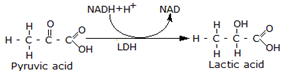
In anaerobic respiration of muscles, pyruvic acid is changed to ... [ BHU1990 ]
-
20%
a) Alcohol
-
20%
b) Acetaldehyde
-
50%
c) Acetyl CoA
-
10%
d) Lactic acid
Explanation
Q.27.
Lungs are not affected by the disease ... [ RPMT 2006 ]
-
20%
a) Pneumonia
-
0%
b) Bronchitis
-
60%
c) Polio
-
20%
d) Asthma
Q.28.
Amount of CO 2 in expired air is about ... [ JKCET 2011 ]
-
0%
a) 0.04%
-
44%
b) 0.03%
-
44%
c) 21%
-
11%
d) 4.5%
Q.29.
Trachea is lined with incomplete rings of .... [ AFMC 2002 ]
-
9%
a) Fibrous cartilage
-
36%
b) Calcified cartilage
-
9%
c) Elastic cartilage
-
45%
d) Hyaline cartilage
Q.30.
Residual volume is ... [ KCET 2007 ]
-
22%
a) Greater than vital capacity
-
33%
b) Greater than tidal volume
-
33%
c) Lesser than tidal volume
-
11%
d) Greater than inspiratory volume
Q.31.
Respiratory centre of brain is stimulated by ... [ AIIMS 2000 ]
-
0%
a) Carbon dioxide content in venous blood
-
25%
b) Carbon dioxide content in arterial blood
-
25%
c) Oxygen content in venous blood
-
50%
d) Oxygen content in arterial blood
Q.32.
At high altitude, RBCs of human blood will ...[AFMC 2011 ]
-
25%
a) Increase in number
-
62%
b) Decrease in number
-
12%
c) Decrease in size
-
0%
d) Increase in size
Q.33.
How much pulmonary air is expired normally? [ Har PMT 2005]
-
12%
a) 7%
-
62%
b) 25%
-
25%
c) 32%
-
0%
d) 20%
Q.34.
What is correct ... [ Odisha 2003 ]
-
0%
a) Pulmonary ventilation is equal to alveolar ventilation
-
14%
b) Alveolar ventilation is less than pulmonary ventilation
-
57%
c) Alveolar ventilation is more than pulmonary ventilation
-
29%
d) The two are variable
Q.35.
Vital capacity of lungs is ... [ MPPMT 1997 ]
-
38%
a) 4.5 - 5.5 l
-
38%
b) 3.5 - 4.5 l
-
12%
c) 2.5 - 3.9 l
-
12%
d) 1.5 - 2.5 l
Q.36.
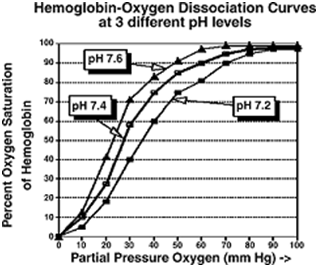
Decrease in pH causes O2 dissociation curve of haemoglobin to shift to ... [ HPPMT 2007 ]
-
38%
a) Left
-
50%
b) Right
-
12%
c) Remain unchanged
-
0%
d) Oscillate erratically
Explanation
Q.37.
Which one has the lowest value? .... [ BHU 1996]
-
33%
a) Tidal volume
-
44%
b) Vital capacity
-
22%
c) Inspiratory reserve volume
-
0%
d) Expiratory reserve volume
Q.38.
Which can bind several hundred times more strongly to haemoglobin than oxygen .... [ AMU 2011 ]
-
12%
a) CO2
-
38%
b) CO
-
50%
c) H2CO3
-
0%
d) SO2
Q.39.
Due to increasing air-borne allergens and pollutants, many people in urban areas are suffering from respiratory disorder causing wheezing due to ... [NEET 2019]
-
11%
a) benign growth on mucous lining of nasal cavity
-
44%
b) inflammation of bronchi and bronchioles
-
22%
c) proliferation of fibrous tissues and damage of the alveolar walls
-
22%
d) reduction in the secretion of surfactants by pneumocytes.
Q.40.
What percentage of CO2 is transported by RBCs .... ...[ MPPMT 2011 ]
-
12%
a) 70%
-
25%
b) 20 -25%
-
50%
c) 7%
-
12%
d) 97 %
Q.41.
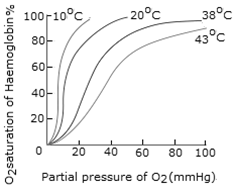
increased body temperature makes oxygen haemoglobin dissociation curve to .... [ BHU 2012 ]
-
44%
a) Shift right
-
22%
b) Shift left
-
22%
c) Become parabolic
-
11%
d) Become hyperbolic.
Explanation
Q.42.
At a given O2 concentration, dissociation of oxyhaemoglobin will increase if ....[ Manipur 2007]
-
12%
a) pH of blood rises
-
50%
b) pH of blood falls
-
25%
c) CO2 concentration of blood falls
-
12%
d) Free fatty acid concentration of blood falls
Q.43.
Skin is an accessory organ of respiration in ...[ CBSE 1990 ]
-
0%
a) Humans
-
50%
b) Frog
-
12%
c) Rabbit
-
38%
d) Lizard
Q.44.
Enzyme essential for transport of CO2 as bicarbonate in blood is ...... [ kerala 2012 ]
-
0%
a) Caboxypeptidase
-
25%
b) Succinic dehydrogenase
-
62%
c) Carbonic anhydrase
-
12%
d) Thrombokinase
Q.45.
If the CO2 concentration in the blood increases, the breathing shall...[AMU 1999 ]
-
62%
a) Increase
-
25%
b) Decrease
-
12%
c) Stop
-
0%
d) No effect
Q.46.
Congestion of lungs in one of the main symptoms in ... ... (kerala 2011 ]
-
12%
a) Hypertension
-
38%
b) Angina
-
12%
c) Heart failure
-
38%
d) Coronary artery disease
Q.47.
Amount of oxygen carried by 100 ml arterial blood while passing through tissues is ......[WB 2012 ]
-
0%
a) 0.4 -0 .5 ml
-
38%
b) 4 - 6 ml
-
38%
c) 14 -15 ml
-
25%
d) 19 -20 ml
Q.48.
Partial pressure of oxygen in alveolar air is ... [ AMU 2010 ]
-
38%
a) 45 mmHg
-
25%
b) 125 mm Hg
-
12%
c) 100 mmHg
-
25%
d) 104 mmHg
Q.49.
If the thoracic wall but not lungs is punctured ....
-
12%
a) The lungs get inflated
-
50%
b) The man dies as the lungs get collapsed
-
38%
c) The breathing rate decreases
-
0%
d) The breathing rate increases
Q.50.
Inner alveolar surface area of human lungs is .....[ PMT 2000 ]
-
12%
a) 1 m2
-
0%
b) 10 m2
-
75%
c) 100 m2
-
12%
d) 1000 m2