Q.1.
In carbon monoxide poisoning there is ... [ AFMC 1997 ]
-
11%
a) Increase in carbon dioxide concentration
-
50%
b) Decrease in oxygen availability
-
39%
c) Decrease in free haemoglobin
-
0%
d) None of the above
Q.2.
Layer of uneven columnar cells which form tracheal lining are component of ...[ Uttarakhand 2001 ]
-
27%
a) Brush border epithelium
-
20%
b) Stratified epithelium
-
40%
c) Pseudostratified epithelium
-
13%
d) Ciliated epithelium
Q.3.
Carbon monoxide has greater affinity for haemoglobin as compared to oxygen ...[CBSE 1995 ]
-
40%
a) 1000 times
-
27%
b) 200 times
-
20%
c) 20 times
-
13%
d) 2 times
Q.4.
Hamburger's phenomenon is also known as ....[ JIPMER 2002 ]
-
31%
a) HCO3' shift
-
15%
b) Na+ shift
-
31%
c) H+ shift
-
23%
d) Chloride shift
Q.5.
Which leads to acidosis ...[ COMEDK's -2007 ]
-
50%
a) Hypercapnia
-
14%
b) Asphyxia
-
7%
c) Hypocapnia
-
29%
d) Emphysema
Q.6.
Which is not true ...[ kerala 2007 ]
-
71%
a) pCO2 of deoxygenated blood is 95 mm Hg
-
0%
b) pCO2 of alveolar air is 40 mm Hg
-
14%
c) pO2 alveolar air is 104 mm Hg
-
14%
d) pO2 of oxygenated blood is 95 mm Hg
Q.7.
Residual air mostly occurs in .... [ MPPMT 1992 ]
-
80%
a) Alveoli
-
13%
b) Bronchus
-
7%
c) Nostrils
-
0%
d) Trachea
Q.8.
Compound soluble in water which does not impede oxygen transportation is ...[AIIMS 1997 ]
-
21%
a) SO2
-
29%
b) SO3
-
43%
c) CO
-
7%
d) NO
Q.9.
Protective respiratory blast is ... [ CET Chd. 2006 ]
-
8%
a) Hiccupping
-
38%
b) Sneezing
-
15%
c) Coughing
-
38%
d) All the above
Q.10.
In alveolar air, partial pressure of CO2 is ..... [ W.B. 2007]
-
43%
a) 40 mmHg
-
29%
b) 44 mmHg
-
29%
c) 44 mmHg
-
0%
d) 42 mmHg
Q.11.
Oxygen carried in inhalation ultimately reaches ... [ MPPMT 1998 ]
-
8%
a) Bronchioles
-
17%
b) Bronchus
-
17%
c) Trachea
-
58%
d) Alveoli
Q.12.
What is absolutely correct? [ CBSE 2006 ]
-
18%
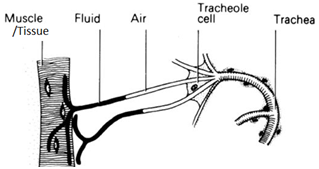
a) Presence of nonrespiratory air sacs increases efficiency of respiration in birds
-
18%
b) In insects, circulating body fluids serve to distribute oxygen to tissues
-
36%
c) Principle of counter - current flow facilitates efficient respiration in gills of fishes
-
27%
d) Residual air in lungs slightly decreases the efficiency of respiration in mammals
Explanation
Q.13.
Combination of oxygen with haemoglobin in the lungs causes the haemoglobin to become a strong acid. It leads to:
-
0%
a) Bohr’s effect.
-
25%
b) Haldane effect.
-
33%
c) Herring breur reflex.
-
42%
d) Chloride shift.
Q.14.
During transport of CO2 blood does not become acidic due to .... [ CBSE 1995 ]
-
45%
a) Neutralisation of H2CO3 by Na2CO3
-
18%
b) Absorption of leucocytes
-
36%
c) Blood buffers
-
0%
d) Nonaccumulation
Q.15.
Vital capacity, the maximum volume of air a person can inhale, is measured with ... [ CET Chd.2010]
-
0%
a) Stethoscope
-
50%
b) Spirometer
-
33%
c) Aspirator
-
17%
d) Sphygmomanometer
Q.16.
Amount of air inspired or expired during normal breathing is ...[DPMT 2003 ]
-
17%
a) 4.5 lit
-
33%
b) 3.5 lit
-
25%
c) 1.5 lit
-
25%
d) 0.5 lit
Q.17.
According to Boyle's law, the product of pressure and volume is constant, hence ... [ KCET 2010 ]
-
36%
a) If volume of lung is increased, the pressure decreases proportionately
-
27%
b) If volume of lung is increased, the pressure also increases proportionately
-
27%
c) If volume of lung is increased, the pressure decreases disproportionately
-
9%
d) If volume of lungs is increased, the pressure remains the same
Q.18.
Oxygen dissociation curve of haemoglobin is ... [ BHU 1995 ]
-
73%
a) Sigmoid
-
0%
b) Hyperbolic
-
9%
c) Linear
-
18%
d) Hypobolic
Q.19.
Which is true ... [ kerala 2009 ]
-
27%
a) H+ ions released from carbonic acid combine with haemoglobin to form haemoglobinic acid
-
0%
b) Oxyhaemoglobin of erythrocytes is alkaline
-
55%
c) More than 70% of carbon dioxide is transferred from tissue to lungs as carbamino compounds
-
18%
d) In lungs oxygen from alveoli reaches blood through active transport
Q.20.
Capacity of human lungs for air in a healthy person is ... [ Odisha 2005 ]
-
50%
a) 6000 ml
-
10%
b) 3000 ml
-
10%
c) 1000 ml
-
30%
d) 500 ml
Q.21.
A molecule of haemoglobin carries oxygen molecules ... [ MPPMT 1997 ]
-
10%
a) 1
-
20%
b) 2
-
10%
c) 3
-
60%
d) 4
Q.22.
Which one is mismatch .....
-
67%
a) Haemoglobin - Frog
-
8%
b) Myglobin - Mollusca
-
17%
c) Haemocyanin - Snail
-
8%
d) Haemoerythrin - Sipunculus
Q.23.
Oxygen carried by blood is liberated in [ CET Chd. 2000 ]
-
0%
a) Arteries
-
22%
b) Capillaries of body
-
44%
c) Capillaries of lungs
-
33%
d) Heart
Q.24.
Common feature of human and insect trachea is .... [ AFMC 1994 ]
-
50%
a) Noncollapsible wall
-
10%
b) Supporting rings
-
10%
c) Ectodermal origin
-
30%
d) Endodermal origin
Q.25.
Carbon dioxide entering erythrocytes reacts with water to form carbonic acid. the enzyme is ...[ HPPMT 2001 ]
-
67%
a) Carbonic anhydrase
-
22%
b) Carboxypeptidase
-
0%
c) Hydrolase
-
11%
d) Oxidoreductase
Q.26.
Oxygen carrying capacity of blood is ....[ CPMT 1990 ]
-
30%
a) 20%
-
20%
b) 30%
-
30%
c) 40%
-
20%
d) 50%
Q.27.
Wind pipe arises from ... [ COMED 2009 ]
-
50%
a) Larynx
-
30%
b) Nasopharynx
-
20%
c) Oropharynx
-
0%
d) Laryngopharynx
Q.28.
Which is correct ... [ CPMT 2010 ]
-
62%
a) During inspiration, external intercostal muscles and diaphragm contract
-
25%
b) Cyanosis means collapse of alveoli
-
12%
c) Eupnoea is slow breathing
-
0%
d) Coryza is caused by human corona virus
Q.29.
Oxygen and carbon dioxide is transported in blood through ... [ CBSE 1996 ]
-
0%
a) Platelets and corpuscles
-
50%
b) RBCs and WBCs
-
12%
c) WBCs and serum
-
38%
d) RBCs and plasma
Q.30.
Carboxyhaemoglobin is converted into haemoglobin during the internal respiration because ... ..
-
25%
a) An enzyme splits oxyhaemoglobin
-
12%
b) Oxygen tension in tissues is less than capillary blood reaching tissues
-
50%
c) CO2 tension is low in blood that reaches tissues
-
12%
d) Oxyhaemoglobin is unstable
Q.31.
Mammalian lungs have numerous alveoli for ...[CPMT 1991 ]
-
0%
a) Increasing volume of inspired air
-
33%
b) Keeping the lungs in proper shape
-
33%
c) Higher number of muscles to provide greater elasticity
-
33%
d) Increasing surface area for gaseous diffusion.
Q.32.
Lack of pulmonary surfactant produces ... [ AMU 2009 ]
-
17%
a) Asthma
-
50%
b) Cystic fibrosis
-
17%
c) Respiratory distress syndrome
-
17%
d) Emphysema
Q.33.
Bicarbonate ion is produced inside ... [ MPPMT 2000 ]
-
0%
a) Lymphocytes
-
67%
b) Erythrocytes
-
33%
c) Neutrophils
-
0%
d) Basophils
Q.34.
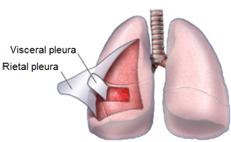
Pleura is double membrane sac which ..[ JKCMEE 1992]
-
0%
a) Envelops the kidneys
-
0%
b) Envelops the brain
-
100%
c) Envelops the lungs
-
0%
d) Lines the nasal passage
Explanation
Q.35.
Respiration movements are controlled by ... [ CPMT 1998 ]
-
0%
a) Cerebellum
-
33%
b) Cerebrum
-
67%
c) Medulla oblongata
-
0%
d) Crura cerebri
Q.36.
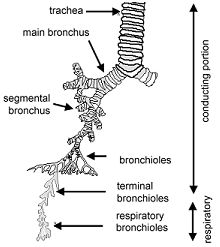
Which one has the smallest diameter ...[ kerala 2003 ]
-
0%
a) Right bronchus
-
17%
b) Left bronchus
-
50%
c) Secondary bronchiole
-
33%
d) Respiratory bronchiole
Explanation
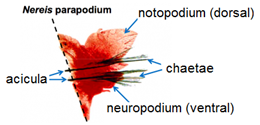
Q.37.
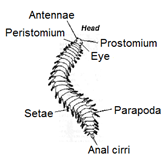
In Nereis, gaseous exchange occurs through ... [ Kerala 2000 ]
-
33%
a) Parapodia
-
17%
b) Gills
-
17%
c) Lungs
-
33%
d) Skin
Explanation
Q.38.
Forced deep breathing during rest for some time followed by temporary stoppage of breathing because of ...[BHU2005 ]
-
33%
a) Little CO2in blood
-
33%
b) Higher CO2 content in blood
-
0%
c) Higher oxygen content in blood
-
33%
d) Little oxygen content in blood
Q.39.
Percentage of oxygen supplied by haemoglobin is .... [CPMT 1996 ]
-
33%
a) 97%
-
17%
b) 100%
-
50%
c) 49%
-
0%
d) 3%
Q.40.
Oxygen carrying capacity ofblood is reduced by ... [ AMU 2009 ]
-
0%
a) CO2
-
33%
b) CO
-
67%
c) SO2
-
0%
d) O3
Q.41.
The alveolar epithelium in the lung is ...[ CBSE 1990 ]
-
17%
a) Non-ciliated columnar
-
33%
b) Non-ciliated squamous
-
33%
c) Ciliated columnar
-
17%
d) Ciliated squamous
Q.42.
BCG vaccine is used to curb
-
0%
a) Pneumonia
-
33%
b) Tuberculosis
-
50%
c) Emphysema
-
17%
d) Small pox
Q.43.
Rate of respiration is directly affected by ...[CPMT 1993 ]
-
33%
a) Concentration of carbon dioxide
-
0%
b) Oxygen in trachea
-
33%
c) Concentration of oxygen
-
33%
d) Diaphragm expansion
Q.44.
Carbonic anhydrase is mostly active in .... {MHCET 2011 ]
-
17%
a) RBC
-
0%
b) WBC
-
50%
c) Blood plasma
-
33%
d) Blood platelets
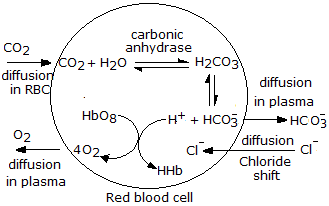
Q.45.
Choose the right sequential phenomena during passage of O2 from blood to tissues P. Absorption of CO2 by blood Q. Reaction of CO2 with water forming H2CO3 inside RBCs and then H+ and HCO'3 ions R. Reaction of CO2 with water forming H2CO3 inside plasma followed by conversion into H+ and HCO'3 ions S. Combination of H+ with haeme part of HbO2 to release O2 T. Combination of HCO'3 with haeme part of HbO2 to release O2 to form reduced haemoglobin and release of O2
-
33%
a) P, R, S
-
33%
b) P, Q, T
-
33%
c) P, Q, S
-
0%
d) P, R, T
Explanation
Q.46.
About 97% of oxygen is transported by RBC, then remaining 3% is ... [ Kerala 2008 ]
-
14%
a) Retained in lungs
-
57%
b) Dissolved in plasma and transported
-
29%
c) Attached to cell membrane
-
0%
d) Inside mitochondria
Q.47.
Apnoea is ...[ DPMT 2001 ]
-
67%
a) Decreased ventilation
-
0%
b) Absence of breathing
-
17%
c) Laboured breathing
-
17%
d) Increased ventilation
Q.48.
The amount of air that moves in and out of the lung, with each normal inspiration and expiration is called ...[AFMC 2009 ]
-
14%
a) Residual volume
-
14%
b) Vital capacity
-
43%
c) Tidal volume
-
29%
d) Tidal capacity
Q.49.
Haldane believes oxyhaemoglobin to act as ... [ RPMT 1996 ]
-
29%
a) Acid
-
29%
b) Alkali
-
43%
c) Buffer
-
0%
d) None of the above
Q.50.
Arrange the following in order of increasing volume .... [AIIMS 2007 ] Tidal volume residual volumeExpiratory reserve volume.Vital capacity
-
33%
a) 1 < 2 < 3 < 4
-
0%
b) 1 < 4 < 3 < 2
-
67%
c) 1 < 3 < 2 < 4
-
0%
d) 1 < 4 < 2 < 3