Q.1.
High percentage of CO2 and very low percentage of O2 may make a person unconscious due to ... [ KCET 2011 ]
-
0%
a) Eupnoea
-
25%
b) Emphysema
-
69%
c) Suffocation
-
6%
d) Asphyxia
Q.2.
A respiratory disease is .... { BHU 2006 ]
-
8%
a) Cancer
-
31%
b) Arthritis
-
0%
c) Polio
-
62%
d) Asthma
Q.3.
Haemoglobin has maximum affinity for ... [ Bih PMT 2004 ]
-
21%
a) CO
-
0%
b) CO2
-
57%
c) O2
-
21%
d) NH3
Q.4.
respiratory centre is situated in ...[BHU 1995 ]
-
0%
a) Cerebellum
-
83%
b) Medulla oblongata
-
17%
c) Hypothalamus
-
0%
d) Cerebrum
Q.5.
In an oxygen association-dissociation curve, the curve shifts on an average about 15% to right. It causes:
-
23%
a) An increase in the pH of blood and P50 value.
-
31%
b) A decrease in the P50 value and decrease in the pH of blood.
-
46%
c) An increase in the p50 value decrease in the pH of blood.
-
0%
d) An increase in the alkalinity of blood by decreasing its pH.
Q.6.
A fully grown tadpole larva of frog respires through ... [ Bihar PMT 2001 ]
-
38%
a) Skin
-
54%
b) Gills
-
8%
c) Lungs
-
0%
d) Tail fin
Q.7.
Partial pressure below arterial pO2 causes ....[ kerala 2003 ]
-
8%
a) Formation of bicarbonate
-
58%
b) Formation of carbaminohaemoglobin
-
25%
c) Production of carbonic acid
-
8%
d) Releases of CO2 from the cell
Q.8.
Pneumotaxic centre occurs in .... [ CPMT 2007 ]
-
9%
a) Cerebellum
-
27%
b) Cerebrum
-
36%
c) Medulla oblongata
-
27%
d) Pons varolii
Q.9.
Maximum amount of oxygen is lost from blood in ... [ KCET 2006 ]
-
8%
a) Arteries of body
-
17%
b) Capillaries surrounding the alveoli <
-
42%
c) Left auricle of heart
-
33%
d) Capillaries surrounding the tissues
Q.10.
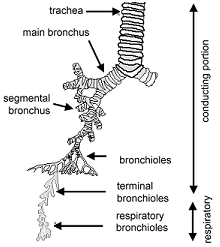
Lungs have a large number of narrow tubes called ...[Har. PMT 2007 ]
-
0%
a) Alveoli
-
58%
b) Bronchioles
-
25%
c) Bronchi
-
17%
d) Alveolar ducts
Explanation
Q.11.
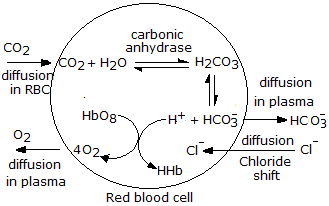
In lungs there is definite exchange of ions between RBC and plasma. removal of CO2 from blood involves ... [ CPMT 2005 ]
-
8%
a) Influx of C' into RBC
-
33%
b) Efflux of Cl' from RBC
-
17%
c) Influx of HCO'3 ions in RBC
-
42%
d) Influx of HCO'3 ions from RBC
Explanation
Q.12.
pCO2 released from body is ...[ Pb. PMT 1997]
-
0%
a) 15 mm
-
36%
b) 23 mm
-
27%
c) 30 mm
-
36%
d) 70 mm
Q.13.
Metabolic rate will be highest in ... [ Har PMT 2001 ]
-
33%
a) Elephant
-
33%
b) Rat
-
25%
c) Horse
-
8%
d) Human
Q.14.
In mammal, voice is produced by ...[MPPMT 2000 ]
-
8%
a) Bronchus
-
17%
b) Syrinx
-
58%
c) Larynx
-
17%
d) Inhalation and exhalation
Q.15.
Respiratory system is derived from ...[CPMT 1993 ]
-
20%
a) Endoderm
-
40%
b) Mesoderm
-
40%
c) Ectoderm
-
0%
d) None of the above
Q.16.
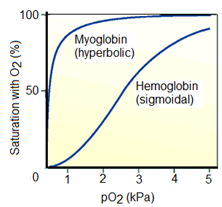
Oxygen carrying capacity of blood is ....[ CPMT 1990 ]
-
25%
a) 20%
-
8%
b) 30%
-
50%
c) 40%
-
17%
d) 50%
Explanation
Q.17.
Carbon dioxide is transported from tissues to respiratory surface by only ...[CBSE 1993 ]
-
50%
a) Plasma and erythrocytes
-
30%
b) Plasma
-
10%
c) Erythrocytes
-
10%
d) Erythrocytes and leucocytes
Q.18.
Hiccough ( hiccup) is due to activity of ....[ DPMT 2011 ]
-
0%
a) Intercostal muscles
-
44%
b) Food in air tract
-
44%
c) Diaphragm/ jerk incomplete inspiration
-
11%
d) Inadequate oxygen in environment
Q.19.
Match the columns and find correct combination.... [ HarPMT 2002 ]
| a) Earth worm | i) Pulmonary |
| b) Human | ii) Branchial |
| c) Prawn | iii) Tracheal |
| d) Insects | Cutaneous |
-
12%
a) a - (i); b - (ii), c - (iii), d - (iv)
-
75%
b) a - (iv), b - (i), c - (ii), d - (iii)
-
12%
c) a - (iii), b - (ii), c - (iv), d - (i)
-
0%
d) a - (iv), b - (iii), c - (ii), d - (i)
Q.20.
Chloride shift is required for transport of .... [ CPMT 1990 ]
-
0%
a) Nitrogen
-
12%
b) Oxygen
-
50%
c) Carbon dioxide
-
38%
d) Carbon dioxide and oxygen
Q.21.
In expiration, diaphragm becomes ...[ CPMT 1993 ]
-
25%
a) Flattened
-
12%
b) Relaxed
-
0%
c) Straightened
-
62%
d) Arched/ Dome-shaped
Q.22.
Which is false? ...[Manipal 1995 ]
-
38%
a) Blood from right side of heart is carried to lungs by pulmonary artery
-
62%
b) Pleura is double covering of kidney
-
0%
c) Pancreas is both exocrine and endocrine gland
-
0%
d) Scurvy is due to vitamin C deficiency
Q.23.
The greatest quantity of air that can be expired after a maximum inspiratory effort is its ....[ AFMC 1997 ]
-
25%
a) Residual volume
-
25%
b) Tidal volume
-
25%
c) Vital capacity
-
25%
d) Lung volume
Q.24.
Match the columns ....[ KCET 1999 ]
| Column I | Column II |
| a) Larynx | p) Lid of larynx |
| b) Trachea | q) Air sacs |
| c) Alveoli | r) Voice box |
| d) Epiglottis | s) Wind pipe |
| -- | t) Common passage |
-
44%
a) a - r ; b - s; c - q; d - p
-
44%
b) a - t ; b - s; c - p; d - q
-
11%
c) a - r ; b - s; c - q; d - t
-
0%
d) a - r ; b - t; c - q; d - p
Q.25.
Carbon dioxide is transported from tissues to respiratory surface by only ...[CBSE 1993 ]
-
50%
a) Plasma and erythrocytes
-
12%
b) Plasma
-
25%
c) Erythrocytes
-
12%
d) Erythrocytes and leucocytes
Q.26.
Approximately seventy percent of carbon dioxide absorbed by the blood will be transported to the lungs: ….[AIPMT 2014]
-
12%
a) by binding to R.B.C
-
25%
b) as carb amino - haemoglobin
-
50%
c) as bicarbonate ions
-
12%
d) in the form of dissolved gas molecules
Q.27.
idal Volume and Expiratory Reserve Volume of an athlete is 500 mL and 1000 mL, respectively. What will be his Expiratory Capacity if the Residual Volume is 1200 mL? [NEET 2019]
-
14%
a) 1500 mL
-
57%
b) 1700 mL
-
29%
c) 2200 mL
-
0%
d) 2700 mL
Q.28.
Which of the following is an occupational respiratory disorder ? [NEET 2018]
-
10%
a) Botulism
-
60%
b) Silicosis
-
0%
c) Anthracis
-
30%
d) Emphysema
Q.29.
The iron containing haemoglobin pigment is a
-
33%
a) protein
-
22%
b) polysaccharide
-
33%
c) enzyme
-
11%
d) none of these
Q.30.
The process of breathing-in of oxygen rich air from outside is called
-
25%
a) expiration
-
50%
b) inspiration
-
12%
c) respiration
-
12%
d) oxidation
Q.31.
Ciliated epithelium in the trachea of mammals helps in
-
12%
a) sucking-in air
-
50%
b) pushing expired air out
-
12%
c) pushing mucus out
-
25%
d) keeping the alveolar air in circulation
Q.32.
A large proportion of oxygen is left unused in the human blood even after its uptake by the body tissues. This O2
-
29%
a) raises the PCO2 of blood to 75mm of Hg
-
29%
b) is enough to keep oxyhaemoglobin
-
14%
c) help in releasing more O2 to the epithelial tissues
-
29%
d) acts as a reserve during muscular exercise
Q.33.
When, under certain conditions, the P50 value of haemoglobin rises, the affinity of the pigment of combining with O2 will
-
14%
a) remain same
-
57%
b) rise
-
14%
c) fall
-
14%
d) first rise and then fall
Q.34.
In human beings, oblique fissures are associated with
-
29%
a) right lung
-
14%
b) left lung
-
43%
c) both lungs
-
14%
d) none of the above
Q.35.
Name the chronic respiratory disorder caused mainly by cigarette smoking :- …[AIPMT-2016]
-
43%
a) Emphysema
-
43%
b) Asthma
-
14%
c) Respiratory acidosis
-
0%
d) Respiratory alkalosis
Q.36.
Asthma may be attributed to : …[AIPMT-2016]
-
0%
a) bacterial infection of the lungs
-
14%
b) allergic reaction of the mast cells in the lungs
-
57%
c) inflammation of the trachea
-
29%
d) accumulation of fluid in the lungs
Q.37.
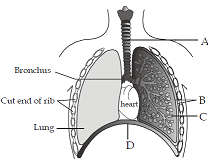
The figure shows a diagrammatic view of human respiratory system with labels A, B, C and D. Select the option which gives correct identification and main function and/or characteristic. …[NEET 2013]
-
43%
a) A - trachea - long tube supported by complete cartilaginous rings for conducting inspired air
-
29%
b) B-pleural membrane - surround ribs on both sides to provide cushion against rubbing
-
29%
c) C-Alveoli - thin walled vascular bag like structures for exchange of gases
-
0%
d) D-Lower end of lungs - diaphragm pulls it down during inspiration
Q.38.
The partial pressure of oxygen in the alveoli of the lungs is :- …[NEET 2016]
-
29%
a) Less than that in the blood
-
29%
b) Less than that of carbon dioxide
-
14%
c) Equal to that in the blood
-
29%
d) More than that in the blood
Q.39.
Lungs do not collapse between breaths and some air always remains in the lungs which can never be expelled because :- …[NEET 2016]
-
29%
a) There is a positive intrapleural pressure
-
14%
b) Pressure in the lungs is higher than the atmospheric pressure.
-
14%
c) There is a negative pressure in the lungs.
-
43%
d) There is a negative intrapleural pressure pulling at the lung walls
Q.40.
Adult human RBCs are enucleate. Which of the following statement(s) is/are most appropriate explanation for this feature? ….[NEET- 2017] (a) They do not need to reproduce (b) They are somatic cells (c) They do not metabolize (d) All their internal space is available for oxygen transport
-
43%
a) Only (d)
-
43%
b) Only (a)
-
14%
c) a), (c) and (d)
-
0%
d) (b) and (c)
Q.41.
Name the pulmonary disease in which alveolar surface area involved in gas exchange is drastically reduced due to damage in the alveolar walls : [ ReAIPMT 2015]
-
14%
a) Asthma
-
14%
b) Pleurisy
-
43%
c) Emphysema
-
29%
d) Pneumonia
Q.42.
When you hold your breath, which of the following gas changes in blood would first lead to the urge to breathe? …[AIPMT 2015]
-
57%
a) rising CO2 and falling O2 concentration
-
0%
b) falling O2 concentration
-
29%
c) rising CO2 concentration
-
14%
d) falling CO2 concentration
Q.43.
Which of the following options correctly represents the lung conditions in asthma and emphysema, respectively ? [NEET 2018]
-
29%
a) Inflammation of bronchioles; Decreased respiratory surface
-
29%
b) Increased number of bronchioles; Increased respiratory surface
-
14%
c) Increased respiratory surface; Inflammation of bronchioles
-
29%
d) Decreased respiratory surface; Inflammation of bronchioles
Q.44.
Match the items given Column I with those in Column II and select the correct option given below : [NEET 2018]
| Column I | Column II |
| a. Tidal volume | i. 2500-3000 mL |
| b. Inspiratory Reserve | ii. 1100-1200 mL volume |
| c. Expiratory Reserve | iii. 500-550 mL volume |
| d. Residual volume | iv. 1000-1100 mL |
-
17%
a) a -iii; b - ii; c - i; d -iv
-
67%
b) a -iii; b - i; c - iv; d -ii
-
17%
c) a -i; b - iv; c - ii; d -iii
-
0%
d) a -iv; b - iii; c - ii; d -i
Q.45.
Which of the following is an occupational respiratory disorder ? [NEET 2018]
-
14%
a) Anthracis
-
57%
b) Silicosis
-
29%
c) Botulism
-
0%
d) Emphysema
Q.46.
Which of the following does not shift the oxy-haemoglobin dissociation curve to the right?
-
25%
a) increased pH
-
25%
b) increased carbon dioxide
-
38%
c) increased temperature
-
12%
d) 2,3-DPG
Q.47.
Which of the following is entirely made of cartilage?
-
14%
a) Nasal septum
-
29%
b) Larynx
-
29%
c) Glottis
-
29%
d) Trachea
Q.48.
Trachea divides into two right and left primary bronchi at the level of
-
0%
a) Seventh cervical vertebra
-
29%
b) Third thoracic vertebra
-
57%
c) Fifth thoracic vertebra
-
14%
d) Seventh thoracic vertebra
Q.49.
Contraction of diaphragm
-
14%
a) Increases the volume of the thoracic chamber in the antero-posterior axis
-
29%
b) Increases the volume of the thoracic chamber in the dorso-ventral axis
-
43%
c) Decreases the volume of the thoracic chamber in the dorso-ventral axis
-
14%
d) Decreases the volume of the thoracic chamber in the dorso-ventral axis
Q.50.
Trachea and bronchi possess:
-
50%
a) Incomplete cartilaginous rings.
-
12%
b) Complete cartilaginous rings.
-
12%
c) Thick muscular wall.
-
25%
d) Thin muscular wall.