Q.1.
In alveolar air, the partial pressure of CO2 is:
-
56%
a) 40mm Hg.
-
12%
b) 44mm Hg.
-
19%
c) 42mm Hg.
-
12%
d) 45mm Hg.
Q.2.
Volume of air left after maximum forceful expiration in humans is:
-
0%
a) Total lung capacity.
-
73%
b) Residual volume.
-
18%
c) Vital capacity.
-
9%
d) Tidal volume.
Q.3.
Book lungs are respiratory organs in:
-
25%
a) Scorpion.
-
33%
b) Prawn.
-
33%
c) Snail.
-
8%
d) Cockroach.
Q.4.
How much amount of oxygen is present in one gram of haemoglobin?
-
18%
a) 20ml.
-
55%
b) 1.34ml.
-
0%
c) 40ml.
-
27%
d) 13.4ml.
Q.5.
Which one of the following represents the part of respiratory tract where exchange of gases takes place?
-
20%
a) From external nostrils upto terminal bronchioles.
-
30%
b) Glottis to respiratory bronchioles.
-
50%
c) Alveoli and its ducts.
-
0%
d) Trachea, bronchi and its ducts.
Q.6.
An increase in thoracic chamber volume in the dorso-ventral axis is caused by:
-
11%
a) Contraction of diaphragm.
-
22%
b) Relaxation of diaphragm.
-
22%
c) Contraction of external intercostal muscles.
-
44%
d) Contraction of internal intercostal muscles.
Q.7.
What is Bohr’s effect?
-
33%
a) A rise in levels of PCO2 or fall in pH decreases the oxygen affinity of haemoglobin.
-
33%
b) Decrease in levels of PCO2 or fall in pH decreases the oxygen affinity of haemoglobin.
-
22%
c) A rise in levels of PCO2 or increase in pH decreases the oxygen affinity of haemoglobin.
-
11%
d) Shifting of oxygen association dissociation curve to left.
Q.8.
Shifting of the given curve to right takes place in the case of:
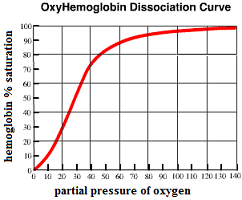
-
11%
a) Raise in PCO2.
-
33%
b) Fall in pH.
-
11%
c) Raise in temperature.
-
44%
d) All of the above.
Q.9.
Match the following columns:
| Column I | Column II |
| a) Inspiratory capacity (IC) | Total air, a person can inspire after a normal inspiration |
| b) Expiratory capacity (EC) | Maximal volume of the air, a person can breathe in after a forced expiration. |
| c) Functional residual capacity (FRC) | Volume of the air that will remain in the lungs after a normal expiration. |
| d) Vital capacity (VC) | Total volume of air a person can expire after a normal inspiration. |
-
14%
a) a → 1 ; b → 2 ; c → 3 ; d → 4
-
43%
b) a → 1 ; b → 4 ; c → 3 ; d → 2
-
14%
c) a → 1 ; b → 4 ; c → 2 ; d → 3
-
29%
d) a → 4 ; b → 1 ; c → 3 ; d → 2
Q.10.
Match the following columns:
| Column A | Column B |
| a. Hypopnoea | Difficult breathing |
| b. Hyperpnoea | Painful breathing |
| c. Apnoea. | No breathing |
| d. Dyspnoea. | Rapid breathing |
| e. Orthopnoea. | Slow breathing |
-
17%
a) a → 5 ; b → 2 ; c → 4 ; d → 2 ; e → 1
-
50%
b) a → 5 ; b → 3 ; c → 1 ; d → 2 ; e → 4
-
17%
c) a → 5 ; b → 4 ; c → 3 ; d → 2 ; e → 1
-
17%
d) a → 5 ; b → 4 ; c → 2 ; d → 3 ; e → 1
Q.11.
The term Saccus refers to:
-
17%
a) Wings of seeds of Pinus.
-
17%
b) Wings of pollen grains of Pinus
-
50%
c) Prothallial cells of pollen grains of Pinus.
-
17%
d) Female cone of Pinus.
Q.12.
Which of the following, examples belongs to the same class of algae?
-
43%
a) Porphyra, Ectocarpus, Ulothrix.
-
14%
b) Sargassum, Laminaria, Gracilaria.
-
29%
c) Volvox, Spirogyra, Chlamydomonas.
-
14%
d) Chara, Fucus, Polysiphonia.
Q.13.
The regulatory centre for respiration is situated in the
-
0%
a) cerebral cortex
-
17%
b) hypothalamus
-
67%
c) medulla oblongata
-
17%
d) procencephalon
Q.14.
Colour of oxyhaemoglobin is
-
17%
a) dull red
-
17%
b) bluish red
-
33%
c) bright red
-
33%
d) dull brown
Q.15.
The rate of respiration is lowest at
-
57%
a) sleeping
-
0%
b) running
-
43%
c) eating food
-
0%
d) playing
Q.16.
The functional unit of the lung is
-
17%
a) neuron
-
33%
b) alveolus
-
0%
c) bronchus
-
50%
d) none of these
Q.17.
All are lung diseases except
-
17%
a) asthma
-
50%
b) pericarditis
-
33%
c) bronchitis
-
0%
d) pneumonia
Q.18.
The term used to denote the difference in volume between the total lung capacity and the vital capacity is
-
17%
a) tidal volume
-
50%
b) ventilation rate
-
33%
c) residual volume
-
0%
d) all of these
Q.19.
The vibrations of which of these membranes produces vocal sounds?
-
0%
a) Glottis
-
71%
b) Vocal cords
-
14%
c) Vocal sacs
-
14%
d) Epiglottis
Q.20.
Internal respiration refers to
-
50%
a) exchange of gases between lungs and blood
-
33%
b) cellular respiration
-
17%
c) exchange of gases between lungs and atmosphere
-
0%
d) respiration in open air
Q.21.
The carbon dioxide pressure in the lung capillaries is
-
17%
a) less than that in alveolar air
-
67%
b) more than that in alveolar air
-
0%
c) equal to that in alveolar air
-
17%
d) similar to oxygen pressure in the capillaries
Q.22.
The oxygen content of expired air in man is
-
17%
a) 3 per cent
-
0%
b) 25 per cent
-
67%
c) 16 per cent
-
17%
d) 20 per cent
Q.23.
A normal man respires in a minute
-
33%
a) 25-30 times
-
0%
b) 10-15 times
-
17%
c) 14-18 times
-
50%
d) 20-25 times
Q.24.
Pulmonary artery
-
33%
a) returns highly oxygenated blood to the left heart for distribution throughout the body
-
50%
b) returns highly oxygenated blood to right heart for distribution throughout the body.
-
17%
c) delivers blood to lungs low in oxygen
-
0%
d) delivers highly oxygenated blood in lungs
Q.25.
The respiratory tubes devoid of cartilaginous rings are
-
17%
a) trachea
-
0%
b) bronchi
-
50%
c) bronchioles
-
33%
d) none of these
Q.26.
The condition in which the body suffers from acute oxygen shortage is called
-
0%
a) anaemia
-
50%
b) deoxygenation
-
0%
c) detoxification
-
50%
d) hypoxia
Q.27.
Tissue respiration is a process by which
-
33%
a) carbohydrates are synthesised
-
17%
b) proteins are broken down
-
17%
c) fat molecules are metabolised
-
33%
d) energy is liberated
Q.28.
In response to high altitude hypoxia supply of oxygen to the tissue is maintained by
-
33%
a) increased alveolar ventilation and increased cardiac output
-
33%
b) shift in the haemoglobin dissociation curve to the right
-
17%
c) increased erythrocytes and haemoglobin content of blood
-
17%
d) all of these
Q.29.
The respiratory disease immediately related to cigarette smoking is
-
17%
a) hypercapnia
-
17%
b) pulmonary oedema
-
0%
c) hypoxia
-
67%
d) emphysema
Q.30.
To take air into the lungs, the diaphragm must be
-
17%
a) dome shaped
-
17%
b) oblique
-
67%
c) flattened
-
0%
d) normal
Q.31.
In frog, the alveoli are surrounded by
-
20%
a) flattened and ciliated cells to increase the surface area of lungs
-
20%
b) columnar and ciliated cells to increase the surface area of lungs
-
0%
c) only ciliated cells to increase the surface area of lungs
-
60%
d) only Squamous cells to decrease the surface area of lungs
Q.32.
The capacity of lungs for air in a healthy man is about
-
0%
a) 500 ml
-
40%
b) 1000 ml
-
40%
c) 2000 ml
-
20%
d) 3000 ml
Q.33.
The substances undergoing slow oxidation in the body during respiration are known as
-
20%
a) Oxidases
-
60%
b) Metabolites
-
0%
c) ATP
-
20%
d) ADP
Q.34.
The medullary inspiratory centre is always under direct control of
-
0%
a) chemicals
-
83%
b) physical conditions
-
0%
c) nerves
-
17%
d) all of these
Q.35.
Which of the following can respire in total absence of air (anoxyliosis)?
-
40%
a) Amoeba
-
20%
b) Bed bug
-
20%
c) Hydra
-
20%
d) Tapeworm
Q.36.
Among the following, the maximum amount of usable energy is released per-molecule of glucose by
-
0%
a) yeast cell in fermentation
-
20%
b) a liver cell in glycolysis
-
60%
c) an Amoeba in aerobic respiration
-
20%
d) a muscle cell in lactic acid formation
Q.37.
Which of the following differentiates the expired air from the inspired air?
-
0%
a) Less oxygen.
-
40%
b) Presence of bacteria.
-
40%
c) More nitrogen
-
20%
d) All of the above.
Q.38.
The experiment considering physical exercise shows the loss of _______________ while breathing.
-
20%
a) No loss.
-
20%
b) Health.
-
40%
c) Energy
-
20%
d) Water.
Q.39.
Which of the following statements is not true? The partial pressure of:
-
0%
a) Oxygen in deoxygenated blood is 40 mm Hg.
-
40%
b) Oxygen in deoxygenated blood is 95 mm Hg
-
60%
c) Oxygen in alveolar air is 104 mm Hg.
-
0%
d) Carbon dioxide in the alveolar air is 40 mm Hg.
Q.40.
The factor which does not affect the rate of alveolar diffusion is:
-
0%
a) Solubility of gases.
-
40%
b) Thickness of the membranes.
-
20%
c) Pressure gradient.
-
40%
d) Reactivity of the gases
Q.41.
Body tissues obtain O2 from oxyhaemoglobin, because of its dissociation caused by:
-
20%
a) Low O2 concentration.
-
40%
b) High CO2 concentration
-
20%
c) Low CO2 concentration.
-
20%
d) Low O2 and high CO2 concentration.
Q.42.
Concentration of carbonic acid does not increase in blood due to presence of:
-
20%
a) Na+.
-
20%
b) Mg2+
-
40%
c) Ca2+.
-
20%
d) K+
Q.43.
Arrange the given steps of respiration in the sequence of events they occur: I. Diffusion of gases O2 and CO2 across the alveolar membrane. II. Transport of gases by the blood. III. Utilisation of O2 by the cells for catabolic reactions and the resultant release of CO IV. Pulmonary ventilation by which atmospheric air is drawn in and CO2 rich alveolar air is released out. V. Diffusion of O2 and CO2 between the blood and tissue. Choose the correct option:
-
20%
a) III → V → II → I → IV.
-
80%
b) III → II → V → I → IV.
-
0%
c) V → IV → III → II → I.
-
0%
d) II → III → IV → I → V.
Q.44.
Find the incorrectly matched pair:
-
0%
a) CO2 – Binds with the amine radicals of haemoglobin.
-
0%
b) O2 – Binds with the Fe2+ atoms of the Haeme unit.
-
50%
c) CO – Binds with the amine radicals of the globin parts of Haemoglobin.
-
50%
d) 2, 3, BPG – Binds with the haemoglobin and reduces oxygen binding affinity of haemoglobin.
Q.45.
Which of the following is incorrect regarding breathing?
-
20%
a) Increase of 2, 3 Biphosphoglycerate shifts the oxygen dissociation curve to the right.
-
20%
b) Pressure of thoracic chamber is negative to atmospheric pressure.
-
40%
c) In pneumothorax, intrapleural pressure equals to atmospheric pressure.
-
20%
d) Decrease in surface tension inside the alveoli leads to collapse of lungs.
Q.46.
Assertion: Pneumotaxic centres moderate respiratory rhythm. Reason: It decreases the duration of inspiration and increases the Inspiratory rate.
-
40%
a) Both Assertion and Reason are true and Reason is the correct explanation of Assertion.
-
20%
b) Both Assertion and Reason are true but Reason is NOT the correct explanation of Assertion.
-
20%
c) Assertion is true but Reason is false.
-
20%
d) Both Assertion and Reason are false.
Q.47.
If a respiratory surface dries out, gas exchange will :
-
20%
a) Increase.
-
20%
b) Decrease
-
40%
c) Stop
-
20%
d) Not be affected
Q.48.
An inflammatory disease by which the lungs or all the alveoli are filled with fluid and blood cells are called:
-
20%
a) Ateclasis.
-
20%
b) Cyanosis.
-
60%
c) Pneumonia
-
0%
d) Tuberculosis.
Q.49.
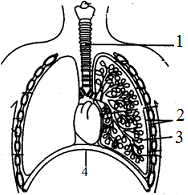
The figure shows a diagrammatic view of human respiratory system with the labels 1 –Select the option which gives correct identification and main function/characteristics
-
20%
a) 4 – Lower end of lungs – Diaphragm pulls it downward during inspiration
-
20%
b) 1 – Trachea – Long tube supported by incomplete cartilaginous rings for conducting inspired air.
-
40%
c) 2 – Pleural membrane – Surrounds ribs on both sides to provide cushion against rubbing.
-
20%
d) 3 – Alveoli – Thin walled vascular bag like structures for exchange of gases.
Q.50.
Assertion: Smoking causes oxygen deficiency in the body. Reason: Carbon monoxide when inhaled while smoking combines with the haemoglobin to form a chemically stable compound.
-
17%
a) Both Assertion and Reason are true and Reason is the correct explanation of Assertion.
-
33%
b) Both Assertion and Reason are true but Reason is NOT the correct explanation of Assertion.
-
17%
c) Assertion is true but Reason is false.
-
33%
d) Both Assertion and Reason are false.