Q.1.
Industrial preparation of formic acid involves
-
0%
a) reaction of CO2with aqueous NaOH under pressure
-
57%
b) passing a mixture of CO and H2 over heated copper at 473K
-
29%
c) reaction of CO with methanol at 473K
-
14%
d) reaction of CO with aqueous NaOH under pressure
Explanation

Q.2.
ion Q61) The product of acid hydrolysis of P and Q can be distinguished by ... [ IIT 2003]

-
0%
a) Lucas reagent
-
50%
b) 2,4-DNP
-
50%
c) Fehling's solution
-
0%
d) NaHSO3
Q.3.
Which of the following reactions is expected to give readily a hydrocarbon product is good yields? [ Punjab CET 2001]
-
20%
a)

-
20%
b)

-
40%
c)

-
20%
d)

Q.4.
Which is most reactive towards nucleophilic substitution among acid derivatives? [ DEC 2006]
-
17%
a) (RCO)2O
-
33%
b) RCOX
-
50%
c) RCONH2
-
0%
d) RCOOR
Q.5.
The OH group of an alcohol or -COOH group of a carboxylic acid can be replaced by -Cl using ... ..[ IIT 2004 ]
-
0%
a) Chlorine
-
33%
b) Hydrochloric acid
-
67%
c) Phosphorus pentachloride
-
0%
d) Hypochlorous acid
Q.6.
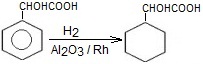
Hydrogenation of C6H5CHOHCOOH over Rh-Al2O3 catalyst in methanol gives
-
20%
a) C6H11CH2COOH
-
40%
b) C6H5CH2COOH
-
0%
c) C6C11CH2COOH
-
40%
d) C6H11CHOHCOOH
Explanation
Q.7.
Formic acid is not a representative member of the carboxylic acids becuase
-
0%
a) it is the first member of the series
-
17%
b) it does not contain alkyl group
-
0%
c) it is a gas
-
83%
d) it contains an aldehydeic group while the other acids do not have the aldehydic group
Q.8.
Given below are some statements concentrating formic acid which of them is true?
-
0%
a) It is a weaker acid than acetic acid
-
33%
b) It is a reducing agent
-
50%
c) When its calcium salt is heated, it forms a ketone
-
17%
d) It is an oxidising agent
Q.9.
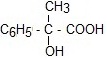
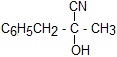
ion Q68) In a set of reaction acetic acid yields a product [D}. The structure of [D} would be

-
0%
a)
-
40%
b)

-
20%
c)

-
40%
d)
Explanation


Q.10.
What is formed when oxalic acid is dehydrated by conc.H2SO4?
-
0%
a) CO
-
17%
b) CO2
-
33%
c) C + CO2
-
50%
d) CO + CO2
Q.11.
Which of the following is the strongest acid?
-
0%
a) CH3COOH
-
20%
b) CF3COOH
-
40%
c) CBr3COOH
-
40%
d) CCl3COOH
Q.12.
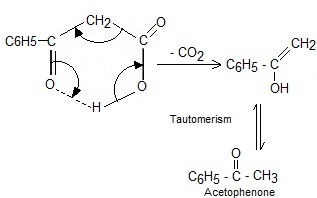
Which of the following carboxylic acid undergoes decarboxylation easily? [ IIT 1995]
-
20%
a) C6H5 - CO - CH2 - COOH
-
40%
b) C6H5 - CO - COOH
-
20%
c) C6H5 - CH(OH) - COOH
-
20%
d) C6H5 - CH(NH2) - COOH
Explanation
Q.13.
The weakest acid among the following is
-
0%
a) CCl3COOH
-
20%
b) CHCl2COOH
-
80%
c) CH3COOH
-
0%
d) ClCH2COOH
Q.14.
General formula (RCO)2O represents
-
0%
a) Ketone
-
25%
b) Ester
-
50%
c) Acid anhydride
-
25%
d) Carboxylic acid
Q.15.
Acetamide is ... .... [ ISM Dhandnd 1994]
-
20%
a) Amphoteric
-
0%
b) Highly basic
-
40%
c) Neutral
-
40%
d) Highly acidic
Q.16.
Which of the following undergoes hydrolysis?
-
0%
a) C6H5CH3
-
20%
b) CH3COONa
-
20%
c) CH3CONH2
-
60%
d) both 'b' and 'c'
Q.17.
The IUPAC name of tartaric acid is
-
29%
a) butane-1,4-dicarboxylic acid
-
0%
b) 1,4-dihydroxy butane-2,-3-dioic acid
-
57%
c) 2,3-dihydroxy butane-1-4-dicarboxylic acid
-
14%
d) 1,4-dihydroxy butane-2,3- dicarboxylic acid
Explanation

Q.18.
An organic acid when heated strongly with P2O5, give rise to a colourless gas which burns with a pale blue flame. The acid is
-
0%
a) acetic acid
-
50%
b) benzoic acid
-
0%
c) formalin
-
50%
d) formic acid
Q.19.
Glacial acetic acid is obtained by ... ..[ KCET 2002]
-
0%
a) Distilling vinegar
-
50%
b) Ceystallizing, separating and melting acetic acid
-
50%
c) Treating vinegar with dehydrating agent
-
0%
d) Chemically separating acetic acid
Q.20.
tion : Acetic acid does not undergo haloform reaction Reason : Acetic acid has no α-hydrogen
-
17%
a) Both Assertion and Reason are true and Reason is the correct explanation of Assertion
-
50%
b) The Assertion and Reason are true but Reason is not correct explanation of Assertion
-
17%
c) Assertion is true but, Reason is false
-
17%
d) Assertion is false but, Reason is true
Q.21.
-COOH group of a compound does not react with NaHSO3 even through it has >C=O group because of
-
0%
a) cyclic structure
-
20%
b) the attached organic group
-
20%
c) acid character
-
60%
d) resonance
Q.22.
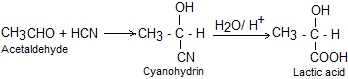
Cyanohydrin of which of the following forms lactic acid
-
0%
a) CH3CH2CHO
-
0%
b) CH3CHO
-
25%
c) CH3COCH3
-
75%
d) HCHO
Explanation
Q.23.
When acetamide is hydrolysed by boiling with acid the product obtained is
-
0%
a) Acetic acid
-
60%
b) Acetaldehyde
-
20%
c) Ethyl amine
-
20%
d) Ethyl alcohol
Q.24.
Oxidation of Butan-2-one to propionic acid can be achived by ... .... [ DEC 1989 ]
-
33%
a) NaOH + I2
-
17%
b) Br2 Water
-
33%
c) Tollen's reagent
-
17%
d) Atmospheric oxidation
Explanation

Q.25.
On mixing ethyl acetate with aqueous sodium chloride, the composition of the resultant solution is ... .. [ AIEEE 2004]
-
25%
a) CH3COONa + C2H5OH
-
50%
b) CH3COOC2H5 + NaCl
-
25%
c) CH3Cl + C2H5COONa
-
0%
d) CH3COCl + C2H5OH + NaOH
Q.26.
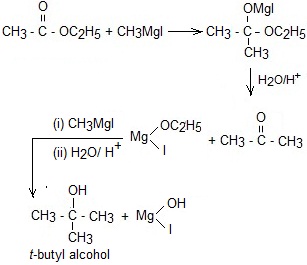
Reaction of ethyl acetate with excess of CH3MgI followed by hydrolysis gives ... ..[ IIT 1992]
-
20%
a) Propanal
-
0%
b) n-propyl alcohol
-
20%
c) iso-propyl alcohol
-
60%
d) tert-butyl alcohol
Explanation
Q.27.
The reagent that can be used to distinguish between phenol and ethanoic acid is
-
0%
a) Fehling solution
-
0%
b) Sodium carbonate solution
-
83%
c) Ammonical silver nitrate solution
-
17%
d) Phenolphthalein
Q.28.
Which acid gives wine red colour with neutral FeCl3?
-
0%
a) Acetic acid
-
20%
b) Formic acis
-
60%
c) Propanoic acid
-
20%
d) none of the above
Q.29.
The group present in waxes is
-
0%
a) Ether group
-
25%
b) Ester group
-
25%
c) Acid group
-
50%
d) Alcohol group
Q.30.
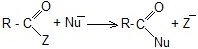
ion Q91) Rate if the reaction, is fastest when Z is .. [ AIEE 2005]
-
25%
a) OCOCH3
-
75%
b) NH2
-
0%
c) OC2H5
-
0%
d) Cl