Q.1.
An organic acid having molecular formula C2H4O2 is ... [ Punjab CET 1989]
-
0%
a) Acetic acid
-
25%
b) Propionic acid
-
25%
c) Formic acid
-
50%
d) Oxalic acid
Q.2.
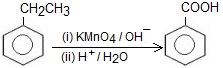
The compound formed as a result of oxidation of ethyl benzene by KMnO4 is ... ..[ IIT 2007]
-
20%
a) Benzyl alcohol
-
40%
b) Benzophenone
-
0%
c) Acetophenone
-
40%
d) Benzoic acid
Q.3.
Assertion : p- hydroxy benzoic acid has a lower boiling point than o-hydroxy benoix acid Reason : o-hydroxy benzoic acid has intramolecular hydrogen bonding
-
50%
a) Both Assertion and Reason are true and Reason is the correct explanation of Assertion
-
50%
b) The Assertion and Reason are true but Reason is not correct explanation of Assertion
-
0%
c) Assertion is true but, Reason is false
-
0%
d) Assertion is false but, Reason is true
Q.4.
Among the following the strongest acid is ... ... [ Haryana CEET 2000 ]
-
20%
a) CH3COOH
-
20%
b) CH2ClCH2COOH
-
40%
c) CH2ClCOOH
-
20%
d) CH3CH2COOH
Q.5.
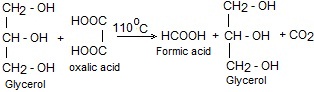
Formic acid is obtained when
-
50%
a) Acetaldehyde is oxidised with K2Cr2O7 and H2SO4
-
25%
b) Glycerol is heated with oxalic acid
-
0%
c) Calcium formate is heated with calcium acetate
-
25%
d) Calcium acetate is heated with conc. H2SO4
Explanation
Q.6.
Which reactin is suitable for preparing α-chloroacetic acid?
-
50%
a) Hell-Volhard Zelinsky reaction
-
0%
b) Stephen's reaction
-
50%
c) Perkin's reaction
-
0%
d) None of these
Q.7.
α-chloropropionic acid on treatment with KOH followed by acidifion gives
-
75%
a) CH3-CH(OH)-COOH
-
25%
b) CH2=CH -COOH
-
0%
c) HO - CH2 - CH2 - COOH
-
0%
d) none of the above
Q.8.
Glacial Acetic acid is
-
20%
a) Pure actic acid at 0°C
-
40%
b) Acetic acid mixed with methanol
-
20%
c) Pure acetic acid at 100°C
-
20%
d) Pure aetic acid around 16.6°C
Q.9.
on Q160) Predict X in the reaction
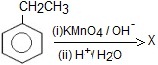
-
25%
a)

-
75%
b)

-
0%
c)

-
0%
d)

Explanation
Q.10.
ion : Sulphanilic acid is insoluble in water and organic solvents Reason : Sulphanilic acid is typical dipolar salt
-
25%
a) Both Assertion and Reason are true and Reason is the correct explanation of Assertion
-
50%
b) The Assertion and Reason are true but Reason is not correct explanation of Assertion
-
25%
c) Assertion is true but, Reason is false
-
0%
d) Assertion is false but, Reason is true
Q.11.
Two moles of acetic acid are heated with P2OThe product formed is
-
25%
a) 2 moles of methul cyanide
-
25%
b) acetic anhydride
-
50%
c) 2 mole of ethyl alcohol
-
0%
d) formic acid
Q.12.
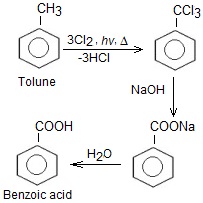
Chlorination of toluene in presence of light and heat followed by treatment with aqueous NaOH gives
-
0%
a) p- Cresol
-
67%
b) o- Cresol
-
33%
c) 1, 3, 5-Trihydroxytoluene
-
0%
d) Benzoic acid
Explanation
Q.13.
The refluxing of (CH3)2NCOCH3 with acid gives ... .[ kurukshetra CEET 1996]
-
25%
a) (CH3)2NH + CH3COOH
-
25%
b) 2CH3NH2 + CH3COOH
-
50%
c) 2CH3OH + CH3CONH2
-
0%
d) CH3COONa + C2H5OH
Explanation

Q.14.
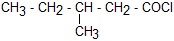
on Q165) The IUPAC name for ...[ Punjab CET 1989]
-
0%
a) 1-Chloro-3-methylpentanone
-
0%
b) 1-Chloro-3-ethyl butanone
-
50%
c) 3-Methylbutanoyl chloride
-
50%
d) 3-Methylpentanoyl chloride
Q.15.
On subjecting mesityl oxide to the iodoform reaction, one of the products is the sodium salt of an organic acid. Which acid is obtained?
-
25%
a) (CH3)2C = CH - CO - COOH
-
25%
b) (CH3)2C = CH - CH2COOH
-
50%
c) (CH3)2C = CH - CO - COOH
-
0%
d) (CH3)2C = CH - COOH
Explanation

Q.16.
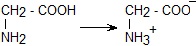
The acid showing salt like character in aqueous solutions is
-
17%
a) Benzoic acid
-
17%
b) Formic acid
-
67%
c) α-Aminoacetic acid
-
0%
d) Acetic acid
Explanation
Q.17.
Acetamide and NaOBr/OH- produce ... [ DCM 2000 ]
-
25%
a) NH3
-
50%
b) Ethanamine
-
0%
c) Methanamine
-
25%
d) CH3CN
Explanation

Q.18.
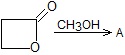
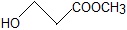
on Q169) A is
-
25%
a)
-
0%
b)
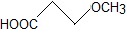
-
75%
c) Both are correct
-
0%
d) None is correct
Explanation

Q.19.
Lower carboxylic acids are soluble in water due to .. [ MPCET 1999[
-
25%
a) Low molecular weight
-
25%
b) Hydrogen bonding
-
25%
c) Dissociation into ions
-
25%
d) Easy hydrolysis
Q.20.
ion :CH3COCH2COOC2H5 will give iodoform test Reason : It contains CH3-CO- unit linked to carbon atom
-
25%
a) Both Assertion and Reason are true and Reason is the correct explanation of Assertion
-
75%
b) The Assertion and Reason are true but Reason is not correct explanation of Assertion
-
0%
c) Assertion is true but, Reason is false
-
0%
d) Assertion is false but, Reason is true
Q.21.
When propionic acid is treated with aqueous sodium bicarbonate CO2 is liberated. The 'C' of CO2 comes from
-
0%
a) Methyl group
-
60%
b) Carboxylic acid group
-
20%
c) Methylene group
-
20%
d) Bicarbonate
Q.22.
Which of the following substances cannot be used for the replacement of -OH group in organic compounds by Cl?
-
20%
a) SOCl2
-
0%
b) PCl5
-
20%
c) PCl3
-
60%
d) S2Cl2
Q.23.
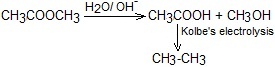
Hydrolysis of an ester gives a carboxylic acid which on Kole's electrolysis yields ethane. the ester is
-
0%
a) Methyl ethanoate
-
0%
b) Ethyl amine
-
50%
c) Ethyl methonoate
-
50%
d) Propyl amine
Explanation
Q.24.
Aspirin is
-
0%
a) Benzoic acid
-
0%
b) Phenyl salicylic acid
-
50%
c) Acetyl salicylic acid
-
50%
d) Benzoic acid
Q.25.
on Q176) Identify Z

-
50%
a) CH3CH2CONH2
-
25%
b) CH3COOH
-
25%
c) CH3CN
-
0%
d) CH3CH2CONH2
Q.26.
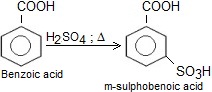
Sulphonation of benzoic acid produces mainly
-
50%
a) o- and p- Sulphobenzoic acid
-
25%
b) o- Sulphobenzoic acid
-
0%
c) m-Sulphobenzoic acid
-
25%
d) p- Sulphobenoic acid
Explanation
Q.27.
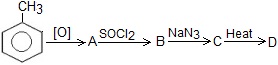
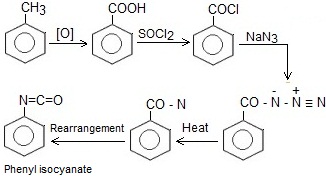
on Q178) Identify D
-
0%
a) Amide
-
0%
b) Primary amine
-
100%
c) Phenyl isocyanate
-
0%
d) Chain lengthed hydrocarbon
Explanation
Q.28.
Hydrolysis of an ester gives acid A and alcohol B. The acid reduces Fehling's solution. Oxidation of alcohol B gives acid A. The ester is
-
25%
a) ethyl formate
-
50%
b) methyl acetate
-
0%
c) methyl formate
-
25%
d) ethyl acetate
Explanation

Q.29.
Hydrated oxalic acid contains
-
80%
a) 2 water molecules
-
0%
b) 1 water molecule
-
0%
c) 3 water molecules
-
20%
d) 4 water molecules
Q.30.
Acetyl bromide reacts with excess of CH3MgI followed by treatment with a saturated solution of NH4Cl gives ...[ AIEEE 2004]
-
0%
a) acetyl iodide
-
33%
b) acetamide
-
67%
c) 2-methyl propan-2-ol
-
0%
d) acetone
Explanation
