Q.1.
Which of the following is least acidic? .... [ Punjab CET 19985]
-
50%
a) C2H5OH
-
0%
b) CH3COOH
-
33%
c) C6H5OH
-
17%
d) ClCH2COOH
Q.2.
Hydrolysis of trichloromethane with aqueous KOH gives
-
40%
a) Methanol
-
20%
b) Acetylene
-
40%
c) Potassium format
-
0%
d) Chloral
Explanation

Q.3.
Among the given compounds, the most suseptible to nucleophilic attack at the carbonyl group is ... ... [ IIT 1997]
-
33%
a) MeCOOCOMe
-
33%
b) MeCOCl
-
17%
c) MeCHO
-
17%
d) MeCOOMe
Q.4.
Which of the following compounds will be optically active? [ Haryana CEET 1991]
-
60%
a) (CH3)2CHOH
-
20%
b) CH3CH2CH2CH3
-
0%
c) CH3 - CHCl - COOH
-
20%
d) (CH3)3CCl
Explanation

Q.5.
on Q186) The IUPAC name of the compound is

-
0%
a) 4-Carboxyhexane-1,6-dioic acid
-
50%
b) 2-(Carboxymethyl)pentane-1,5-dioic acid
-
50%
c) Butane-1,2,4-tricarboxylic acid
-
0%
d) 3-carboxyhexane-1,6-dioic acid
Q.6.
Acetic acid reacts with PCl5 to form
-
25%
a) CHCl2COOH
-
0%
b) CH3COOCl
-
25%
c) CH2ClCOOH
-
50%
d) CH3COCl
Q.7.
HCOOH reacts with conc. H2SO4 to produce
-
50%
a) CO2
-
25%
b) NO2
-
25%
c) CO
-
0%
d) NO
Q.8.
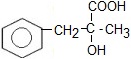
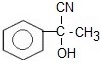
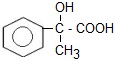
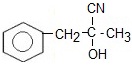
on Q189) In a set of reactions acetic acid yielded a product S The structure of S would be

-
50%
a)
-
25%
b)
-
0%
c)
-
25%
d)
Explanation
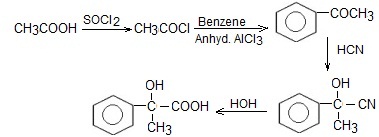
Q.9.
Which of the following decreasing order of acid strength of I. Methanoic acid II. Ethanoic acid IV. Propanoic acid IV. Butanoic acid is correct?
-
67%
a) I > II > IIII > IV
-
0%
b) IV > III > II > I
-
33%
c) I > IV > III > II
-
0%
d) IV > I > II > III
Q.10.
On warming formic acid with ammonical silver nitrate, the product formed is
-
40%
a) formaldehyde
-
20%
b) metallic silver
-
20%
c) silver oxide
-
20%
d) silver formate
Q.11.
Identify the wrong statement from the following .... ... [ Tamilnadu CET 2002]
-
0%
a) Salicylic acid is a monobasic acid
-
0%
b) Methyl salicylate is an ester
-
67%
c) Salicylic acid gives violet colour with neutral ferric chloride as well as brisk effervescence with sodium bicarbonate
-
33%
d) Methyl salicylate does not occur in natural oils
Q.12.
Between CH3COOH and HCOOH, HCOOH will be
-
33%
a) Less acidic
-
33%
b) More acidic
-
0%
c) Equally acidic
-
33%
d) None
Q.13.
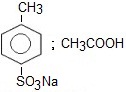
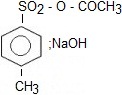
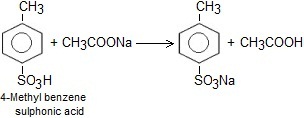
4-Methylbenzenesulphonic acid reacts with sodium acetate to give .... ... [ IIT 2005]
-
0%
a)
-
50%
b)

-
50%
c)

-
0%
d)
Explanation
Q.14.
Which of the following compounds is the reactant in Rosenmund'd reduction?
-
50%
a) CH3CO2H
-
50%
b) CH3CHO
-
0%
c) CH3CH2Cl
-
0%
d) CH3COCl
Q.15.
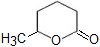
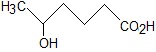
on Q196) End product of this conversion

-
50%
a)
-
50%
b)

-
0%
c)

-
0%
d)
Q.16.
Which of the following is a strong reducing agent
-
0%
a) Benzoic acid
-
0%
b) Ethanoic acid
-
0%
c) Methanoic acid
-
100%
d) Chloroacetic acid
Q.17.
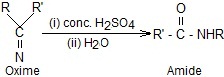
Rearrangement of an oxime to an amide in the presence of strong acid is called .... .. [ DEC 2002]
-
0%
a) Aldol condensation
-
50%
b) Beckmann rearrangement
-
0%
c) Fries rearrangement
-
50%
d) Curtius rearrangement
Explanation
Q.18.
The salicylic acid reacts with both the neutral FeCl3 solution and in esterification reaction because it contains
-
0%
a) both an acid and ester group
-
50%
b) both an acid group and a phenolic group
-
0%
c) both an acid group and an aldehyde group
-
50%
d) both an acid group and an alcoholic group
Q.19.
Acetyl chloride can not be obtained by treating acetic acid with
-
0%
a) CHCl3
-
0%
b) PCl3
-
50%
c) PCl5
-
50%
d) SOCl2
Q.20.
The relative reactivities of acyl compounds towards nucleophilic substitution are in the order of
-
50%
a) acyl chloride > acid anhydride > ester > amide
-
0%
b) ester > acyl chloride > amide > acid anhydride
-
50%
c) acid anhydride > amide > ester > acyl chloride
-
0%
d) acyl chloride > ester > acid angydride > amide
Q.21.
Which of the following acids has smallest dissociation contsant? [ IIT 2002]
-
50%
a) CH3CHFCOOH
-
0%
b) FCH2CH2COOH
-
0%
c) BrCH2CH2COOH
-
50%
d) CH3CHBrCOOH
Q.22.
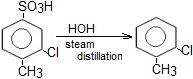
3-chloro-4methyl benzene sulphonic acid on steam distillation gives ... ..[ Roorkee 1996]
-
0%
a) toluene
-
0%
b) m-chloro benzene sulphonic acid
-
0%
c) p-methyl benzene sulphonic acid
-
100%
d) o-chloro toluene
Explanation
Q.23.
Which of the following compounds is resistant to nucleophilic attack of hydroxyl ion
-
0%
a) Acetonitrile
-
0%
b) Acetonitrile
-
33%
c) Acetamide
-
67%
d) Diethyl ether