Q.1.
The reduction of CH3CN to CH3CH2NH2 is called
-
60%
a) Mendius reduction
-
40%
b) Hofmann's reduction
-
0%
c) Rosnmunds's reduction
-
0%
d) Clemmensen's reduction
Q.2.
The reduction of nitrobenzene with zinc and alkali results in the formation of
-
80%
a) Hydrazobenzene
-
20%
b) Phenylhydroxylamine
-
0%
c) Aniline
-
0%
d) Nitrobenzene
Q.3.
tion: Nitromethane and acenitromethane are tautomers to each other Reason: Migration of H atom from α-C atom to electronegative atom which is bonded with multiple bond develops this phenomenon
-
40%
a) both the assertion and reason are true and reason explains the assertion
-
60%
b) both the assertion and reason are true but reason does not explain the assertion.
-
0%
c) assertion is true but reason is false
-
0%
d) assertion is false but reason is true.
Q.4.
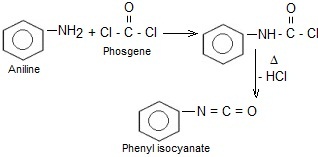
Aniline reacts with phosgene and KOH to form
-
25%
a)
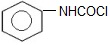
-
50%
b)

-
0%
c)

-
25%
d)

Explanation
Q.5.
Which of the following compounds gives dye test?
-
33%
a) Methyl amine
-
17%
b) Ethyl amine
-
17%
c) Aniline
-
33%
d) Diphenyl amine
Q.6.
Nitrobenzne on reduction with Al-Hg and water gives
-
20%
a) azoxy benzene
-
0%
b) azobenzene
-
20%
c) aniline
-
60%
d) phenylhydroxylamine
Explanation

Q.7.
Indicate which nitrogen compound amongst the following would undergo Hofmann reaction (i.e. reaction with Br2 and strong KOH) to furnish the primary amine (R - NH2)
-
40%
a) RCOONH4
-
40%
b) R - CO - NHOH
-
20%
c) RCONHCH3
-
0%
d) RCONH2
Q.8.
than one correct answers Q98) in C4H11N (A) + HNO2 → C4H10O (3° alcohol) Thus (A) will give
-
0%
a) Carbylamine reaction
-
20%
b) Hoffmann mustard oil reaction
-
80%
c) diazotisation
-
0%
d) none is correct
Q.9.
ion Q99) Match the compounds in List I with their nature from List II, as seen in aqueous medium from the combinations shown
| List I | List II |
| I. Acetamide | A. Acidic |
| II. Benzonitrile | B. Basic |
| III. Triethylamine | C. Neytral |
| IV. Phenol | - - - - |
-
40%
a) I - C; II - C ; III - B; IV -A
-
40%
b) I - B; II - C; III - C; IV - A
-
20%
c) I - C; II - B; III - B ; IV - C
-
0%
d) I -A ; II - A; III - C; IV - B
Q.10.
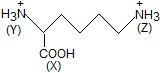
on Q100) In the compound given below the correct order of acidic nature of the position (X), (Y) and (Z) is ... [ IIT 2004]
-
33%
a) Z > X > Y
-
67%
b) X > Y > Z
-
0%
c) X > Z > Y
-
0%
d) Y > X > Z
Q.11.
The compound that will react most readily with NaOH to form methanol is
-
20%
a) (CH3)3CCl
-
0%
b) CH3OCH3
-
60%
c) (CH3)4N+I-
-
20%
d) (CH3)3S+I-
Q.12.
on Q103) What is the end product in the following sequence of operations?

-
60%
a) Acetamide
-
20%
b) Ethyl amine
-
20%
c) Ethyl cyanide
-
0%
d) Methyl amine
Q.13.
ion: Aniline does not undergo Friedel-Craft reaction Reason: -NH2group of aniline reacts with AlCl3 to give acid-base reaction
-
50%
a) both the assertion and reason are true and reason explains the assertion
-
50%
b) both the assertion and reason are true but reason does not explain the assertion.
-
0%
c) assertion is true but reason is false
-
0%
d) assertion is false but reason is true.
Q.14.
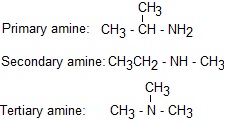
C3H9N represents
-
17%
a) Primary amine
-
17%
b) Secondary amine
-
33%
c) Tertiary amine
-
33%
d) All
Explanation
Q.15.
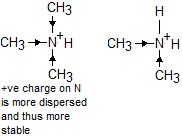
The basic character of methylamines in vapour phase is
-
60%
a) 3° > 2° > 1° > NH3
-
0%
b) 2° > 3° > 1° > NH3
-
20%
c) 1° > 2° > 3° > NH3
-
20%
d) none of these
Explanation
Q.16.
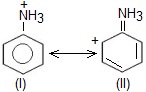
on Q107) Choose the correct statement from the ones given below for two anilium in .. [ IIT 1993]
-
40%
a) II is not acceptable cannonical structure because carbonium ions are less stable than ammonium ions
-
40%
b) II is not an acceptable canonical structure because it is non-aromatic
-
20%
c) II is not an acceptable cannonical structure because the nitrogen has 10 valence electrons
-
0%
d) II is an acceptable cannociacal structure
Q.17.
Gabriel phthalimide reaction is used for prepartion of
-
20%
a) Tertiary amines
-
0%
b) Secondary amines
-
40%
c) Primary aliphatic amines
-
40%
d) Primary aromatic amines
Q.18.
han one correct answers Q109) Nitrobenene on eletolytic reduction gives(s)
-
20%
a) p-aminophenol
-
0%
b) phenyl hydroxylamine
-
0%
c) hydrazobenzene
-
80%
d) aniline
Q.19.
An organic compound having molecular ass 60 is found to contain C=20%, H = 6.67% and N = 46.67% while rest is oxygen. On heating it gives NH3 alongwith a solid residue. The solid residue gives violet colour with alkaline copper sulphate solution. The compound is ... .. [ AIEEE 2005]
-
50%
a) CH3NCO
-
25%
b) CH3CONH2
-
25%
c) (NH2)2CO
-
0%
d) CH3CH2CONH2
Explanation

Q.20.
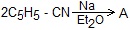
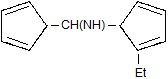
on Q111) The product A formed in the reaction is
-
25%
a)
-
50%
b)
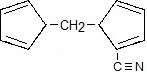
-
25%
c)
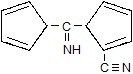
-
0%
d)
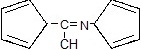
Q.21.
Nitrobenzene on electrolytic reduction in strongly acidic medium gives
-
25%
a) Nitrosobenzene
-
25%
b) m-Nitoaniline
-
25%
c) p-Aminophenol
-
25%
d) Aniline
Explanation
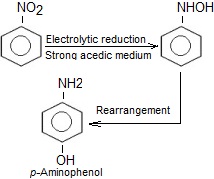
Q.22.
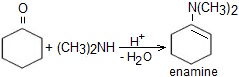
Reaction of cyclohexanone with dimethyl amine in the presence of catalytic amount of an acid forms a compound if water during the reaction is continuously removed. The compound formed is generally known as .... [ AIEEE 2005]
-
25%
a) Schiff's base
-
25%
b) an enamine
-
25%
c) an imine
-
25%
d) an amine
Explanation
Q.23.
Dipole moment of p-nitroaniline, when compared to nitrobenzene (X) and aniline (Y) will be
-
25%
a) greater than (X) and (Y)
-
25%
b) smaller than (X) and (Y)
-
0%
c) greater than (X) but smaller than (Y)
-
50%
d) equal to zero
Explanation


Q.24.
Which of the following compounds cannot be identified by carbylamine test
-
25%
a) C6H5-NH-C6H5
-
0%
b) CHCl3
-
75%
c) CH3CH2NH2
-
0%
d) C6H5NH2
Q.25.
The reagent used for conservation of benzene diazonium chloride to benzene is
-
25%
a) Na2SnO2 + NaOH
-
0%
b) C2H5OH
-
0%
c) H3PO2
-
75%
d) all of these
Q.26.
Nitrobenzene can be prepared from benzene by using a mixture of conc. HNO3 and conc H2SOIn the nitrating mixture HNO3 acts as a .... [ IIT 1997]
-
25%
a) base
-
0%
b) acid
-
25%
c) reducing agent
-
50%
d) Catalyst
Q.27.
A primary amine heated with CS2 in presence of excess of HgCl2 gives isothiocyanate. The reaction is called ... [ CET Haryana 1996]
-
25%
a) Hoffmann's bromamide reaction
-
25%
b) Hoffmann's mustard oil reaction
-
50%
c) Perkin's condensation
-
0%
d) Hoffmann's elimination
Q.28.
p-chloroaniline and anilium hydrochloride can be distinguished by
-
0%
a) AgNO3
-
50%
b) carbylamine test
-
0%
c) P2O5
-
50%
d) Sandmeyer's reaction
Q.29.
On reduction, secondary amine is given by
-
25%
a) Nitrobenzene
-
25%
b) Methyl cyanide
-
25%
c) Nitroethane
-
25%
d) Methyl isocyanide
Q.30.
Hinsberg reagent is
-
25%
a) C6H5NO
-
0%
b) C6H5N2Cl
-
25%
c) C6H5SO3H
-
50%
d) C6H5SO2Cl