Q.1.
Brain ventricles are lined by
-
44%
a) Neurons
-
17%
b) Schwann cells
-
15%
c) Neuroglia
-
24%
d) Ependymal cells
Q.2.
Which cranial nerve is purely sensory
-
13%
a) Abducens
-
42%
b) Auditory
-
31%
c) Vagus
-
15%
d) Spinal accessory
Q.3.
Glaucoma is due to
-
31%
a) Blocking of canal of Schlemm
-
31%
b) Drying up of vitreous humor
-
20%
c) Increased size of eye
-
17%
d) Opacity of lens
Q.4.
The chemical causing transmission of nerve impulse across synapse or end plate is … [ CPMT 2009]
-
6%
a) Choline
-
66%
b) Acetylcholine
-
9%
c) Cholinesterase
-
19%
d) Adrenaline
Q.5.
The chemical causing the transmission of the nerve impulse across synapse/end plate is
-
8%
a) Choline esterase
-
74%
b) Acetylcholine
-
5%
c) Choline
-
13%
d) Adrenaline
Q.6.
Nerve gas affects neuromuscular working by … [ BHU 2012]
-
13%
a) Enhancing release of acetylcholine
-
48%
b) Inhibiting acetylcholinesterase
-
32%
c) Inhibiting release of acetylcholine
-
6%
d) Blocking acetylcholine receptors
Q.7.
Which pair has the same meaning
-
21%
a) Sternum – chest bone
-
21%
b) Stapes – anvil bone
-
26%
c) Patella – knee bone
-
32%
d) Malleus – hammer bones
Q.8.
Brachial plexus is formed of spinal nerves
-
14%
a) iv ,v and vi cervical
-
43%
b) v, vi, vii , viii cervical and i thoracic
-
14%
c) iv and vii lumbar
-
29%
d) First three sacral
Q.9.
The charge on the outer side of neuron is … ….[ HPPMT 2012]
-
52%
a) +ve
-
24%
b) –ve
-
12%
c) Zero
-
12%
d) Alternate +-ve and +ve
Q.10.
Choose the type of neurons system and type of muscle splaying visceral organs
-
13%
a) Sympathetic nervous system, voluntary
-
16%
b) Sympathetic nervous system , involuntary
-
29%
c) Parasympathetic nervous system , involuntary
-
42%
d) Both sympathetic and parasympathetic nervous system , involuntary
Q.11.
Area of retia devoid of rods and cones is
-
8%
a) Yellow spot
-
54%
b) Blind spot
-
17%
c) Red spot
-
21%
d) Black spot
Q.12.
Which of the following is the largest nerve?
-
47%
a) Vagus
-
18%
b) Olfactory
-
12%
c) Hypoglossal
-
24%
d) Glossopharyngeal
Q.13.
Node of Ranvier occurs over … [ Har PMT 2007]
-
3%
a) Muscle
-
10%
b) Dendrite
-
10%
c) Right auricle
-
76%
d) Axon
Explanation

Q.14.
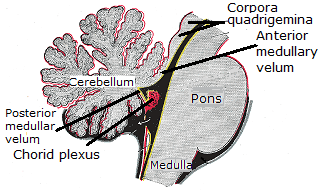
Band of fibre which join corpora quadrigemina to cerebellum is called
-
17%
a) Pons varolii
-
31%
b) valve of Vieussens
-
41%
c) Corpus callosum
-
10%
d) Corpus striatum
Explanation
Q.15.
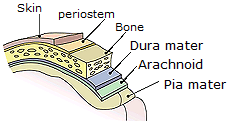
Arachnoid is
-
26%
a) Covers cranium
-
52%
b) Sorrounds pia mater
-
15%
c) Surrounds dura mater
-
7%
d) Surrounds heart
Explanation
Q.16.
A characteristic of human cornea is
-
30%
a) Absence of blood circulation
-
33%
b) Causes cataract in old age
-
23%
c) Has lacrimal gland for secretion of tears
-
13%
d) Secreted by conjunctiva and glandular layer
Q.17.
Organ of Golgi is the sensing structure formed at the junction of
-
14%
a) Two nerves
-
5%
b) Two bones
-
48%
c) Nerve and muscle
-
33%
d) Muscle and tendon
Q.18.
A polarized neuron is the one that is
-
15%
a) Conducting stimulus
-
52%
b) At resting potential
-
26%
c) Having action potential
-
7%
d) None of the above
Q.19.
Which is incorrect about Na+
-
13%
a) Conducts impulse along nerve
-
39%
b) Transmits impulse across synapse
-
26%
c) Is reabsorbed in kidney with the help of aldosterone
-
22%
d) Transports some substances across membrane
Q.20.
3rd, 6th, and 11th cranial nerves are
-
20%
a) Optic , facial and accessory spinal
-
30%
b) Oculomotor, trigeminal and accessory spinal
-
25%
c) Trigeminal , abducens and accessory
-
25%
d) Oculomotor , abducens and accessory spinal
Q.21.
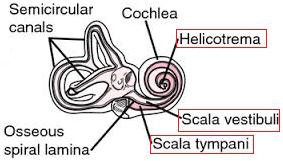
Vestibular and tympanic canals of cochlea are connected by
-
29%
a) Oval window
-
36%
b) Round window
-
21%
c) Helicotrema
-
14%
d) Eustachian canal
Explanation
Q.22.
Which is not a reflex action?
-
58%
a) Swallowing of food
-
17%
b) Shivering in cold
-
4%
c) Salivation at choicest food
-
21%
d) Closure of eyes lids by flashing light
Q.23.
Cerebral peduncles connect … ..[ MHTCET
-
23%
a) Two cerebral hemispheres
-
41%
b) Cerebrum with diencephalon
-
14%
c) Corpora quadrigemina
-
23%
d) Cerebrum with cerebellum
Q.24.
Cerebrum is located in part of brain
-
0%
a) Lower side
-
17%
b) Extension of brain
-
83%
c) Forefront
-
0%
d) None of the above
Q.25.
During conduction of nerve impulse
-
24%
a) Na+ moves out of axoplasm
-
62%
b) Na+ moves into axoplasm
-
10%
c) K+ moves into axoplasm
-
5%
d) Ca2+ moves into axoplasm
Q.26.
Light sensitive cells of eye are present in
-
25%
a) Cornea
-
8%
b) Sclera
-
8%
c) Choroid
-
58%
d) Retina
Q.27.
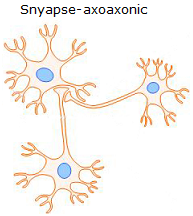
Direction of nerve impulse is reversed in junction
-
5%
a) Axo-axonic
-
37%
b) Axo-dendritic
-
42%
c) Axo-dendritic-axonic
-
16%
d) None of the above
Explanation
Q.28.
One of the following is the function of cerebellum
-
9%
a) Appetite
-
59%
b) Motor coordination
-
18%
c) Intelligence
-
14%
d) Sensory processing
Q.29.
On stimulation sympathetic nervous system
-
20%
c) Decrease saliva
-
10%
a) Increase sweat secretion
-
20%
b) Increase tear secretion
-
50%
d) All the above
Q.30.
Which ones are gustatoreceptors
-
5%
a) Rod cells of eyes
-
24%
b) Cone cells of eyes
-
67%
c) Taste buds of tongue
-
5%
d) Receptors in skin
Q.31.
Autonomic nervous system controls
-
38%
a) Reflex action
-
14%
b) Sense organs
-
38%
c) Internal organs
-
10%
d) Skeletal muscles
Q.32.
Iter(Aqueduct of Sylvius) is found between
-
47%
a) Third and fourth ventricles
-
20%
b) Two lateral ventricles
-
20%
c) Lateral ventricles and third ventricles
-
13%
d) Rhinocoel and lateral ventricles
Q.33.
Adrenaline is equivalent to neurotransmitter … .. [ Odisha 2009]
-
15%
a) GABA
-
45%
b) Epinephrine
-
20%
c) Nor-epinephrine
-
20%
d) Serotonin
Q.34.
Supply of blood to visceral organs is controlled by
-
0%
a) SNS, involuntary
-
19%
b) SNS, voluntary
-
48%
c) PNS, involuntary
-
33%
d) SNS, PNS, involuntary
Q.35.
Receptor absent over tongue in
-
5%
a) Thermoreceptor
-
40%
b) Gustatoreceptor
-
50%
c) Photoreceptor
-
5%
d) None of these
Q.36.
Broca area controls
-
16%
a) Breathing
-
42%
b) Movement of vocal cords
-
16%
c) Movement of tongue
-
26%
d) Both b. and c.
Q.37.
During resting condition, a nerve fibre becomes
-
63%
a) +vely charged on outside and –vely charged on inside
-
5%
b) +vely charged on both outside and inside
-
26%
c) –vely charged on outside and +vely charged on inside
-
5%
d) –vely charged on both outside and inside
Q.38.
The stato-acoustic receptor responds to changes in the
-
25%
a) light and pressure
-
38%
b) pain and pressure
-
25%
c) sound and equilibrium
-
12%
d) pressure and touch
Q.39.
Which centre is stimulated during increase in body temperature … ..[ WB 2011]
-
47%
a) Anterior hypothalamus
-
37%
b) Posterior hypothalamus
-
16%
c) Limbic system
-
0%
d) Red nucleus
Q.40.
Parasympathetic nervous system is not involved in
-
15%
a) Peristalsis
-
30%
b) Secretion of saliva
-
35%
c) Dilation of pupil
-
20%
d) Excitation of reproductive organs
Q.41.
3rd, 6th and 11th cranial nerves are …. [ BHU 2007]
-
14%
a) Optic, facial and accessory spinal
-
43%
b) Oculomotor, trigeminal and accessory spinal
-
14%
c) Trigeminal, abducens and vagus
-
29%
d) Oculomotor, abducens and accessory spinal
Q.42.
Which foramen is paired in mammalian brain? … [ mPPMT 2009]
-
47%
a) Foramen of Monro
-
33%
b) Foramen of Magendie
-
7%
c) Interventricular foramen
-
13%
d) Foramen of Luschka
Q.43.
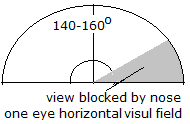
In human beings total visual field and stereoscopic visual field are respectively
-
14%
a) 140° and 52°
-
14%
b) 140° and 26°
-
57%
c) 180° and 140°
-
14%
d) 180° and 26°
Explanation
Q.44.
Arbor vitae is
-
35%
a) Tree-like structure in cerebrum
-
41%
b) Tree of life in cerebellum
-
24%
c) End part of spinal cord
-
0%
d) None of the above
Q.45.
Part of brain involved in interpretation of storage of information and initiation of response on the basis of past experience is
-
0%
a) Motor area
-
37%
b) Cerebellum
-
16%
c) Sensory area
-
47%
d) Association area
Q.46.
Roof of cerebrum is called … ..[ MHT CET 2010]
-
9%
a) Pallium
-
35%
b) Epithalamus
-
52%
c) Choroid plexus
-
4%
d) Centrocoel
Q.47.
Fourth cranial nerve is
-
29%
a) Trigeminal
-
36%
b) Abducens
-
21%
c) Trochlear
-
14%
d) Optic
Q.48.
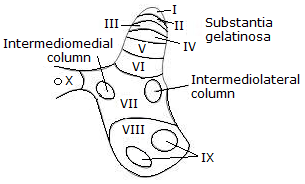
How many laminae are present in grey matter of spinal cord .. [ WB 2010]
-
21%
a) Four
-
57%
b) Six
-
21%
c) Eight
-
0%
d) Ten
Explanation
Q.49.
Sensory neurons of retina are
-
13%
a) Maculae and cristae
-
20%
b) Pacinian and ruffini’s corpuscles
-
47%
c) Rods and cones
-
20%
d) All the above
Q.50.
Unidirectional transmission of nerve impulse is maintained by
-
39%
a) Synapses
-
39%
b) Myelin sheath
-
22%
c) Membrane polarity
-
0%
d) Interneurons