Q.1.
Which mineral deficiency is supplemented on a large scale in India? [ BHU 1998]
-
15%
a) Potassium
-
41%
b) Iron
-
36%
c) Iodine
-
8%
d) Sodium
Q.2.
Which pairing is not correct
-
13%
a) Vitamin D - Rickets
-
28%
b) Vitamin K - Sterility
-
31%
c) Thiamine - Beri-beri
-
28%
d) Niacin - Pellagra
Q.3.
Lathyrism due to consumption of khesri dal is characterised by ...[CBSE 1998 ]
-
25%
a) Skeletal deformation and thinning of collagen fibres
-
32%
b) Skeletal abnormalities, diabetes mellitus and reproductive failure
-
26%
c) Retarded growth, precocious puberty and renal dysfunction.
-
17%
d) Cardiovascular abnormalities, mental retardation and delayed puberty
Q.4.
on Q131) Which of the following is the incorrect match regarding absorption:
-
25%
a) Active transport – Na+, glucose, amino acids.
-
36%
b) Simple diffusion – Fatty acids, monoglycerides.
-
20%
c) Facilitated transport – Fructose.
-
19%
d) None of these.
Q.5.
Major requirement of protein in the body is for ..[CPMT 1994 ]
-
12%
a) Energy
-
51%
b) Growth
-
18%
c) Repair
-
19%
d) Proper nourishmnet
Q.6.
Crypts of Lieberkuhn are found in... [ Kerala 2008 ]
-
53%
a) Small intestine, secrete digestive enzymes
-
20%
b) Pancreas, secrete pancreatic juice
-
17%
c) Stomach, secrete gastric juice
-
10%
d) Liver, secrete bile
Q.7.
Which one is rich in magnesium ...[ JIPMER 2002 ]
-
21%
a) Milk
-
12%
b) Meat
-
67%
c) Soyabean
-
0%
d) Egg
Q.8.
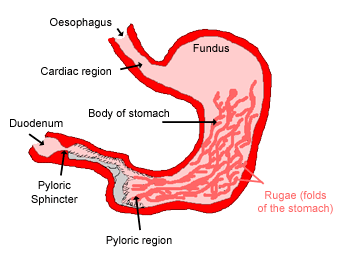
In Man the zymogen or chief cells are mainly found in...[CBSE 1990 ]
-
33%
a) Cardiac part of stomach
-
27%
b) Pyloric part of stomach
-
20%
c) Duodenum
-
20%
d) Fundus part of stomach
Explanation
Q.9.
Cholecystokinin is secretion of ...[ AFMC 2005 ]
-
40%
a) Duodenum that stimulates the release of bile
-
37%
b) Goblet cells of ileum, stimulates secretion of succus entricus
-
9%
c) Liver and controls secondary sex characters.
-
14%
d) Stomach that stimulates pancreas to release juice
Q.10.
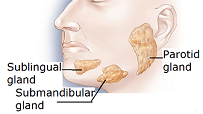
A salivary gland is .... [ KCET 1999]
-
16%
a) Brunner's gland
-
69%
b) Sublingual gland
-
9%
c) Lacrimal gland
-
7%
d) Adrenal gland
Explanation
Q.11.
Vitamin required for formation of rhodopsin is .... [ MPPMT 2000 ]
-
24%
a) A
-
65%
b) B2
-
7%
c) D
-
4%
d) C
Q.12.
ion Q64) Water soluble vitamins are .. .[ Bih. PMT 2006 ]
-
24%
a) C and D
-
21%
b) A and C
-
40%
c) B and C
-
14%
d) A and D
Q.13.
Pepsinogen is secreted by ..[ CPMT 1993 ]
-
15%
a) Mucous glands
-
37%
b) Intestinal glands
-
30%
c) Chief cells
-
17%
d) Parietal cells
Q.14.
Enzyme maltase of human gut acts on food at ..[ Odisha 2005 ]
-
39%
a) pH less than 7, changes maltose to glucose
-
25%
b) pH more than 7, changes maltose to glucose
-
30%
c) pH less than 7, changes starch to maltose
-
7%
d) pH more than 7, changes starch to maltose
Q.15.
What is also called vitamin G ...[Kerala 2000 ]
-
32%
a) Riboflavin
-
15%
b) Thiamine
-
34%
c) Pantothenic acid
-
20%
d) Niacin
Q.16.
Inhibition of gastric and stimulation of gastric pancreatic and bile secretions are controlled by hormones..[CBSE 1994 ]
-
35%
a) Gastrin, secretin, enterocrinin and cholecystokinin
-
20%
b) Enterogastrone, gastrin, pancreozymin and cholecystokinin
-
20%
c) Secretin, enterogastrone, cholecystokinin and pancreozymin
-
25%
d) Secretin, enterogastrone, gastrin and enterocrinin
Q.17.
Which is not the function of liver
-
68%
a) Production of insulin
-
16%
b) Detoxification
-
8%
c) Storage of glycogen
-
8%
d) Production of bile
Q.18.
Glycogenolysis is ...[Bih PMT 2002 ]
-
16%
a) Oxidation of sugar
-
54%
b) Conversion of glycogen into glucose
-
22%
c) Conversion of glucose into glycogen
-
8%
d) Conversion of glycogen into fat
Q.19.
Which does not occur in case of glucose ..[ JKCMEE 2002 ]
-
25%
a) Digestion
-
22%
b) Ingestion
-
11%
c) Absorption
-
42%
d) Assimilation
Q.20.
Proteolytic enzymes do not corrode lining of alimentary canal as ...[Uttarakhand 2001 ] Explanation is provided, please click on
-
50%
a) they are secreted in inactive form
-
38%
b) Lining layer of alimentary canal does not contain protein
-
6%
c) The enzymes are not capable of digesting fat
-
6%
d) None of the above
Q.21.
What is cholecystokinin .. [ Odisha 2002 ]
-
17%
a) Bile pigment
-
40%
b) Gastro-intestinal hormone
-
37%
c) Enzyme
-
7%
d) Lipid
Q.22.
Rennin acts on ...[CBSE 1994 ]
-
50%
a) Milk changing casein into calcium paracaseinate at 7.2-8.2pH
-
6%
b) Proteins in stomach
-
16%
c) Fat in intestine
-
28%
d) Milk changing casein into calcium paracaseinate at 1-3pH
Q.23.
When all the peptide bonds of a protein have been broken down, the resultant would be ...[RPMT 2002 ]
-
23%
a) Polypeptides
-
20%
b) Oligopeptides
-
14%
c) Peptides
-
43%
d) Amino acids
Q.24.
Which one of the following is the best source of vitamin A? [ KCET 1997 ]
-
17%
a) Apple
-
56%
b) Carrot
-
22%
c) Honey
-
6%
d) Peanuts
Q.25.
Cyanocobalamin is required for the maturation of ...[ AFMC 2012 ]
-
29%
a) RBC
-
21%
b) WBC
-
35%
c) Lymph
-
15%
d) Platelets
Q.26.
Pernicious anaemia is caused by the deficiency of vitamin.. [RPMT 1996 ]
-
47%
a) B1/ Thiamine
-
38%
b) B12/ Cobalamine
-
9%
c) C/ Ascorbic acid
-
6%
d) D/ Calciferol
Q.27.
Hydrolytic enzyme which acts at low pH is ...[CBSE 2002 ]
-
28%
a) α-amylase
-
22%
b) proteases
-
47%
c) Hydrolases
-
3%
d) Peroxidases
Q.28.
In human beings, carbohydrate is stored as glycogen in ...[ Odisha 2003 ]
-
27%
a) Liver and muscles
-
45%
b) Liver
-
24%
c) Muscles
-
3%
d) Spleen
Q.29.
Just as hydrochloric acid to pepsinogen, so is ...[ MPPMT 2004 ]
-
23%
a) Haemoglobin to oxygen
-
47%
b) Enterokinase to trypsinogen
-
7%
c) Bile juice to fat
-
23%
d) Glucagon to glycogen
Q.30.
Which one is incorrectly matched .. [ CBSE 2003]
-
13%
a) Vit C - Scurvy
-
26%
b) Vit. B3 - Pellagra
-
6%
c) Vit B12 - Pernicious anaemia
-
55%
d) Vit B6 - Beri-beri
Q.31.
Duodenal glands which prevent corrosion by HCl of chyme are ....[Uttarakhnad 2001 ]
-
32%
a) Oxyntic cells
-
21%
b) Peptic cells
-
26%
c) Brunner's gland
-
21%
d) Crypts of Lieberkuhn
Q.32.
Which one leaves human stomach at the earliest? [ CPMT 1992 ]
-
10%
a) Fat
-
10%
b) Protein
-
69%
c) Carbohydrate
-
10%
d) Beer
Q.33.
Pulp cavity of tooth is lined by ...[ CPMT 2002 ]
-
14%
a) Ameloblast
-
28%
b) Chondroblast
-
17%
c) Osteoblasts
-
41%
d) Odontoblasts
Q.34.
Exposure to sun is required for synthesis of vitamin D in ... [ Har. PMT 2007 ]
-
32%
a) Adipose tissue
-
14%
b) Liver
-
4%
c) Gall blader
-
50%
d) Skin
Q.35.
Pellagra is caused due to the deficiency of ...[AFMC 2009 ]
-
7%
a) Ascorbic acid/ Vit C
-
81%
b) Nicotinic acid/ VitB3/Niacin
-
4%
c) Pantothenic acid
-
7%
d) Folic acid
Q.36.
Conversion of glycogen into glucose is ...[ CPMT 1992 ]
-
11%
a)Gluconeogenesis
-
22%
b) Glycolysis
-
63%
c) Glycogenolysis
-
4%
d) Glycogenesis
Q.37.
Bring out the matching pair [ MPPMT 1992 ]
-
28%
a) Renin - Protein
-
19%
b) Trypsin - Starch
-
34%
c) Invertase - Sucrose
-
19%
d) Amylase - Lactose.
Q.38.
Which ones are bile salts... [ KCET 2003 ]
-
7%
a) Haemoglobin and biliverdin
-
59%
b) Bilirubin and biliverdin
-
3%
c) Bilirubin and haemoglobin
-
31%
d) Sodium glycolate and taurocholate
Q.39.
Vitamins often act as ... [ BHU 1992 ]
-
29%
a) Holoenzymes
-
38%
b) Coenzymes
-
12%
c) Apoenzymes
-
21%
d) Cofactors
Q.40.
Layer of cells that secrete enamel of tooth is ....[CBSE 1998 ]
-
15%
a) Osteoblast
-
31%
b) Ameloblast
-
27%
c) Odontoblast
-
27%
d) Dentoblast
Q.41.
Excessive bleeding from an injury is due to deficiency of ...[CBSE 2002]
-
7%
a) Vitamin A
-
10%
b) Vitamin B
-
55%
c) Vitamin K
-
28%
d) Vitamin E
Q.42.
Excessive intake of alcohol causes ..[MPPMT 1993 ]
-
17%
a) Jaundice
-
13%
b) Dermatitis
-
60%
c) Liver cirrhosis
-
10%
d) Lung fibrosis
Q.43.
Which one is not a source of Vit A ..[CPMT 2002 ]
-
18%
a) Carrot
-
54%
b) Yeast
-
14%
c) Mango
-
14%
d) Apple
Q.44.
Starch is digested by ....[CET Chd. 2003 ]
-
10%
a) Peptidase
-
62%
b) Amylase
-
28%
c) Lipase
-
0%
d) Proteinase
Q.45.
Digested lipids are absorbed from lacteals as ...[AMU 2003 ]
-
22%
a) Triglycerides
-
7%
b) Diglycerides
-
30%
c) Monoglycerides
-
41%
d) Free fatty acids
Q.46.
Glucose and amino acids are absorbed in intestine by ... [ JIPMER 2002 ]
-
20%
a) Osmosis
-
27%
b) Passive transport
-
40%
c) Active transport
-
13%
d) Selective absorption
Q.47.
Absorption of glycerol, fatty acids and monoglycerides takes place by ...[KCET 2003 ]
-
57%
a) Lymph vessels within villi
-
20%
b) Walls of stomach
-
10%
c) Colon
-
13%
d) Capillaries within villi
Q.48.
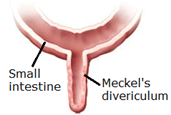
Meckle's diverticulum occurs in ...[JIPMER 2002 ]
-
24%
a) rectum
-
20%
b) Appendix
-
32%
c) Ileum
-
24%
d) Pylorus
Explanation
Q.49.
Which ones are absorbed in the alimentary canal without any breakdown? [ Pb.PMT 1996 ]
-
7%
a) Proteins
-
47%
b) polysaccharides
-
37%
c) Fat soluble vitamins
-
10%
d) Albumen of egg
Q.50.
Richest source of B12 is ... [ CBSE 2001 ]
-
14%
a) Chocolate and green gram
-
21%
b) Rice and Hen's eggs
-
21%
c) Carrot and Chicken breast
-
45%
d) Goat liver and spirulina