Q.1.
A point Q lies on the perpendicular bisector of an electrical dipole moment p. If the distance of Q from the dipole is r ( much larger than the size of dipole) then electric field at Q is proportional to [ CBSE 1998]
-
0%
a) p-1 and r-2
-
11%
b) p and r-2
-
89%
c)p and r-3
-
0%
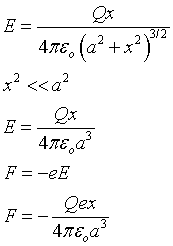
d)p2 and r-3
Q.2.
Equal charges are given to two spheres of different radii. The potential will [ MPPMT 1998]
-
14%
a) be more on the smaller sphere
-
29%
b) be more on the bigger sphere
-
43%
c)be equal on the both the sphere
-
14%
d)depend on the nature of the material of spheres
Q.3.
Two point charges Q and -3Q are placed at some distance apart. If the electric field at the location of Q is E, then at the location of -3Q it is [ BIT 1987]
-
8%
a) -E
-
17%
b) E/3
-
42%
c) -3E
-
33%
d) -E/3
Explanation

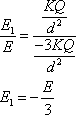
Q.4.
A particle of mass m and charge q is placed at rest in uniform electric field E and then freed. The kinetic energy attended by the particle after moving a distance y is [ CBSE 1998]
-
10%
a)qE2y
-
60%
b) qEy
-
30%
c)qEy2
-
0%
d)qEy
Q.5.
Two equal negative charges -q are fixed at points ( 0, a) and (0, -a). Positive charge Q is released from rest at a point (2a, 0) on the X-axis, the charge Q will [ CPMT 1995]
-
22%
a) execute SHM about the origin
-
11%
b) move to origin and remain at rest
-
22%
c)move to infinity
-
44%
d)execute oscillations but not S.H.M
Explanation
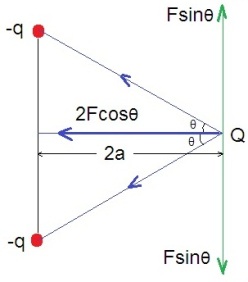
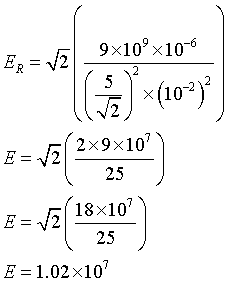
Q.6.
The electric field at distance r from a uniformly charged infinity sheet of surface charge density σ will be [ Raj.PET 1996]
-
10%
a) σ / εo
-
60%
b) σ / 2εo
-
20%
c) σ2 / 2εo
-
10%
d)σ2 / εo
Q.7.
A hollow sphere of charge does not produce an electric field at any [ MNR 1985]
-
70%
a) interior point
-
0%
b) outer point
-
10%
c) surface point
-
20%
d) none of the above
Q.8.
A uniform electric field having a magnitude Eo and direction along positive X-axis exists. If the electric potential V is zero at X=0, then its value at x=+x will be [ MPPMT 1987]
-
14%
a)Vx=x Eo
-
43%
b) Vx=-x Eo
-
0%
c)Vx=x2 Eo
-
43%
d)Vx=-x2 Eo
Explanation
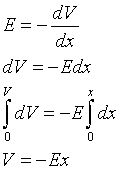
Q.9.
The angle between the equipotential surface and the electric field ( or line of force) at any point on the equipotential surface is [ MPPMT 1995]
-
0%
a) 0°
-
10%
b) 45°
-
50%
c)90°
-
40%
d)180°
Q.10.
The electric force between two point charges q1 and q2 at separation r is given by The constant K [ CPMT 1993]

-
12%
a) Depends upon system of unit only
-
38%
b) Depends upon medium between the charges
-
50%
c)Depends on both 'a' and 'b'
-
0%
d)Is independent of both 'a' and 'b'
Q.11.
One metallic sphere A is given positive charge whereas another identical metallic sphere B of exactly same mass as of A is given equal amount of negative charge . Then [ AMU 1995]
-
43%
a) mass of A and mass of B still remain equal
-
29%
b) mass of A increases
-
0%
c) mass of B decreases
-
29%
d) mass of B increases
Q.12.
The point charges -Q and +2Q are placed at a distance R apart. Where should a third point charge be placed so that it is in equilibrium [ CPMT 1993]
-
0%
a)At a point on the right of 2Q
-
33%
b) At a point on the left of -Q
-
50%
c)between -Q and 2Q
-
17%
d)at a point on a line perpendicular to the line joining -Q and 2Q
Q.13.
A large circular ring has a uniform positive charge distribution. A negative charge on the axis and close to the centre is related from the rest. The negative charge
-
25%
a) has a uniform acceleration
-
25%
b) move towards the ring
-
12%
c)remains at rest
-
38%
d)executes a simple harmonic motion
Explanation
Q.14.
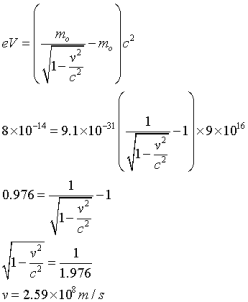
The speed of electron when accelerated through a potential difference of 5×10⁵ volt is nearly
-
14%
a)4.4×10⁸ m/s
-
14%
b) 2.59×10⁸ m/s
-
57%
c)4.4×108 cm/s
-
14%
d)2.59×108 cm/s
Explanation
Q.15.
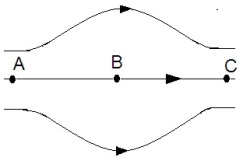
The figure shows some of the electric field lines corresponding to an electric field. The figure suggests .. [ MPPMT 1999]
-
25%
a) EA > EB > EC
-
25%
b) EA=EB > EC
-
38%
c)EA=EC > EB
-
12%
d)EA=EC < EB
Q.16.
An electric dipole is placed in an electric field generated by a point charge [ MPPMT 1999]
-
17%
a) the net electric force on the dipole must be zero
-
17%
b) the net electric force on the dipole may e zero
-
50%
c)the torque on the dipole due to the field must e zero
-
17%
d)the torque on the dipole due to the field may be zero
Q.17.
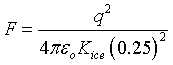
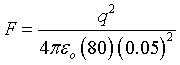
Two balls with equal charges are in vessel with ice at -10°C at a distance of 25cm from each other. On forming water at 0°C, the balls are brought nearer to 5cm for the interaction between them to be same. If the dielectric constant of water at 0°C is 80, the dielectric constant of ice at -10°C is
-
40%
a) 40
-
40%
b) 3.2
-
20%
c) 20
-
0%
d) 6.4
Explanation
Q.18.
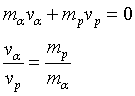
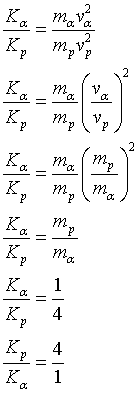
A free proton and free α particle initially at a separation of 1Å are released, the kinetic energy of proton and that of &alpha-particle when at infinite distance, bear a ratio
-
0%
a)1:1
-
20%
b) 1:2
-
0%
c)1:4
-
80%
d)4:1
Explanation
Q.19.
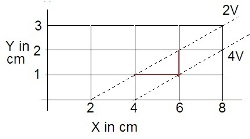
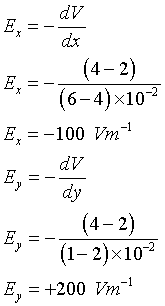
The figure below shows two equipotential surface in X-Y plane for an electric field. The scales are marked. The x-component and y component of electric field in the region of the space where these equipotential lines exist, are respectively
-
40%
a) +100 Vm-1 , -200Vm-1
-
40%
b) -100 Vm-1 , +200Vm-1
-
0%
c)+200 Vm-1 , 100Vm-1
-
20%
d)-200 Vm-1 , -100Vm-1
Explanation
Q.20.
On moving a charge of 20 C by 2cm, 2J of work is done, then the potential difference between the points is [ AIEEE 2002]
-
17%
a) 0.1V
-
17%
b) 8.0V
-
50%
c)2V
-
17%
d)0.5 V
Q.21.
If there are n capacitors in parallel connected to V volt source., then the energy stored is equal to [ AIEEE 2002]
-
17%
a) CV
-
50%
b) ½ n CV2
-
0%
c) CV2
-
33%
d) (1/2n) CV2
Q.22.
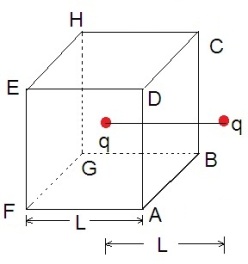
A charged particle q is placed at the centre O of cube of length L ( ABCDEFGH). Another same charge q is placed at a distance L from O. Then the electric flux through ABCD is [ AIEEE 2002]
-
0%
a)q/ 4ΠεoL
-
83%
b) zero
-
17%
c)q/ 2ΠεoL
-
0%
d)q/ 3ΠεoL
Q.23.
Capacitance (in F0 of a spherical conductor with radius 1 m is [ AIEEE 2002]
-
17%
a) 1.1×10⁻¹⁰
-
50%
b) 10-6
-
17%
c)9×10⁻⁹
-
17%
d)10-3
Q.24.
If the electric flux entering and leaving an enclosed surface respectively is φ1 and φ2, the electric charge inside the surface will be [ AIEEE 2003]
-
0%
a) ( φ2 - φ1)εo
-
33%
b)( φ2 + φ1) / εo
-
50%
c)( φ2 - φ1) / εo
-
17%
d)( φ2 + φ1)εo
Q.25.
A sheet of aluminum foil of negligible thickness is introduced between the plates of a capacitor. The capacitance of the capacitor [ AIEEE 2003]
-
0%
a) decreases
-
57%
b) remains unchanged
-
43%
c) becomes infinite
-
0%
d) increases
Q.26.
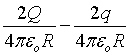
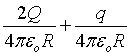
A thin spherical conducting shell of radius R has a charge q. Another charge Q is placed at the centre of the shell. The electrostatic potential at a point P a distance R/2 from the centre of the shell is [ AIEEE 2003]
-
14%
a)

-
43%
b)
-
43%
c)
-
0%
d)

Explanation
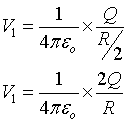
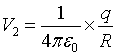
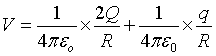
Q.27.
The work done in placing a charge of 8×10-18 coulomb on a condenser of capacity 100 µF is [ AIEEE 2003]
-
14%
a) 16×10-32 J
-
43%
b) 3.1×10⁻²⁶J
-
14%
c)4×10⁻¹⁰ J
-
29%
d)32×10-32 J
Explanation
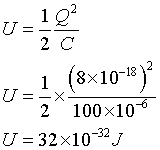
Q.28.
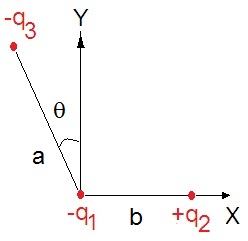
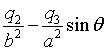
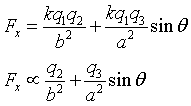
Three charges -q1, +q2 and -q3 are placed as shown in the figure. The x-component of the force on -q1 is proportional to ..[ AIEEE 2003]
-
14%
a)
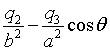
-
29%
b)
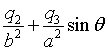
-
43%
c)
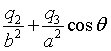
-
14%
d)
Explanation


Q.29.
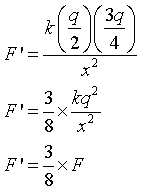
Two spherical conductors B and C having equal radii and carrying equal charges on them repel each other with a force F when kept apart at some distance. A third spherical conductor having same radius as that B but uncharged is brought in contact with B, then brought in contact with C and finally removed away from both. The new force of repulsion between B and C is [ AIEEE 2004]
-
20%
a) F/8
-
0%
b) 3F/4
-
40%
c) F/4
-
40%
d) 3F/8
Explanation
Q.30.
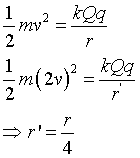
A charged particle 'q' is shot towards another charged particle 'Q' which is fixed, with a speed 'v'. It approaches 'Q' up to a closest distance r and then returns. If q were given a speed of 2v the closest distance of approach would be [ AIEEE 2004]
-
0%
a)r/2
-
20%
b) 2r
-
40%
c)r
-
40%
d)r/4
Explanation
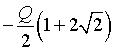
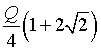
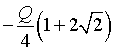
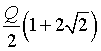
Q.31.
Four charges equal to -Q are placed at the four corners of a square and a charge q is at its centre. If the system is in equilibrium the value of q is [ AIEEE 2004]
-
17%
a)
-
0%
b)
-
67%
c)
-
17%
d)
Explanation
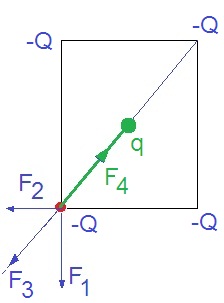
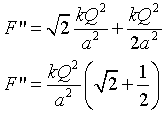
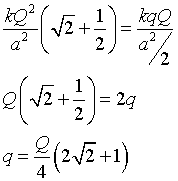
Q.32.
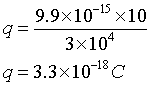
A charged oil drop is suspended in a uniform field of 3×10⁴ v/m so that it neither falls nor rise. The charge on the drop will be ( Take mass of the charge=9.9×10⁻¹⁵kg and g=10 m/s2) [ AIEEE 2004]
-
20%
a) 1.6×10⁻¹⁸C
-
40%
b) 3.2×10⁻¹⁸ C
-
20%
c)3.3×10⁻¹⁸C
-
20%
d).8×10-18C
Explanation
Q.33.
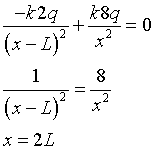
Two point charges +8q and -2q are located at x=0 and x=L respectively. the location of a point on the x axis at which the net electric field due to these two point charges is zero is [ AIEEE 2005]
-
50%
a) L/4
-
17%
b) 2L
-
33%
c) 4L
-
0%
d) 8L
Explanation
Q.34.
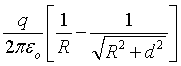
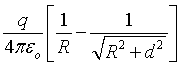
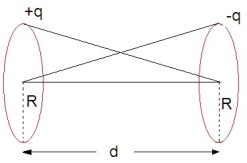
Two think rings each having a radius R are placed at a distance d apart with their axes coinciding. The charges on the two rings are +Q and -Q. The potential difference between the centres of the two rings is [ AIEEE 2005]
-
14%
a)
-
0%
b)

-
86%
c)
-
0%
d)zero
Explanation
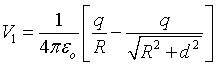
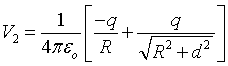
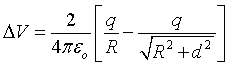
Q.35.
A parallel plate capacitor is made by staking n equally spaced plates connected alternatively. If the capacitance between any two adjacent plates is C then the resultant capacitance is [ AIEEE 2005]
-
20%
a) ( n+1) C
-
40%
b) ( n-1)C
-
20%
c)nC
-
20%
d)C
Q.36.
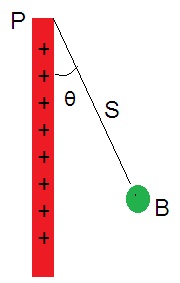
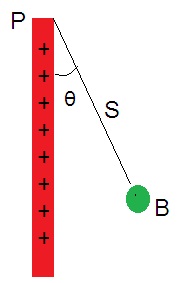
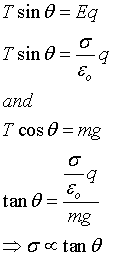
A charged ball B hangs from a silk thread S, which makes an angle θ with a large charged conducting sheet P, as shown in the figure. The surface charge density σ of the sheet is proportional to [ AIEEE 2005]
-
33%
a)cotθ
-
0%
b) cosθ
-
67%
c)tanθ
-
0%
d)sinθ
Explanation
Q.37.
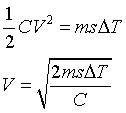
A fully charged capacitor has a capacitance 'C'. It is discharged through a small coil of resistance wire embedded in a thermally insulated block of specific heat capacity 's' and mass 'm'. If the temperature of the block is raised by ΔT, the potential difference 'V' across the capacitance is [ AIEEE 2005]
-
17%
a)

-
50%
b)

-
33%
c)

-
0%
d)

Explanation
Q.38.
An electric dipole is placed at an angle of 30° to a non-uniform electric field. The dipole will experience [ AIEEE 2006]
-
0%
a)a translational force only in the direction of the field
-
0%
b) a translational force only in a direction norml to the direction of the field
-
83%
c)a torque as well as translational force
-
17%
d)torque only
Q.39.
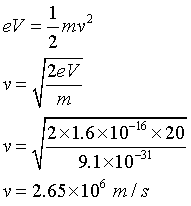
Two insulating plates are both uniformly charged in such a way that the potential difference between them is V2 - V1=20V. The plates are separated by d=0.1 m and can be treated as infinitely large. An electron is released from rest on the inner surface of plateWhat is its speed when it heats palate 3 [ AIEEE 2006]( e=1.6×10-19C, me=9.11×10-31 kg)
-
50%
a) 2.65×10⁶ m/s
-
33%
b)7.02×10¹² m/s
-
0%
c)1.87×10⁶
-
17%
d)32×10-19 m/s
Explanation
Q.40.
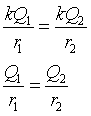
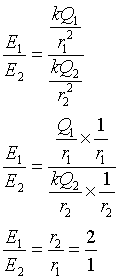
Two spherical conductors A and B of radii 1mm and 2mm are separated by a distance of 5cm and are uniformly charged. If the spheres are connected by the conducting wire then in equilibrium condition, the ratio of the magnitude of the electric field as the surfaces of the spheres A and B is [ AIEEE 2006]
-
33%
a) 4:1
-
33%
b) 1:2
-
17%
c)2:1
-
17%
d)1:4
Explanation
Q.41.
An electric charge 10-3 µC is placed at the origin ( 0, 0) of X-Y co-ordinate system. Two points A and B are situated at ( √2, √2) and ( 2, 0) respectively. The potential difference between the points A and B will be [ AIEEE 2007]
-
0%
a) 4.5 volts
-
17%
b) 9 volts
-
83%
c) zero
-
0%
d) 2 volt
Q.42.
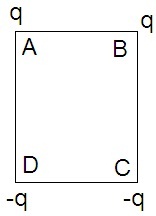
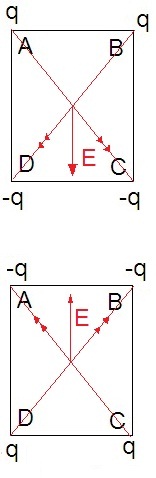
Charges are placed on the vertices of a square as shown. Let E be the electric field and V be the potential at the centre. If the charges on A and B are interchanged with those on D and C respectively, then [ AIEEE 2007]
-
43%
a)E changes, V remains unchanged
-
43%
b) E remains unchanged, V changes
-
14%
c)both E and V changes
-
0%
d)E and V remain unchanged
Explanation
Q.43.
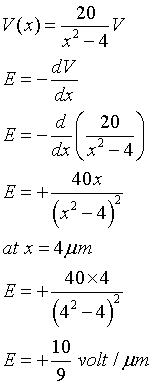
The potential at a point x ( measured in µm) due to some charges situated on the x-axis is given by V(x)=20 / (x2 - 4) voltThe electric field E at x=4µm is given by{AIEEE 2007]
-
17%
a) (10/9) V/µm and in the +ve x direction
-
50%
b) (5/3) V/µm and in the -ve x direction
-
33%
c)(5/3) V/µm and in the +ve x direction
-
0%
d)(10/9) V/µm and in the -ve x direction
Explanation
Q.44.
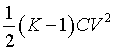
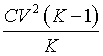
A parallel plate condenser with a dielectric of dielectric constant K between the plates has a capacity C and is charged to a potential V volt. The dielectric slab is slowly removed from between plates and then reinserted. The net work done by the system in this process is [ AIEEE 2007]
-
60%
a) zero
-
0%
b)
-
0%
c)

-
40%
d)
Q.45.
If gE and gM are the acceleration due to gravity on the surface of the earth and the moon respectively and if Millikan's oil drop experiment could be performed on the two surfaces, one will find the ratioelectronic charge on moon / electronic charge on earth=[ AIEEE 2007]
-
50%
a) gM / gE
-
33%
b) 1
-
17%
c) 0
-
0%
d) gE / gM
Q.46.
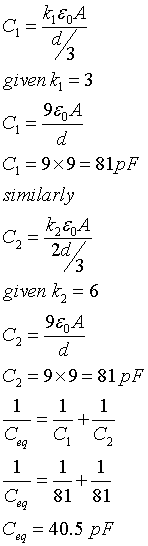
A parallel plate capacitor with air between the plates has capacitance of 9pF. The separation between its plates is 'd'. The space between the plates is now filled with two dielectrics. One of the dielectric has dielectric constant k1=3 . and thickness d/3 while the other one has dielectric constant k2=6 and thickness 2d/Capacitance of capacitor is now [ AIEEE 2008]
-
14%
a)1.8 pF
-
43%
b) 45 pF
-
43%
c)40.5 pF
-
0%
d)20.25 pF
Explanation
Q.47.
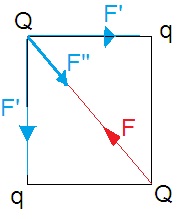
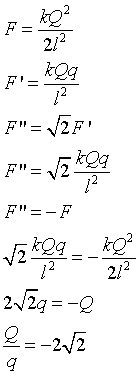
A charge Q is placed at each of the opposite corners of a square. A charge q is placed at each of the other two corners. If the net electrical force on Q is zero, then Q/q equals [ AIEEE 2009]
-
17%
a) -1
-
0%
b) 1
-
50%
c)- 1/√2
-
33%
d)-2√2
Explanation
Q.48.
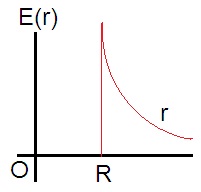
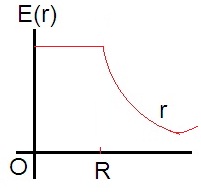
A thin spherical shell of radius R has Q spread uniformly over its surface. Which of the following graphs most closely represents the electric field R(r) produced by the shell in the range 0≤ r < ∞, where r is the distance from the centre of shell? [ AIEEE 2008]
-
83%
a)
-
17%
b)
-
0%
c)
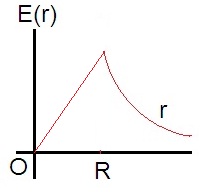
-
0%
d)
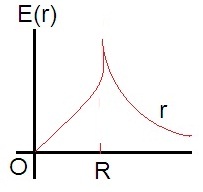
Q.49.
Two points P and Q are maintained at the potential of 10V and -4V, respectively. The work done in moving 100 electrons from P to Q is [ AIEEE 2009]
-
0%
a) 9.6×10⁻¹⁷ J
-
60%
b) -2.24×10⁻¹⁶ J
-
20%
c) 2.24×10⁻¹⁶J
-
20%
d) -9.6×10⁻¹⁷ J
Q.50.
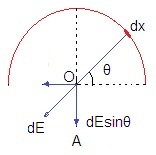
There exists a non-uniform electric field along x axis as shown in figure. the field increases at uniform rate along +Ve x-axis. A dipole is placed inside the field as shown. For the dipole which of the following statement is true
-
17%
a)Dipole moves positive x-axis and undergoes a clockwise rotation
-
0%
b) Dipole moves along negative x-axis and undergoes a clockwise rotation
-
33%
c)Dipole moves along positive x-axis and undergoes an anticlockwise rotation.
-
50%
d)Dipole moves along negative x-axis and undergoes an anticlockwise rotation