Q.1.
The time period of a second's pendulum in a satellite is
-
24%
a) zero
-
19%
b) 2
-
29%
c) infinity
-
29%
d) depends on mass of body
Q.2.
If radius of the earth were to shrink by one percent, its mass remaining the same, the acceleration due to gravity on the earth's surface would [ IIT 1981]
-
24%
a) decrease
-
33%
b) remain unchanged
-
39%
c)increase
-
4%
d)be zero
Q.3.
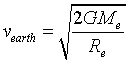
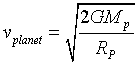
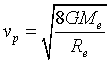
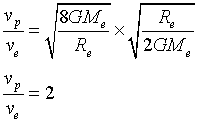
The escape velocity on the surface of earth is 11.2 km/s. What would be the escape velocity on the surface of another planet of the same mass but 1/4 times the radius of the earth? [ CBSE-PMT 2000]
-
26%
a)22.4 km/s
-
34%
b) 44.8 km/s
-
27%
c) 5.6 km/s
-
13%
d)11.2 km/s
Explanation
Q.4.
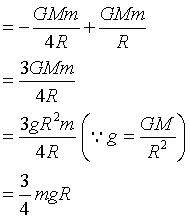
Assuming the radius of the earth as R, the change in gravitational potential energy of a body of mass m. when it is taken from the earth's surface to a height 3R above its surface, is [ CBSE-PMT 2002]
-
34%
a) 3mgR
-
41%
b) (3/4) mgR
-
11%
c) mgR
-
14%
d) (3/2)mgR
Explanation
Q.5.
A roller coaster is designed such that riders experience "weight lessens" as they go round the lop of a hill whose radius of curvature is 20 m. The speed of the car at the top of the hill is between: [ CBSE-PMT 2008]
-
31%
a)14 m/s and 15 m/s
-
33%
b) 15 m/s and 16 m/s
-
23%
c)16 m/s and 17 m/s
-
12%
d)13 m/s and 14 m/s
Q.6.
If the gravitational force between two objects were proportional to 1/R (and not as 1/R2) where R is separation between them, then a particle in circular orbit under such a force would have its orbital speed v proportional to [ CBSE-PMT 1989]
-
27%
a) 1/R2
-
38%
b) R0
-
20%
c) R
-
15%
d)1/R
Q.7.
The earth ( mass=6 × 1024kg) revolves around the sun with an angular velocity 2 × 10⁻⁷ rad/sec in a circular orbit of radius=1.5 × 10⁸km. The force exerted by sun on earth in newton is ...[ AFMC 1997, 1999]
-
41%
a)36 × 1021
-
29%
b) 18 × 1025
-
15%
c)29 × 1039
-
15%
d)zero
Q.8.
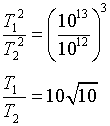
The distance of two planets from the sun are 1013 and 1012 meters respectively. The ratio of time periods of these two planets is [ CBSE PMT 1988]
-
28%
a) 1/√10
-
18%
b) 100
-
46%
c) 10√10
-
9%
d) √10
Explanation
Q.9.
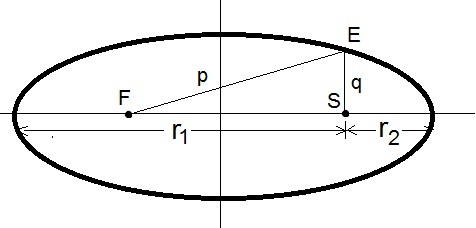
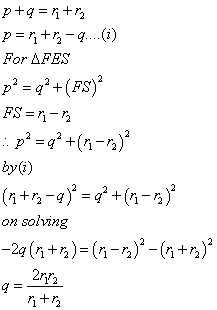
The largest and the shortest distance of the earth from the sun are r1and rIts distance from the sun when it is at perpendicular to the major-axis of the orbit drawn from the sun is [1988]
-
28%
a) (r1 + r2)/4
-
28%
b) (r1 + r2)/ (r1 - r2)
-
42%
c) 2(r1 × r2)/ (r1 + r2)
-
3%
d) (r1 + r2)/ 3
Explanation
Q.10.
If the gravitational force between two objects were proportional to 1/R (and not as 1/R2) where R is separation between them, then a particle in circular orbit under such a force would have its orbital speed v proportional to [1989]
-
23%
a) 1/R2
-
54%
b) R0
-
20%
c) R
-
3%
d) 1/R
Q.11.
A planet is moving in an elliptical orbit around the sun. If T, V, E, and L stands for kinetic energy, gravitational potential, total energy, and magnitude of angular moment bout the center of force respectively
-
12%
a) T is conserved
-
34%
b) V is always positive
-
29%
c) E is always negative
-
24%
d) L is conserved but direction of vector L changes continuously
Q.12.
For a satellite escape velocity is 11 km/s. If the satellite is launched at an angle of 60° with the vertical, then escape velocity will be [1989]
-
31%
a) 11 km/s
-
29%
b) 11 √3 km/s
-
29%
c) 11 /√3 km/s
-
12%
d) 33 km/s
Q.13.
A satellite of mass am is orbiting around the earth in a circular orbit with a velocity v. What will be its total energy? [1991]
-
34%
a) (3/4) mv2
-
22%
b) (1/2) mv2
-
16%
c) mv2
-
28%
d)-(1/2)mv2
Q.14.
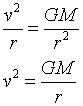
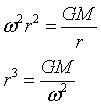
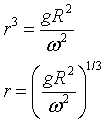
The mean radius of earth is R, its angular speed on its own axis is ω and the acceleration due to gravity at earth's surface is g. What will be the radius of the orbit of a geostationary satellite ?[1992]
-
37%
a) (R2g/ω2)1/3
-
15%
b) (Rg/ω2)1/3
-
37%
c) (R2 ω2/g)1/3
-
11%
d) (R2 g/ ω)1/3
Explanation
Q.15.
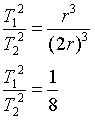
satellite A of mass m is at a distance of r from the earth's center. Another satellite B of mass 2m is at a distance of 2r from the earth's center. Their time periods are in the ratio of
-
40%
a) 1:2
-
21%
b) 1:16
-
16%
c) 1 : 32
-
23%
d) 1 : 2√2
Explanation
Q.16.
The escape velocity from earth is 11.2 km/s. If a body is to be projected in a direction making an angle 45° to the vertical, then the escape velocity is [1993]
-
16%
a) 11.2×2 km/s
-
45%
b) 11.2km/s
-
23%
c) 11.2 / √2 km/s
-
16%
d) 11.2 √2 km/s
Q.17.
The distance of Neptune and Saturn from the sun is nearly 1013 and 1012 meter respectively. Assuming that they move in circular orbits, their periodic times will be in the ratio [1994]
-
7%
a) 10
-
20%
b) 100
-
63%
c) 10√10
-
11%
d) 1000
Q.18.
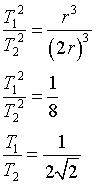
A satellite A of mass m is at a distance of r from the surface of the earth. Another satellite B of mass 2m is at a distance of 2r from the earth's center. Their time periods are in the ratio of..[ CBSE-PMT 1993]
-
12%
a)1:2
-
24%
b) 1:16
-
24%
c)1 : 32
-
39%
d)1 : 2√2
Explanation

Q.19.
A ball is dropped from a satellite revolving around the earth at a height of 120 km: The ball will -, [ CBSE-PMT 1996]
-
14%
a) continue to move with same speed along a straight line tangentially to the satellite at that time
-
50%
b) continue to move with the same speed along the original orbit of satellite
-
26%
c)fall down to earth gradually
-
10%
d)go far away in space
Q.20.
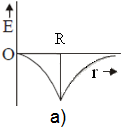
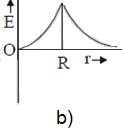
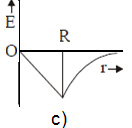
Dependence of intensityof gravitational field(E) of earth with distance (r) from centre ofearth is correctly represented by
-
12%
a)
-
35%
b)
-
40%
c)
-
14%
d)
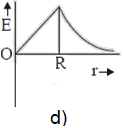
Q.21.
A seconds pendulum is mounted in a rocket. Its period of oscillation decreases when the rocket [ CBSE-PMT 1991]
-
15%
a) comes down with uniform acceleration
-
36%
b) moves round the earth in a geostationary orbit
-
36%
c)moves up with a uniform velocity
-
13%
d)moves up with uniform acceleration
Explanation

Q.22.
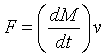
A satellite in force free space sweeps stationary interplanetary dust at a rate dM/dt=αv where M is the mass and v is the velocity of the satellite and α is a constant. What is the deceleration of the satellite? [ CBSE-PMT 1994]
-
13%
a) -αv2
-
28%
b) -αv2/2M
-
36%
c) -αv2/M
-
23%
d) -2αv2/M
Explanation
Q.23.
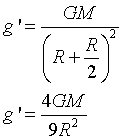
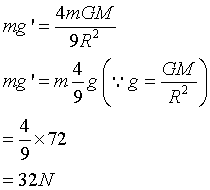
A body weighs 72 N on the surface of the earth. What is the gravitational force on it due to earth at a height equal to half the radius of the earth from the surface [CBSE-PMT 2000]
-
57%
a)32 N
-
18%
b) 28 N
-
12%
c)16N
-
12%
d)72N
Explanation
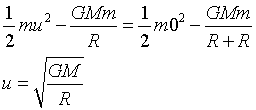
Q.24.
With what velocity should a particle be projected so that its height becomes equal to radius of earth? [ CBSE-PMT 2001]
-
41%
a)

-
23%
b)

-
18%
c)

-
18%
d)

Explanation
Q.25.
For a satellite escape velocity is 11 km/s. If the satellite is launched at an angle of 60° with the vertical, then escape velocity will be [ CBSE-PMT 1989]
-
54%
a)11 km/s
-
20%
b) 11 √3 km/s
-
17%
c)11/ √3 km/s
-
9%
d)33 km/s
Explanation

Q.26.
A planet is moving in an elliptical orbit around the sun. If T, V, E and L stand respectively for its kinetic energy, gravitational potential energy, total energy and magnitude of angular momentum about the center of force, which of the following is correct ? [1990]
-
14%
a) T is conserved
-
9%
b) V is always positive
-
63%
c) E is always negative
-
14%
d) L is conserved but direction of vector L changes continuously
Q.27.
Two spheres of masses m and M are situated in air and the gravitational force between them is F. The space around the masses is now filled with a liquid of specific gravityThe gravitational force will now be [ CBSE-PMT 2003]
-
14%
a) F/9
-
31%
b) 3F
-
46%
c)F
-
9%
d) F/3
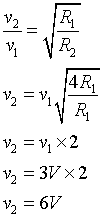
Q.28.
The radii of circular orbits of two satellites A and B of the earth, are 4R and R, respectively. If the speed of satellite A is 3 V, then the speed of satellite B will be: [ CBSE-PMT 2010]
-
17%
a) 3V/4
-
53%
b) 6V
-
22%
c)12V
-
8%
d)3V/2
Explanation
Q.29.
A particle of mass M is situated at the center of a spherical shell of same mass and radius 'a'. The gravitational potential at a point situated at a/2 distance from the center, will be: [ CBSE-PMT 2010]
-
37%
a)

-
18%
b)

-
29%
c)

-
16%
d)

Q.30.
A satellite of mass m is orbiting around the earth in a circular orbit with a velocity v. What will be its total energy? [ CBSE-PMT 1991]
-
29%
a) (3/4) mv2
-
17%
b) (3/2) mv2
-
19%
c) mv2
-
36%
d) -(1/2)mv2