Q.1.
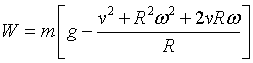
A body weight with a spring balance in a train at rest, shows a weight WWhen the train begins to move with a velocity v around the equator from west to east and if the angular velocity of earth is ω
-
20%
a)W0
-
20%
b) W0 ( 1 + 2vω/g)
-
60%
c)W0( 1 - 2vω/g)
-
0%
d)W0( 1 - v2 / R)
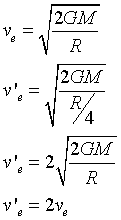
Explanation
Q.2.
A hydrogen balloon released on the moon would
-
0%
a) climb with an acceleration of 9.8×6 m/s2
-
50%
b) climb with an acceleration of 9.8 / 6 m/s2
-
25%
c)neither climb nor fall
-
25%
d)fall with an acceleration of 9.8 / 6 m/s2
Q.3.
A body is dropped from a communication satellite around the earth. Which of the following statements is not correct?
-
0%
a)the body is falling continuously towards the center of earth
-
0%
b) the body will hit the surface of the earth
-
50%
c)the body will move into circular orbit around the earth
-
50%
d)the body will appear to be stationary when observed from the earth
Q.4.
A satellite in force-free space sweeps stationary interplanetary dust at rate dM/dt=αv, where M is the mass and v is the velocity of the satellite and α is constant. What is the deceleration of the satellite: [ CBSE 1994]
-
33%
a) -2αv2 / M
-
33%
b) - αv2 / M
-
33%
c) - αv2 / 2M
-
0%
d) - αv2
Q.5.
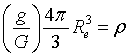
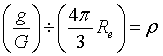
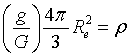
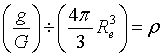
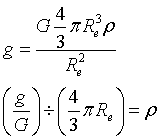
Acceleration due to gravity, g and the mean density of the earth ρ are related by the relation [ BHU 1998]
-
33%
a)
-
33%
b)
-
33%
c)
-
0%
d)
Explanation
Q.6.
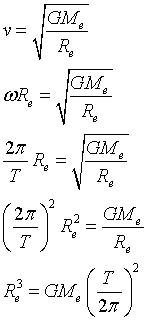
Choose the correct statement from the following:The radius of the orbit of a geostationary satellite depends upon [ PMT 1995]
-
0%
a) mass of the satellite, its time period and gravitational constant
-
33%
b) mass of the satellite, mass of the earth and the gravitational constant
-
67%
c)mass of the earth, mass of the satellite, time period of the satellite and the gravitational constant
-
0%
d)mass of the earth, time period of the satellite and the gravitational constant
Explanation
Q.7.
The gravitational field due to a mass distribution is E=K/x3 in the direction. ( K is a constant). Taking the gravitational potential to be zero at infinity, its value at a distance x is ..[ MPPMT 1994]
-
0%
a) K/x
-
67%
b) K/2x
-
0%
c)K/x2
-
33%
d)K/2x2
Q.8.
To purchase a sugar will be beneficial at [ Raj PET 1996]
-
0%
a) Poles
-
33%
b) Equator
-
67%
c) At 45° altitudes
-
0%
d) At altitude 40°
Q.9.
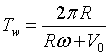
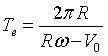
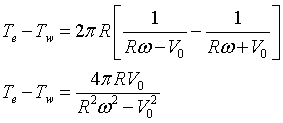
A satellite moves east wards with a speed V0 in equatorial plane, very near to the surface of earth. Another satellite moves West wards in the same orbit with same speed. if R=radius of earth and ω, the angular speed of earth about its own axis, then the difference in time periods of satellites as observed from earth is
-
33%
a)

-
33%
b)

-
33%
c)

-
0%
d)

Explanation
Q.10.
At what height over the earth's pole, the free fall acceleration decreases by one percent? ( Assume the radius of earth to be 6400 km) [ CET 1994]
-
75%
a) 32 km
-
0%
b) 64 km
-
25%
c)80 km
-
0%
d)1.253 km
Q.11.
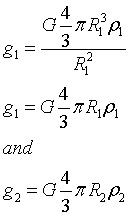
the diameters of two planets are in the ratio 4:1 and their mean densities in the ratio 1:The acceleration due to gravity on the planets will be in ratio....[ ISM Dhanbad 1994]
-
0%
a) 1:2
-
25%
b) 2:3
-
75%
c)2:1
-
0%
d)4:1
Explanation
Q.12.
In a satellite if the time of revolution is T, then K.E. is proportional to [ BHU 1995]
-
0%
a) 1 /T
-
25%
b) 1/ T2
-
25%
c) 1 / T3
-
50%
d) T-2/3
Q.13.
A rubber ball is dropped from height of 5m on a planet where the acceleration due to gravity is not known. On bouncing it rises to 1.8m. The ball loses its velocity on bouncing by a factor of [ CBSE 1998]
-
33%
a)2/5
-
33%
b) 9/25
-
0%
c)3/5
-
33%
d)16/25
Q.14.
The depth d, at which the value of acceleration due to gravity becomes (1/n) times the value at the surface is ( R=Radius of earth) [ MPPMT 1999]
-
33%
a) R/n

-
67%
b)

-
0%
c)

-
0%
d)
Q.15.
Spot the wrong statement: The acceleration due to gravity, g, decreases if : [ MPPMT 1994]
-
33%
a) we go down from the surface of the earth towards its center
-
33%
b) we go up from the surface of the earth
-
0%
c)we go from the equator towards the poles on the surface of the earth
-
33%
d)the rotational velocity of the earth is increased
Q.16.
A particle hanging from the spring stretches it by 1cm at the earth's surface. How much the same particle stretches the spring at a place 1600 km above the surface of earth ( R=6400 km)
-
25%
a) 16/50 cm
-
25%
b) 16/25 cm
-
50%
c) 25/16 cm
-
0%
d) 50/16 cm
Q.17.
A person brings a mass of 1 kg from infinity to a point P. Initially the mass was at rest but moves at a speed of 2m/s as it reaches at p. The work done by the person on the mass is -3J. The potential at P is
-
33%
a) - 2 K/kg
-
0%
b) -3 J/kg
-
33%
c) - 5J/kg
-
33%
d) -7 J/kg
Q.18.
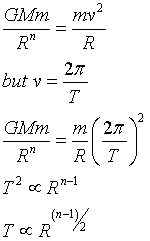
Suppose the gravitational force varies inversely as the nth power of the distance. Then the time period of the planet in circular orbit of radius R around the sun will b proportional to
-
25%
a) R-n
-
0%
b) Rn
-
25%
c) R(n-1)/2
-
50%
d) R(n+1)/2
Explanation
Q.19.
The time period of a second's pendulum in a satellite is
-
0%
a) zero
-
0%
b) 2
-
67%
c) infinity
-
33%
d) depends on mass of body
Q.20.
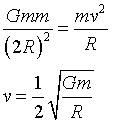
Two particles of equal mass go round a circle of radius R under the action of their mutual gravitational attraction. The speed of each particle is [ CBSE 1995]
-
0%
a)

-
33%
b)

-
33%
c)

-
33%
d)

Explanation
Q.21.
Out of the following, the only correct statement about satellites is [ Hariyana C.E.E. 1996]
-
0%
a)A satellite can not move in a stable orbit in a plane passing through the earth's center
-
33%
b) Geostationary satellites are launched in equatorial plane
-
33%
c)we can use just one geostationary satellite for global communication around the globe
-
33%
d)The speed of satellite increases with an increase in the radius of orbit.
Q.22.
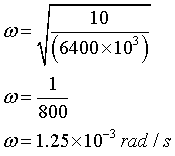
The angular speed of earth in rad/s, so that the object on equator may appear weightless ( g=10 m/s2 and radius of earth=6400 km) [ AMU PMT 1997]
-
0%
a) 1.56
-
0%
b) 1.25 × 10⁻¹
-
33%
c) 1.56 × 10⁻³
-
67%
d)1.25 × 10⁻³
Explanation
Q.23.
The value of g at a particular point is 9.8 m/sSuppose the earth suddenly shrinks to half its present size, without losing any mass. The value of g at the same point ( assume that distance of point from the center of earth does not shrink) will be [ Pb. CET 1998]
-
33%
a) 4.9 m/s2
-
0%
b) 3.1 m/s2
-
67%
c)9.8 m/s2
-
0%
d)19.6 m/s2
Q.24.
The mass of the moon is about 1.2% of the mass of the earth. Compared to the gravitational force the earth exerts on the moon, the gravitational force the moon exerts on earth [ SCRA 1998]
-
67%
a) is the same
-
0%
b) is smaller
-
33%
c) is greater
-
0%
d) varies with its phase
Q.25.
The escape velocity of rocket on the earth is 11.2 km/s. Its value on a planet where acceleration due to gravity is double that on the earth and diameter of the planet is twice that of the earth will be in km/s [ M.N.R. 1999]
-
0%
a)11.2
-
0%
b) 5.6
-
100%
c)22.4
-
0%
d)33.6
Q.26.
If the radius of earth were to decrease by 1%, its mass remains same, the acceleration due to gravity on the surface of earth will [ IIT 1981]
-
33%
a) increase by 1%
-
33%
b) increase by 2%
-
0%
c) decrease by 1%
-
33%
d)decrease by 2%
Q.27.
How much energy will be necessary for making a body of 500 kg escape from the earth? ( g=9.8 km/s2, radius of the earth=6.4 × 10⁶m) [ M.P. CEE 1999]
-
33%
a) About 9.8 × 10⁶ J
-
0%
b) About 6.4 × 10⁸ J
-
33%
c) About 3.1 × 10¹⁰ J
-
33%
d) About 27.4 × 10¹² J
Q.28.
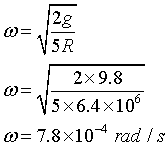
What should be the velocity of earth due to rotation about its own axis so that the weight of person become 3/5 of the present weight at equator. Radius of earth on equator is 6400km [ MNR 1999]
-
33%
a) 7.4 × 10⁻³ rad/s
-
0%
b) 6.7 ×10⁻⁴ rad/s
-
67%
c) 7.8 × 10⁻⁴ rad/s
-
0%
d) 8.7 × 10⁻⁴ rad/s
Explanation
Q.29.
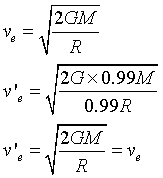
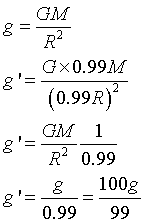
If both the mass and the radius of the earth decreases by 1% [ karnataka CET 2001]
-
0%
a) the escape velocity would increase
-
33%
b) the acceleration due to gravity would increase
-
33%
c)the escape velocity would decrease
-
33%
d)the acceleration due to gravity would decrease
Explanation
Q.30.
The escape velocity on the surface of earth is 11.2km/s. What would be the escape velocity on the surface of another planet of same mass but 1/4 times the radius of the earth? [JIPMER 2002]
-
100%
a) 22.4 km/s
-
0%
b) 67.2 km/s
-
0%
c)44.8 km/s
-
0%
d) 89.6 km/s
Explanation