Q.1.
Elimination of HBr from 2-bromobutane results in the formation of [AIEEE 2005]
-
30%
a) equimolar mixture of 1- and 2-butene
-
50%
b) predominantly 2-butene
-
16%
c) predominantly 1-butene
-
4%
d) predominantly 2-butyne
Q.2.
Among the following, the molecule with the highest dipole moment is ...[ IIT 2003]
-
28%
a) CH3Cl
-
27%
b) CH2Cl2
-
19%
c) CHCl3
-
27%
d) CCl4
Q.3.
Iodoform can be prepared from all except : [ AIEEE 2012]
-
16%
a) isopropyl alcohol
-
25%
b) 3-methyl-2-butanone
-
26%
c) isobutyl alcohol
-
33%
d) ethyl methyl ketone
Q.4.
Elimination reaction of 2-Bromo-pentane to form pent-2-ene is (a) β-Elimination reaction (b) Follows Zaitsev rule (c) Dehydrohalogenation reaction (d) Dehydration reaction .... [ NEET 2020]
-
22%
a) (b), (c), (d)
-
23%
b) (a), (b), (d)
-
43%
c) (a), (b), (c)
-
12%
d) (a), (c), (d)
Q.5.
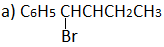
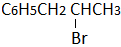
The reaction of C6H5CH = CHCH3 with HBr produces ... [ AIPMT 2015
-
27%
a)
-
39%
b)
-
28%
c) C6H5CH2CH2CH2Br
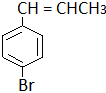
-
6%
d)
Q.6.
Which of the following reaction(s) can be used for the preparation of alkyl halides? [ AIPMT 2015] I. CH3CH2OH + HCl ( in presence of anh ZnCl2) → II.CH3CH2OH + HCl → III. (CH3)3COH + HCl → IV. (CH3)2CHOH + HCl ( in presence of anh ZnCl2) →
-
49%
a) I, III and IV
-
31%
b) I and II
-
14%
c) Only IV
-
6%
d) III and IV
Q.7.
In the following sequence of reactions, the end product C is .... [ AIPMT 2012]

-
12%
a) acetone
-
27%
b) methane
-
32%
c) acetaldehyde
-
29%
d) ethyl alcohol
Q.8.
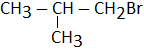
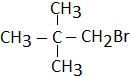
In a SN2 substitution reaction of the type Which one of the following has the highest relative rate? [ AIPMT 2008]

-
31%
a) CH3CH2CH2Br
-
49%
b) CH3CH2Br
-
7%
c)
-
13%
d)
Q.9.
Non-sticking frying pans are coated with ... [ ISM 1993]
-
7%
a) ethylene
-
11%
b) styrene
-
75%
c) tetrafluoroethylene (Teflon)
-
7%
d) chlorofluoro methane
Q.10.
The -OH group of an alcohol or the -COOH group of a carboxylic acid can ne replaced by -Cl using ...[ AIPMT 2004]
-
49%
a) phosphorous pentachloride
-
13%
b) hypochlorous acid
-
12%
c) chlorine
-
26%
d) hydrochloric acid
Q.11.
Which of the following is responsible for depletion of the ozone layer in the upper strata of the atmosphere? [ AIPMT 2004]
-
19%
a) polyhalogens
-
7%
b) Ferrocenes
-
13%
c) Fullerens
-
60%
d) Freons
Q.12.
Reactivity order of halides for dehydrohalogenation is ...[ AIPMT 2002]
-
30%
a) R-F > R - Cl > R - Br > R - I
-
54%
b) R - I > R - Br > R - Cl > R - F
-
13%
c) R - I > R - Cl > R - Br > R - F
-
3%
d) R - F > R - I > R - Br > R - Cl
Q.13.
An organic compound A[C4H9Cl] on reaction with Na/diethyl ether gives a hydrocarbon which on monochlorination gives a hydrocarbon which on monochlorination gives only one chloro derivative, then A is [AIPMT 2001]
-
29%
a) t-butyl chloride
-
10%
b) s-butyl chloride
-
36%
c) iso- butyl chloride
-
24%
d) n- butyl chloride
Q.14.
Gammexane is [ AIPMT 1999]
-
10%
a) chlorobenzene
-
8%
b) benzyl chloride
-
15%
c) bromobenzene
-
66%
d) benzene hexachloride
Q.15.
(CH3)3CMgCl on reaction with D2O gives ...[ IIT 1997]
-
45%
a) (CH3)3CD
-
31%
b) (CH3)3OD
-
14%
c) (CD3)3CD
-
10%
d) (CD3)3OD
Q.16.
2-bromopentane is heated with potassium ethoxide in ethanol. the major prodct obtained is ...[ AIPMT 1998]
-
46%
a) 1-ethoxypentane
-
19%
b) pentene-1
-
31%
c) trans - pentene - 2
-
5%
d) cis-pentene-2
Q.17.
The alkyl halide is converted into an alcohol by ... [ AIPMT 1997]
-
22%
a) addition
-
38%
b) substitution
-
34%
c) dehydrohalogenation
-
6%
d) elimination
Q.18.
When chlorine is passed through propene at 400°C, which of the following is formed? [ AIPMT 1993]
-
22%
a) PVC
-
42%
b) Allyl chloride
-
9%
c) Nickel chloride
-
28%
d) 1, 2-dichloro ethane
Q.19.
Industrial preparation of chloroform employs acetone and ... [AIPMT 1993]
-
25%
a) phosgene
-
32%
b) clacium hypochlorite
-
30%
c) chlorine gas
-
12%
d) sodium chloride
Q.20.
When hydrochloric acid gas is treated with propene in presence of benzoyl peroxide, it gives ... [ AIPMT 1993]
-
23%
a) 2-chloropropane
-
27%
b) alkyl chloride
-
19%
c) no reaction
-
31%
d) n- propyl chloride
Q.21.
Chlorobenzne reacts with Mg in dry ether to give a compound [A] which further reacts with ethanol to yiled .... [ AIPMT 1993]
-
23%
a) phenol
-
28%
b) benzene
-
36%
c) ethyl benzene
-
13%
d) phenyl ether
Q.22.
In compound 'X' all the bond angles are exactly 109°28', 'X' is ... [ AIPMT 1991]
-
14%
a) Chloromethane
-
55%
b) Carbon tetrachloride
-
18%
c) Iodoform
-
12%
d) Chloroform
Q.23.
The Cl- C - Cl angle in 1,1,2,2-tetra-chloroethane and tetrachloromethae will be about ...[ AIPMT 1988]
-
57%
a) 120° and 109°28'
-
20%
b) 90° and 109.5°
-
15%
c) 109.5° and 90°
-
9%
d) 109.5° and 120°
Q.24.
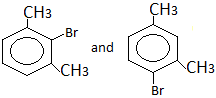
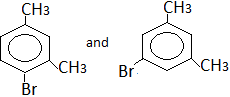
What products are formed when the following compound is treated with Br2 in the presence of FeBr3? [ AIPMT 2014]

-
43%
a)
-
30%
b)
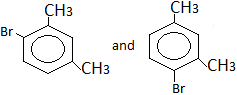
-
15%
c)
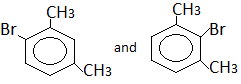
-
13%
d)
Q.25.
Fires result from the combustion of alkali metals can be extinguished by ... [ KCET 1994]
-
39%
a) CCl4, ,
-
28%
b) sand
-
13%
c) water
-
20%
d) kerosene
Q.26.
Identify the set of reagents/reaction conditions 'X' and 'Y' in the following set of transformations: [IIT 2002]
-
29%
a) X = dilute NaOH aq: 20°C Y = HBr/acetic acid: 20°C
-
39%
b) X = conc. alc. NaOH; 80°C Y = HBr/ acetic acid; 20°C
-
17%
c) X = dilute aqueous NaoH; 20°C Y = Br2/CHCl3; 0°C
-
15%
d) X = conc. alc. NaoH; 80°C Y = Br2/CHCl3; 0°C
Q.27.
Which of the following undergoes nucleophilic substitution exclusively by SN1 mechanism? [ AIPMT 2005]
-
22%
a) Benzyl chloride
-
22%
b) Ethyl chloride
-
20%
c) Chlorobenzene
-
37%
d) Isopropyl chloride
Q.28.
If chloroform left open in air in presence of sun-rays ... [ MLNR 1994]
-
19%
c) polymerization takes place
-
21%
a) explosion takes place
-
48%
b) poisonous phosgene gas is formed
-
12%
d) no reaction takes place
Q.29.
Which is finally produced when acetylene reacts with HCl ...
-
27%
a) CH2 = CHCl
-
39%
b) CH3CHCl2
-
31%
c) ClCH=CHCl
-
4%
d) None of these
Q.30.
Phenol is heated with CHCl3 and alcoholic KOH when salicylaldehyde is produced. The reaction is known as
-
24%
a) Rosenmund's reaction
-
65%
b) Reimer Tiemann reaction
-
6%
c)
-
4%
d)