Q.1.
Alkyl halides reacts with dialkyl lithium cuprate to give ...[ AIEEE 2005]
-
18%
a) alkenes
-
32%
b) alkyl Cu halide
-
45%
c) alkanes
-
5%
d) alkenyl halide
Q.2.
An alkyl halides may be converted into an alcohol by [ CET 1997]
-
4%
a) addition
-
78%
b) substitution
-
17%
c) dehydrohalogenation
-
0%
d) elimination
Q.3.
Compound formed, when methyl amine is heated with chloroform in the presence of KOH is ...[ IIT 2006]
-
45%
a) CH3 - C ≡ N
-
18%
b) CH3N+ ≡ C-
-
18%
c) CH3 - N- ≡ C+
-
18%
d) CH3NHCH3
Q.4.
1-chlorobutane onreaction with alcoholic KOH gives ... [IIT 1991]
-
35%
a) 1-butene
-
35%
b) 1-butanol
-
23%
c) 2-butene
-
8%
d) 2-butanol
Q.5.
In the reaction of phenol with CHCl3 and aqueous NaOH at 70°C, the electrophile attacking the ring is ...[ IIT 1991]
-
35%
a) CHCl3
-
30%
b) CHCl2
-
30%
c) CCl2
-
4%
d) COCl2
Q.6.
Butane nitrile may be prepared by heatiing ...[ IIT 1992]
-
9%
a) propyl alcohol with KCN
-
43%
b) butyl alcohol with KCN
-
17%
c) butyl chloride with KCN
-
30%
d) propyl chloride with KCN
Q.7.
The products of reaction of alcohol silver nitrite with ethyl bromide are ...[IIT 1991]
-
0%
a) ethane
-
20%
b) ethene
-
40%
c) ethyl alcohol
-
40%
d) nitroethane
Q.8.
Iodoform is formed when ethanol is heated with [ KCET 1992]
-
29%
a) potassium iodide and sodium hydroxide
-
38%
b) iodine and aqueous potassium hydroxide
-
24%
c) chloroform and iodide
-
10%
d) iodine and potassium iodide
Q.9.
m- chlorobenzaldehyde on reaction with conc.KOH at room temperature gives: [IIT 1991]
-
18%
a) potassium m-chlorobenzoate and m- hydroxy benzaldehyde
-
41%
b) m-hydroxybenzaldehyde and m- chlorobenzylalcohol
-
12%
c) m- chlorobenzylalcohol and m-hydroxy benzylalcohol
-
29%
d) potassium m-chlorobenzoate and m-chlorobenzyl alcohol
Q.10.
Aryl halides are less reactive towards nucleophilic substitution reaction as compared to alkyl halides due to ... [ IIT 1990]
-
20%
a) the formation of less stable carbonium ion
-
50%
b) resonance stabilization
-
15%
c) longer carbon-halogen bond
-
15%
d) the inductive effect
Q.11.
Fluorobenzene (C6H5F) can be synthesised in the laboratory ...[ AIEEE 2006]
-
11%
a) by heating phenol with HF and KF
-
56%
b) from aniline by diazotisation followed by heating the diazonium salt with HBF4
-
17%
c) by direct fluorination of benzene with F2 gas
-
17%
d) by reacting bromobenzene with NaF solution
Q.12.
Isobutyl magnesium bromide with dry ether and absolute alcohol gives ... [ IIT 1995]
-
28%

-
28%
b)

-
6%
c)

-
39%
d)

Q.13.
Among the following the one that gives positive iodoform test upon reaction with I2 and NaOH is ...[ AIEEE 2006]
-
43%
a) CH3CH2CH(OH)CH2CH3
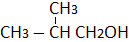
-
29%
b) C6H5CH2CH2OH
-
21%
c) PhCHOHCH3
-
7%
d)
Q.14.
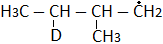
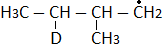
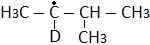
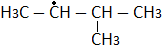
nsider the following reaction Identify the structure of the major product 'X'

-
14%
a)
-
36%
b)
-
29%
c)
-
21%
d)
Q.15.
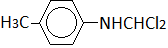
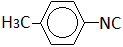
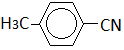
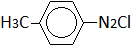
The reaction of chloroform with alc. KOH and p-toluidine forms: [AIEEE 2003]
-
19%
a)
-
44%
b)
-
25%
c)
-
12%
d)
Q.16.
20% of aqueous solution of sodium chloride containing ethyl alochol on electrolysis gives
-
14%
a) chloroform
-
29%
b) acetaldehyde
-
29%
c) ethyl chloride
-
29%
d) sodium ethonate
Q.17.
Most readily hydrolysed is
-
6%
a) C6H5Cl
-
38%
b) (C6H5)2CHCl
-
25%
c) C6H5CH2Cl
-
31%
d) (C6H5)3CCl
Q.18.
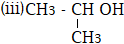
Following compounds are given (i) CH3CH2OH (ii) CH3 COCH3 (iv) CH3OH Which of the above compound(s) , on being warmed with iodine solution and NaOH, will give iodoform?
-
50%
a) (i), (iii) and (iv)
-
17%
b) Only (ii)
-
25%
c) (i), (ii) and (iii)
-
8%
d) (i) and (ii)
Q.19.
When a solution of AgNO3 is added to pure CCl4
-
20%
a) Curdy white precipiitate is formed
-
53%
b) no precipitate is formed
-
13%
c) a pale yellow precipitate is form
-
13%
d) none of the above
Q.20.
Which of the following reagent is not used for preparation of alkyl halid from from an alcohol
-
0%
a) PCl5
-
31%
b) NaCl
-
54%
c) SOCl2
-
15%
d) HCl + ZnCl2
Q.21.
Carbon tetrachloride on treatment with Fe/H2O gives
-
40%
a) chloroform
-
40%
b) chloromethane
-
13%
c) methane
-
7%
d) mthyl chloride
Q.22.
Ethyl iodide on treatment with alcohol potash gives
-
12%
a) ethyl alcohol
-
29%
b) methyl alcohol
-
41%
c) ethylene
-
18%
d) acetylene
Q.23.
Methyl magnesium iodide on treatment with D2O furnishes a hydrocarbon, alongwith Mg(OD)I. The hydrocarbon is
-
38%
a) CH3D
-
31%
b) CH3CH2D
-
31%
c) CH4
-
0%
d) none of above
Q.24.
For the carbylamine reaction we need hot alcoholic KOH and
-
8%
a) any amine and chloroform
-
42%
b)any monoalkyl amine and trichloro methane
-
42%
c) a primary amine and an alyl halide
-
8%
d) chloroform and silver powder
Q.25.
Which statement is correct
-
18%
a) C2H5Br reacts with alcoholic KOH to form C2H5OH
-
45%
b) C2H5Br when treated with sodium ethoxide forms diethyl ether
-
18%
c) C2H5Br when treated with metallic sodium gives ethane
-
18%
d) C2H5Br with AgCN forms ethyl cyanide
Q.26.
1,2-dimromoethane is added to prevent deposition of lead metal in
-
25%
a) electric cell
-
8%
b) wtare pipes
-
42%
c) petrol engine
-
25%
d) electric heater
Q.27.
For the following reaction, the order of reactivity is

-
0%
a) HI > HCl > HBr
-
75%
b) HI > HBr > HCl
-
17%
c) HCl > HBr > HI
-
8%
d) HBr > HI > HCl
Q.28.
The product formed in the reaction of HX with (CH3)2C = CH2
-
36%
a) CH3)2CH.CH2X
-
45%
b) (CH3)2CXCH3
-
9%
c) CH3)2CXCH2X
-
9%
d) CH3)2CHCH3
Q.29.
In dihalogen derivatives if two halogenatoms are attached to the same carbon atom, the compound is called
-
50%
a) gem dihalide
-
17%
b) vicinal dihalide
-
25%
c) both (a) and (b)
-
8%
d) none of these
Q.30.
A sample of chloroform before being used as an anaesthetic is tested by
-
23%
a) AgNO3 solution
-
15%
b) Boiling with KOH
-
38%
c) AgNO3 solution after boiling with alc.KOH
-
23%
d) Fehling solution