Q.1.
The hydrocarbon which does not decolourise alkaline KMnO4 solution and also does not give any precipitate with ammoniacal silver nitrate is ...[ AIIMS 2007]
-
64%
a) benzene
-
18%
b) acetylene
-
18%
c) propyne
-
0%
d) 1-butyne
Q.2.
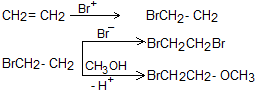
In methyl alcohol solution bromine reacts with ethylene to yield BrCH2CH2OCH2 in addition to 1,2-dibromoethane because ..[ Pb CEET1998]
-
11%
a) this is a free radical mechanism
-
33%
b) the methyl alcohol sollvates the bromine
-
56%
c) the ion formed initially may react with Br- or CH3OH
-
0%
d) the methyl alcohol solvates the bromine
Explanation
Q.3.
Both methane and ethane may be obtained by a suitable one step reaction from [ BHU 2004]
-
42%
a) CH3I
-
25%
b) CH2CH2I
-
8%
c) CH3OH
-
25%
d) C2H5OH
Q.4.
Acetylene when reacts with two molecules of HBr then it gives
-
0%
a) Br-C≡C-Br
-
50%
b) Br-CH=CH-Br
-
21%
c) Br2C-CBr2
-
29%
d) CH3-CHBr2
Q.5.
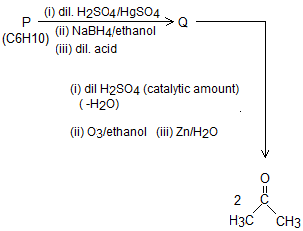
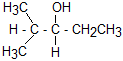
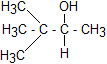
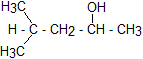
onPassage Based Questions Q277) An acyclic hydrocarbon P, having molecular formula gave acetone as the organic product through the following sequence of reactions, in which Q is an intermediate organic compound ...[IIT 2011] The structure of the compound Q is
-
30%
a)
-
10%
b)
-
50%
c)
-
10%
d)

Q.6.
n presence of peroxid, hydrogen chloride and hydrogen iodide do not give anti-Markovnikov's addition to alkenes because ..[ IIT2001]
-
20%
a) both are highly ionic
-
0%
b) one is oxidising and the other is reducing
-
50%
c) one of the steps is endothermic in both the cases
-
30%
d) all the steps are exothermic in both the cases
Q.7.
When CH3Cl and AlCl3 are used in Friedel-Crafs reaction, the electrophile is ...[ CBSE PMT 1994]
-
11%
a) Cl+
-
22%
b) AlCl4-
-
67%
c) CH3+
-
0%
d) AlCl2+
Q.8.
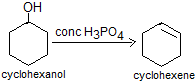
Cyclohexene is best prepared from cyclohexanol by which of the following? [ IIT 2005]
-
0%
a) conc H3PO4
-
60%
b) conc HCl/ ZnCl2
-
40%
c) conc. HCl
-
0%
d) conc. HBr
Explanation
Q.9.
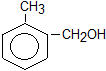
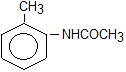
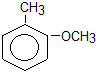
Which is most reactive towards electrophilic reagent? [ AIPMT 2010]
-
0%
a)

-
20%
b)
-
60%
c)
-
20%
d)
Explanation

Q.10.
In preparation of alkene from alcohol using Al2O3 which is an effective factor? [ CBSEPMT 2001]
-
18%
a) Temperature
-
18%
b) Concentration
-
27%
c) Porosityof Al2O3
-
36%
d) Surface area of Al2O3
Q.11.
on Q283) In the reactions (A) and (B) are geometrical isomers. Then ... [ EAMCET Med. 2007]

-
12%
a) A is cis and B is trans
-
50%
b) A is trans and B is cis
-
25%
c) A and B are cis
-
12%
d) A and B are trans
Explanation

Q.12.
Octane number can be changed by ...[ AFMC 2004]
-
9%
a) isomerissation
-
0%
b) alkylation
-
9%
c) cyclisation
-
82%
d) all of these
Q.13.
on Q285) Products of the following reaction [ AMU 2009]

-
22%
a) Me2CO + CH3CHO
-
22%
b) CH3CHO + CH3COOH
-
44%
c) Me2CO + CH3COOH
-
11%
d) 2Me2CO
Explanation

Q.14.
What is the type of reaction CH2 = CHCH3 + HBr → CH3CHBrCH3 ..[ AFMC1999]
-
17%
a) Nucleophilic addition reaction
-
17%
b) Free radical addition reaction
-
33%
c) Electrophilic substitution reaction
-
33%
d) Electrophilic addition reaction
Q.15.
Addition of HI to double bond of propene yields isopropyl iodide and not n-propyl iodide as the major product, because addition proceeds through ...[ Haryana CEET 1998]
-
22%
a) a more stable carbonium ion
-
22%
b) a more stable carbanion
-
44%
c) a more stable free radical
-
11%
d) homolysis
Explanation

Q.16.
The correct order of reactivity towards electrophilic substitution is
-
18%
a) phenol > benzene > chlorobenzene > benzoic acid
-
27%
b) benzoic acid > chlorobenzene > benzene > phenol
-
36%
c) phenol > chlorobenzene > benzene > benzoic acid
-
18%
d) benzoic acid > phenol > benzene > chlorobenzene
Q.17.
Two gases, P and Q decolourises aqueous bromide but only one of them gives white precipitate with aqueous ammonical silver nitrate solution. P and Q are likely to be ... [ DEC 1994]
-
10%
a) Ethane and ethyne
-
50%
b) But-1-yne and but-2-yne
-
30%
c) Ethane and but-2-yne
-
10%
d) Ethyne and popyne
Q.18.
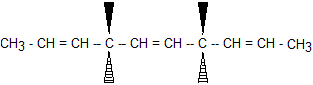
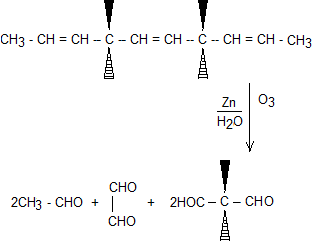
on Q290) The number of optically active products obtained from the complete ozonolysis of the given compound is ...[ IIT 2012]
-
11%
a) 0
-
0%
b) 1
-
89%
c) 2
-
0%
d) 4
Explanation
Q.19.
on Q291) In the following reaction, the product 'R' is [ AFMC 2010]

-
11%
a) benzene
-
11%
b) ethylbenzene
-
56%
c) toluene
-
22%
d) n-propyl benzene
Explanation

Q.20.
Pure methane can be produced by ... [ DEC 2001]
-
11%
a) Wurtz reaction
-
22%
b) Kolbe's electrolysis method
-
33%
c) Soda-lime decarboxylation
-
33%
d) Reduction with H2
Q.21.
Which of the following reagents, when heated withethyl chloride, forms ethylene? [ AFMC 2008]
-
22%
a) Aqueous KOH
-
11%
b) Zn/HCl
-
67%
c) Alcohol KOH
-
0%
d) HI
Explanation

Q.22.
Which of the following will be most easily attacked by an electrophile..[CBSE PMT 1999]
-
10%
a)

-
10%
b)

-
60%
c)

-
20%
d)

Q.23.
Chloroform or iodoform on heating with silver powder gives ..[ CET J&K 2011]
-
25%
a) CH4
-
12%
b) C2H4
-
50%
c) C2H6
-
12%
d) C2H2
Q.24.
Tolune reactswith methyl chloride in presence of anhydrous aluminium chloride to give mainly m-xylene. This is because
-
22%
a) CH3-group is m-directing
-
0%
b) CH3-group has +I effect
-
11%
c) because of hyperconjugation effect of the CH3-group
-
67%
d) m-xylene isthermodynamically more stableInitially formed o- and p-xylenes under the reaction condition are converted into thermodynamically morestable m-xylene
Q.25.
ion and Reason Q297) Statement I : Addition of bromine to trans-2-butene yields meso-2,3-dibromobutane. Statement II : Bromine addition to an alkene is an electrophilic addition
-
33%
a) Statement I is correct Statement II is correct Satement II is a correct explanation of statement I
-
56%
b) Statement I is correct statement II is correct statement II is not the correct explanation of statement I
-
11%
c) Statement I is correct, statement II is incorrect
-
0%
d) Statement I is incorrect statement II is correct
Q.26.
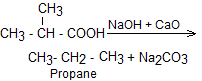
Decarboxylation of isobutyric acid leads to ...
-
22%
a) Iso - Butane
-
33%
b) Propane
-
33%
c) Butane
-
11%
d) None of these
Explanation
Q.27.
The hydrocarbon which decolourises alkaline KMnO4 solution, but does not give any precipitate with ammonical silver nitrate is ...[ AIIMS 1994]
-
50%
a) Benzene
-
0%
b) Acetylene
-
12%
c) Propyne
-
38%
d) Butyne-2
Q.28.
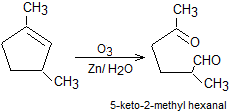
Which compound would give 5-keta-2-methyl hexanal upon ozonilysis? [ IIT 2015]
-
11%
a)

-
56%
b)

-
22%
c)

-
11%
d)

Explanation
Q.29.
Reaction of HBr with propene in absence of peroxide is a/an ...[ Kerala PMT 2011]
-
12%
a) electrophilic addition
-
50%
b) electrophilic substitution
-
0%
c) nucleophilic substitution
-
38%
d) free radical addition
Explanation

Q.30.
In the free radical chlorination of methane, the chain initiation step involves the formation ...[ CBSE PMT 1994]
-
11%
a) Chlorine atom
-
11%
b) Hydrogen chloride
-
44%
c) Methyl radical
-
33%
d) Chloromethyl radical