Q.1.
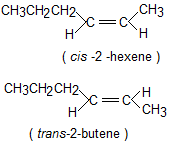
Which of the following compounds will show geometrical isomerism? [ DPMT 2009]
-
11%
a) cyclohexene
-
63%
b) 2-Hexene
-
11%
c) 3-Hexyne
-
16%
d) 1, 1 -Diphenyl ethylene
Explanation
Q.2.
(CH3)3CMgCl on reaction with D2Oproduces ... [IIT 1997]
-
64%
a) (CH3)3CD
-
18%
b) (CH3)3COD
-
18%
c) (CH3)CD
-
0%
d) (CH3)COD
Q.3.
Reaction of HBr with propene in the presence of peroxide gives ...[ AIPMT 2004]
-
23%
a) isopropyl bromide
-
8%
b) allyl bromide
-
69%
c) n-propyl bromide
-
0%
d) 3-bromopropane
Explanation

Q.4.
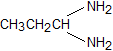
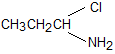
When CH3CH2CHCl2 is treated with NaNH2, the product formed is ...[ CBSE PMT 2002]
-
67%
a) CH3 -CH = CH2
-
33%
b) CH3 - C ≡ CH
-
0%
c)
-
0%
d)
Explanation

Q.5.
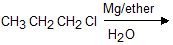
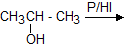
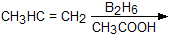
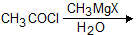
Which of the following reactions will not give propane? [ DPMT 2005]
-
0%
a)
-
60%
b)
-
0%
c)
-
40%
d)
Explanation

Q.6.
Reactivity of hydrogen atoms attached to different carbon atoms in alkaneshas the order ...[ CBSE PMT 1993]
-
25%
a) Tertiary > Primary > Secondary
-
25%
b) Primary > Secondary > Tertiary
-
50%
c) Tertiary > Secondary > Primary
-
0%
d) Both a and b
Q.7.
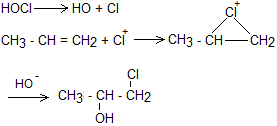
The reaction of propene with HOCl proceeds via the addition of ...[ IIT 2001]
-
44%
a) H+ in the first step
-
44%
b) Cl+ in the first step
-
11%
c) OH- in the first step
-
0%
d) Cl- and OH- single step
Explanation
Q.8.
Which reacgent can be used to convert, halides, alcohols, carbonyl compounds, acids, etc to alkane
-
30%
a) Zn - Hg/HCl
-
60%
b) Red P + HI
-
10%
c) LiAlH4
-
0%
d) None of these
Q.9.
Markovnikov's rule is applicable to ... [ DPMT 1994]
-
12%
a) CH2 = CH2
-
12%
b) CH3-CH2-CH3
-
50%
c) CH3-CH = CH - CH3
-
25%
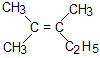
d)
Q.10.
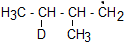
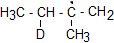
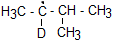
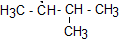
ion Q40) Consider the following reaction . Identify the structure of the major product X ..[ IIT 2002]

-
22%
a)
-
56%
b)
-
22%
c)
-
0%
d)
Explanation

Q.11.
Number of bonds in benzene molecule are ...[ DPMT 2005]
-
0%
a) 3σ and 12π
-
29%
b) 6σ and 3π
-
71%
c) 12σ and 3π
-
0%
d) 6σ and 6π
Q.12.
Which of the following methods is most appropriate for the manufacture of methane? [ CPMT 2000 ]
-
22%
a) By reduction of CH2Cl2
-
0%
b) Wurtz reaction
-
67%
c) Liquefaction of natural gas
-
11%
d) None of these
Q.13.
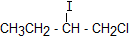
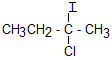
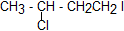
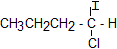
ion Q43) Predict the product 'C' obtained in the following reaction of 1-butyne ..[ AIPMT 2007]

-
29%
a)
-
57%
b)
-
14%
c)
-
0%
d)
Explanation

Q.14.
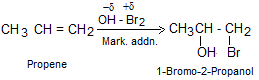
Which of the following is the predominant product in the reaction of HOBr with propene? [ DEC 1994]
-
33%
a) 2-bromo-1-propanol
-
0%
b) 3-bromo-1-propanol
-
8%
c) 2-bromo-2-propanol
-
58%
d) 1-bromo-2-propanol
Explanation
Q.15.
Photochemical halogenation of alkane is an example of ...[ PMT Kerala 2012]
-
0%
a) electrophilic substitution
-
14%
b) nucleophilic substitution
-
71%
c) free radical substitution
-
14%
d) nucleophilic addition
Q.16.
Pentene-1 with HCl gives ...[ Pb CET 1991]
-
0%
a) 3-chloropentane
-
50%
b) 2-chlropentane
-
38%
c) 1,2-dichoropentane
-
12%
d) 1-chloropentane
Q.17.
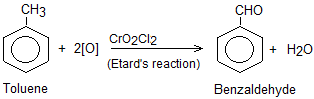
Toluene by Etard's reaction gives ...[ DPMT 2006]
-
0%
a) benzyl chloride
-
57%
b) benzaldehyde
-
0%
c) benzene alcohol
-
43%
d) ortho-cresol
Explanation
Q.18.
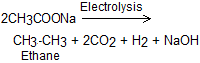
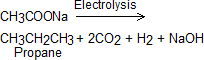
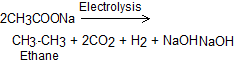
When an aqueous solution containg sodium acetate and sodium propionet is electrolysed we get
-
0%
a) Ethane
-
29%
b) Propane
-
43%
c) Butane
-
29%
d) All the baove
Explanation
Q.19.
2.8g pf pure alkene contain only double bond per moleculess, react completely with 8g of bromine. What is the molecular formula o the alkene? [ DEC 1994]
-
38%
a) C2H4
-
38%
b) C4H8
-
12%
c) C3H4
-
12%
d) C6H12
Q.20.
In electrophilic aromatic substitution reaction, the nitro group is meta- directing because it :...[ Karataka CET 2009]
-
22%
a) decreases electron density at meta- position
-
11%
b) increases electron density at meta- position
-
22%
c) increases electron density at ortho- and para- positions
-
44%
d) decreases electron density ar ortho- and para- position
Q.21.
Which alkene on ozonolysis gives CH3CH2CHO and CH3COCH3? [ AIPMT 2001]
-
0%
a) CH3CH2CH = CHCH2CH3
-
50%
b) CH3CH2CH = C(CH3)2
-
17%
c) CH3CH2CH = CHCH3
-
33%
d) (CH3)2C = CHCH3
Explanation

Q.22.
A mixture of ethyl iodide and n-propyl iodide is subjected to Wurtz reaction. Thehtdrocarbon wihich will not be formed is ... [ IIT 1990]
-
0%
a) Butane
-
25%
b) Propane
-
38%
c) Pentane
-
38%
d) Hexane
Q.23.
Which of the following compounds yields acetone on ozonolysis followed by hydrolysis? [ BHU 2008]
-
43%
a) 2-Methyl-2-butene
-
14%
b) 3-Methyl-1-butene
-
0%
c) Cyclopentane
-
43%
d) 2-Methyl-1-butene
Explanation

Q.24.
3-Hexyne reacts with Na/liq. NH3 to produce ...[ AIIMS 1997]
-
0%
a) cis-3-hexaene
-
57%
b) trans-3-hexene
-
14%
c) 3-hexylamine
-
29%
d) 2-Hexylamine
Q.25.
When CH3COOH reacts with CH3MgX, then ....[ BCECE (Med.)2006]
-
14%
a) CH3COX is formed
-
43%
b) hydrocarbon is formed
-
14%
c) acetone is formed
-
29%
d) alcohol is formed
Q.26.
Acetylene when trated with dilute HCl at 60°C (333K) in presnece of HgCl2 produces ...[ Pb CET 1989]
-
0%
a) Methyl chloride
-
67%
b) Vinyl chloride
-
17%
c) Acetaldehyde
-
17%
d) Formaldehyde
Explanation

Q.27.
Which one of the following has the smallest heat of hydrogenation per mole? [ IIT 1993]
-
12%
a) 1-butene
-
38%
b) trans-2-butene
-
0%
c) cis-2-butene
-
50%
d) 1,3-butadiene
Q.28.
ion Q58) In the reaction X is

-
0%
a) HNO3
-
0%
b) O2
-
50%
c) O3
-
50%
d) KMnO4
Q.29.
A new carbon-carbon bond formation is possible in ...[ DPMT 2009]
-
20%
a) Cannizzaro's reaction
-
20%
b) Friedel-Craft alkylation
-
0%
c) Clemmensen reduction
-
60%
d) Reimer-Tiemann reaction
Q.30.
Which of the following is not aromatic? [ Kerala PMT 2006]
-
0%
a) Benzene
-
20%
b) Cyclopropenyl cation
-
40%
c) Tropylium cation
-
40%
d) Cyclopentadienyl cation